


 Join on WhatsApp
  Join on Telegram
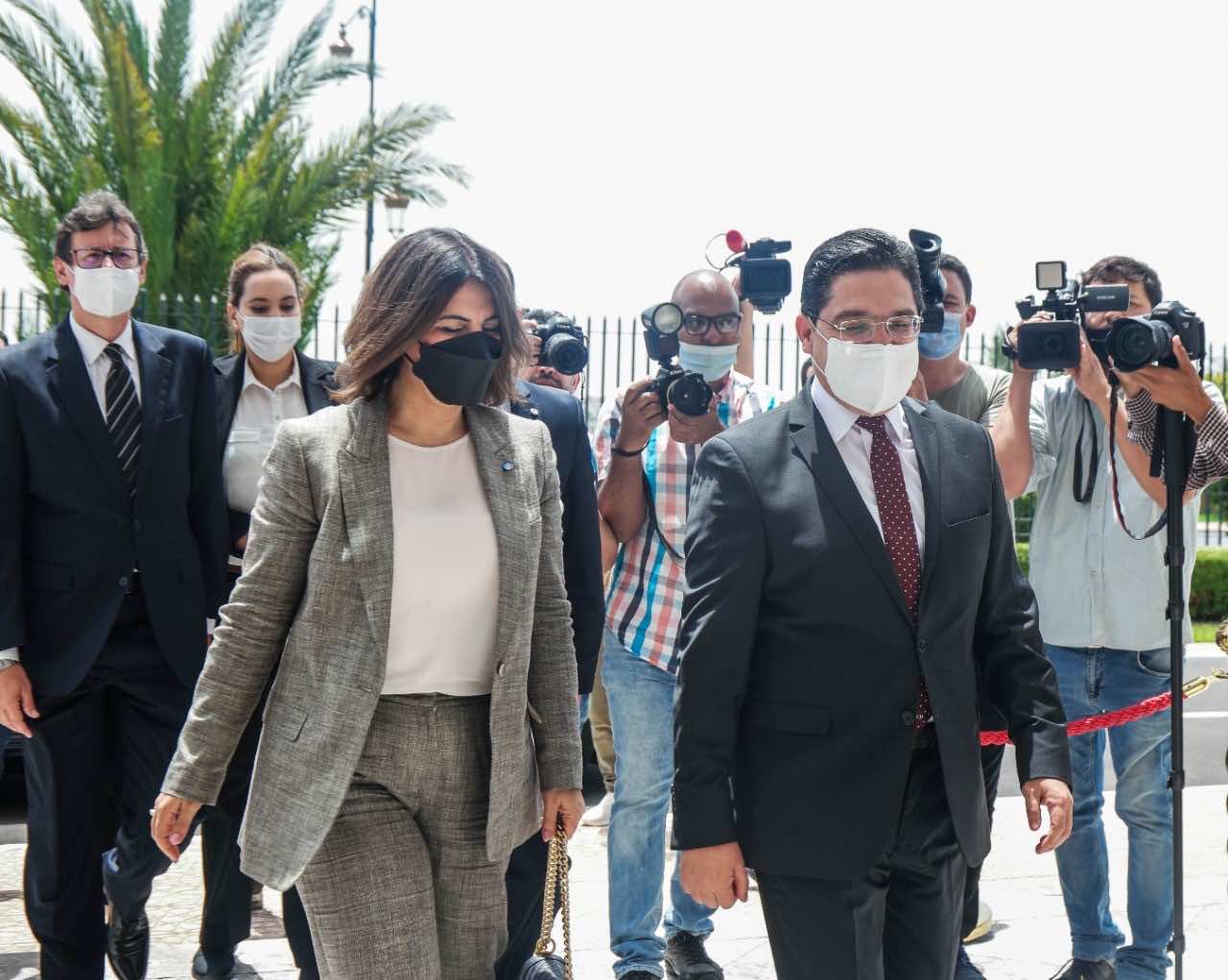
 Denver- The foreign ministers of Morocco and Libya’s transitional government held a meeting today in Rabat to discuss a wide range of political issues surrounding both countries.
During the joint press conference that took place afterwards, Morocco’s Foreign Minister Nasser Bourita stated that Morocco would stand by Libya. Bourita confirmed that Morocco’s government “brings unconditional and unlimited support to whatever is likely to be of service to Libya and the Libyans.” This was a monumental statement, as Libya seeks a long-term solution to the brutal civil war that has engulfed the country in various degrees since 2011.
In his commitments, Bourita assured Mangoush that “Morocco has no agenda” when it comes to the crisis, and was solely there to see an end to the situation “which neither the Libyan people nor its institutions deserve…” in af steadfast show of solidarity with the Libyan people.

He continued by saying that he is “completely convinced that the Libyans, who are animated by wisdom, will manage to get their country out of this situation.”
This is the first official visit by Foreign Minister Mangoush to Morocco, who made history by being elected as the first female foreign affairs minister in Libya’s history, and the fifth woman to hold the position in the Arab world.
According to Bourita, the talks between the two focused on “the evolution of the political process in Libya… and the role Morocco can play within this framework, in consultation with the Libyan brothers.” The two additionally focussed on developing “strong bilateral relations, at the cultural and human levels,” as well as discussing plans for additional meetings between the two countries in the future.
Beyond political objectives, Bourita and Mangoush have also laid the foundation for “the second edition of the Moroccan-Libyan economic forum,” in order to facilitate “the activation of trade” between the two countries moving forward.

Lastly, both parties agreed to set up a meeting between consuls of both countries, likely to facilitate the opening of embassies in both Rabat and Tripoli in the future.
Other topics discussed included “bilateral relations in the religious and security fields,” that will help both countries in solving any potential challenges in the future.
This is an exceptional step forward for the Libyan people, after NATO backed forces deposed former president Muammar Gaddafi in 2011 and inadvertently sent the country spiralling into over ten years of internal conflict, leaving thousands dead and hundreds of thousands in need of humanitarian assistance.


