





































































Rabat – The issue of corruption continues to dominate headlines from the local to the international level. Observers often see this complex and pervasive problem in black-and-white, with little regard for its intertwined and universal nature.
Affecting everybody in some way, corruption feeds off and reinforces inequalities. In order to understand, unpack, and analyze this important topic, Morocco World News spoke to compliance expert Sofia El Mansouri.
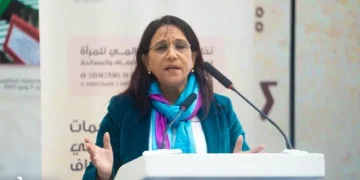
Sofia El Mansouri is a Moroccan-born and US-educated compliance professional. After completing her undergraduate studies in the US, she returned to Morocco to find few opportunities for someone with her expertise. Instead, she moved to the UAE where she worked for 12 years.
Her very first assignment was at a company that was subject to a monitoring program the US imposes when they catch a company engaged in “illegal activities.” Her employer had made improper payments (bribery) in the Middle East and was part of the oil for food scandal in Iraq. In response, the company now faced a three-year monitorship.
Thrown into the deep
Her company was a US multinational and as such had to comply with US laws and regulations, providing a significant challenge for El Mansouri in her first job after graduation. She worked at a regional headquarters that did not yet have a legal department and the company tasked her with establishing their first legal/compliance department for the region.
That first assignment prepared her well for the rest of her career, although she discovered that compliance programs were very different at local organizations. “It was a huge difference,” El Mansouri chuckled as she told Morocco World News. “They will do their best, but it is a far cry from the compliance programs seen at a US or European company.”
“When we say compliance program, it includes anti-corruption, sanctions, export controls, money laundering, among other things,” she explained. “Such a compliance program will depend on the risks and geographies that the company is exposed to.”
El Mansouri now writes on her blog, “thecompliancelady.com,” and provides tactical guidance for the wider Legal, Audit & GRC community. She is also part of the Morocco Compliance Group on LinkedIn, which aims to connect Moroccan compliance professionals with international best practices. Additionally, she applies her experience on a consultancy basis, providing training and advice for clients on various compliance matters.
Corruption on a global scale
“Corruption is a global problem. It does not spare any country or industry or limit itself to particular regions, that is a gross misconception,” she told MWN.
There are many indexes that aim to measure levels of domestic corruption but “unfortunately those indexes are often contested.” El Mansouri herself has doubts about them, in particular the most prominent “Corruption Perception Index” by Transparency International that measures perceptions of corruption rather than actual corruption levels, which opens the index to biases.
Corruption flourishes in countries where there are other associated risk factors, such as money laundering, conflicts of interest, fraud, bureaucratic red-tape, anti-competitive practices, constraints on the freedom of press, and a weak rule of law. Most of these risk factors have indexes too.
“Still, you have to start somewhere,” according to El Mansouri. “Corruption indexes, used with a combination of other risk factor indexes, allow for an overview of regional risks and threats that we use to advise companies.”
The issue with corruption indexes is that investors are often sensitive to them. Therefore they can have a detrimental effect on the lower-ranked countries on the index who international investors from top-performing companies view with apprehension.
“Ironically, foreign bribery is often exported by companies originating from countries marked as “least corrupt” on these indexes. “These multinationals are more likely to engage in foreign bribery in countries that are at the bottom of the index and have a weaker rule of law.”
El Mansouri sees this as a difficult element of global corruption, saying “these companies from ‘clean’ countries are often the ones getting embroiled in corruption scandals.”
The intertwined nature of corruption
These companies are clearly not corrupt in their home country, yet engage in corruption elsewhere. Why this is the case, even an expert such as El Mansouri has not yet figured out.
“Perhaps they feel they can get away with it in these countries,” she posits. “It raises the question: Who offers the ‘sweetner,’ the company or the government official in that foreign country?”
“There’s always a demand side and offer side to the bribe. But ultimately it does take two to tango,” El Mansouri explained.
Corruption does not spare any region nor any industry, but there are specific high-risk industries which are more vulnerable to corruption.
These include extractive industries such as oil, gas and mining, pharmaceuticals, logistics and transport, construction, defense and aerospace, pharmaceuticals and healthcare, as well as banking and finance. Because these industries represent substantial commercial opportunities and engage directly with foreign governments, they may introduce higher corruption risks.
“You need to have a robust strategy in place for dealing with the corruption risks that arise from operating in high-risk industries and high-risk jurisdictions,” she said, highlighting examples such as the 2020 “hash for gold” story that MWN published.
Corruption and money laundering
“Corruption and money laundering are intimate bedfellows. Without money laundering a lot of corrupt deals would simply not be able to exist,” El Mansouri explained. She added that corruption depends on several links that are mired in domestic financial secrecy.
El Mansouri explained this trend with a specific example.
When a corrupt official choses to unjustly enrich himself in his home country through means like corruption, he accumulates illicit wealth that he cannot use at home. Instead he takes his money to a “secrecy jurisdiction” that assists him in depositing and spending that money anonymously.
“There is a whole network of actors in that chain. It doesn’t just include banks that don’t ask too many questions. It also involves lawyers, accountants, and laws that allow anonymous shell companies that enable such a corrupt official,” she explained to MWN. These actors help launder the funds abroad and turn illegitimate funds into high-value legal assets such as real estate, private jets, or luxury artwork, for example.
This practice has evolved over the years, from secret Swiss bank accounts to proxies that have taken this business model and expanded on it, as revealed in the Panama Papers.
The use of shell companies has become a hot topic among regulators, anti-corruption societies, and in the US, the country with the most shell companies despite stringent anti-corruption measures.
El Mansouri described this practice as “the worst nightmare of a compliance officer.” A compliance officer may have to conduct due diligence on a prospective client or third party and find themself confronted with a complex web of shell companies, which, in turn, are owned by several layers of other corporate vehicles in different jurisdictions. The officer ends up having to conduct investigative work.
“These poor compliance officers are not police investigators. They can do their best but oftentimes, when confronted with a network of shell companies established in secrecy jurisdictions, that’s where it ends.” She explained that “you won’t have much luck finding who is the ultimate beneficial owner as required by a true due diligence.”
A global problem
The problem is that these issues are not victimless crimes, yet the opaque nature of these dealings often mean it is difficult to compensate victims.
“When you hear of massive enforcement actions in countries like the US or the UK that run in the millions — sometimes billions — against behemoths like Airbus, Ericsson, Odebrecht, or Rolls Royce, you tend to wonder, will the countries where the bribery took place claim a part of the fine?” She stated that “the victims of multinationals that engaged in bribery should be represented and compensated in such bribery proceedings.”
When countries fail to actively fulfill their obligation to investigate, prosecute, and punish companies that bribe officials in foreign countries, this further aggravates the problem.
Transparency International’s report “Exporting Corruption 2020” evaluates signatories to the OECD Anti-Bribery Convention.
Results have shown that out of the 43 countries that signed the convention, only four actively enforce against companies that export corruption (The US, the UK, Switzerland and Israel). “Without effective enforcement against corporate corruption, corruption will continue to flourish, and countries on the low-end of the spectrum will remain there.”
Global corruption creates enormous costs for societies across the planet. In 2018, the World Economic Forum estimated that the global community loses at least 5% of world gross domestic product, or $3.6 trillion, every year. Governments lose at least $1 trillion in tax revenues every year, according to the IMF.
The UN has stated that “fighting corruption is a global concern because corruption is found in both rich and poor countries, and evidence shows that it hurts poor people disproportionately.”
El Mansouri thinks it is important to show people the scale of the problem. “We are talking about trillions that could be invested in critical services like healthcare,” she said, adding, “look at COVID-19. Where is the money when we need it?” The health crisis has shown that missing funds could have “saved so many lives if enough ventilators and hospitals would have been available.”
“Another recent example of the nefarious effects of an endemic corruption and judicial impunity is the sad demise of 28 souls in an illegal sweatshop in Tangier.”
Local impact
Corruption goes as far as leading to collapsing infrastructure. “We are talking about loss of lives here; people need to understand that this is not a victimless crime,” El Mansouri explained.
In Morocco alone, the amount of money that disappears each year ranges between MAD 50 billion ($5.6 billion) to MAD 70 billion ($7.8 nillion), or 7% of GDP, a similar amount as all earned Moroccan wages together, El Mansouri described in her blog. “So all Moroccans will have to work a whole year to compensate for the loss of earnings due to corruption,” she quoted her colleague Zakaria Garti as saying in her analysis.
“These matters concern the public interest. Unless these messages are amplified they will be brushed under the rug,” she explained. Sofia El Mansouri notices that talking about these issues makes people uncomfortable, yet “without speaking about it, it will never be resolved.”
“Compliance officers can only do their part within the corporate world. Governments will have to do their jobs; journalists will have to raise the issue.” According to El Mansouri, these issues require participation from all segments of society. Including judges and civil society, “everyone will have to do their part.”
Corruption in Morocco
“Anti-corruption efforts need to be endorsed from the top.” Without real support, Sofia El Mansouri does not expect to see the real change that is needed to address corruption.
Public discontent and distrust on the issue has not gone unnoticed by the compliance expert.
She sees much promise in recent efforts to stop corruption in the country, especially the Central Authority for the Prevention of Corruption (ICPC).
New legislative changes will establish a truly independent oversight institution that is not linked to the judiciary as before. This more empowered agency will be able to investigate powerful officials and companies and determine whether there is corruption and impose sanctions
“We wish them luck. We want to see them prosper and be successful because God knows, they have a heavy task ahead of them,” she told MWN.
While El Mansouri is looking forward to seeing the new independent enforcement of such issues, that alone is not enough. “This development is exciting but they can only do so much. Government officials and companies also have to do their part.”
Opportunities for change
According to El Mansouri, Morocco is making significant efforts through its national anti-corruption strategy to reestablish trust in public institutions through “proper transparent governance.”
Morocco enacted its Freedom of Information Law (Law 31.13) in 2020, which gives citizens the right to question administrations and municipalities.
Moroccans received the right to request information held by the public administration, elected institutions, and public service provision organizations. According to the new law, it is also now mandatory for municipalities to publish their financial data and development plans on their websites.
The Right to Information Law promises to promote transparency as well as to restore public trust in state institutions.
The Casablanca floods revealed how powerful this right is. The Moroccan branch of Transparency International made extensive use of this freedom of information act to request a review of the inner workings of the local government and the local water service.
Ultimately, the law offers an opportunity, but it will be up to citizens to exercise their rights, she says.
“The opportunities are there, but corruption has been embedded in Moroccan society for a long time, despite it being against our religion.” According to El Mansouri, despite corruption being endemic in Morocco, it is not a fundamental part of Moroccan culture and society.
“There is general consensus that religion and ethics are closely linked.” Religion offers a framework of norms and values guiding the principles with which individuals should live, she says. “Studies have shown that religious beliefs influence ethical behavior at work: They influence ethical decision making in profound and often unexpected ways.”
She sees examples in Indonesia and Malaysia where religion is mixed into anti-corruption campaigns that could also take root here.
An anti-corruption recipe
Many Moroccans don’t know, or don’t take seriously, services such as the corruption reporting hotline (05 37 71 88 88). “They will laugh and tell you that no one will pick up the phone if you call them,” El Mansouri chuckled, “yet there have been many cases investigated based on such calls.”
“We have to give an opportunity for the government to do its job if we see something wrong,” El Mansouri stressed to MWN.
In order to ensure the presence of a free judiciary, Morocco could create a panel of judges specifically trained and tasked with tackling corruption, she said.
“In response to the profusion of money laundering reports against the country, the UAE created a court specialized in prosecuting money laundering crimes. Similarly, Morocco could create an independent court with a team of prosecutors and judges specifically tasked to deal with corruption and money laundering issues.”
For El Mansouri the recipe to fight corruption revolves around the availability of an independent auditor, freedom of information, an independent judiciary, and a sense of vigilance by government and citizens.
“Compliance is the key to eradicating corruption,” she said, adding, “less corruption means a better business climate, better jobs, and better economic empowerment.”