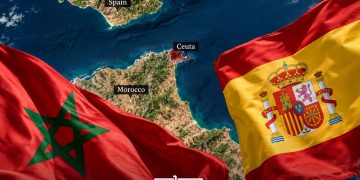






















































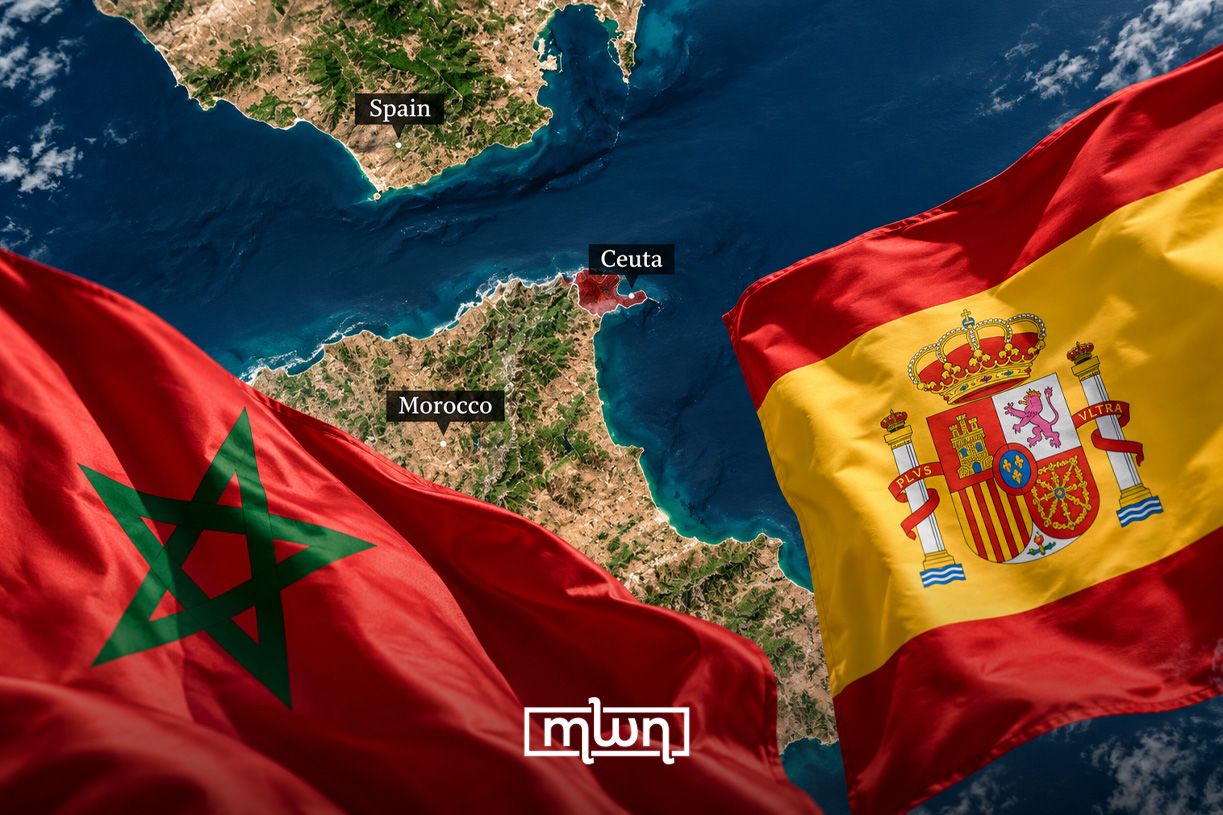
On 30 and 31 July, some 72,000 people crossed from Morocco into Ceuta, a figure Spain’s government later raised to about 80,000. Between 100 and 141 people died, depending on who is counting, a toll that should humble everyone who speaks about this border.
Then the noise began, and it was loud. On 2 September, tens of thousands marched in Madrid under slogans defending territorial integrity. Spain’s Prime Minister Pedro Sánchez called the episode a challenge to Spain’s sovereignty. In late September, King Felipe VI called the situation in Ceuta “unacceptable,” and leaders of the Popular Party and Vox joined a Madrid march demanding immediate elections. In October, the King and Queen made the first royal visit to Ceuta and Melilla since 2007. Each of these actors had an electorate to address, and each performed for it.
Spain and Morocco have been here before. In July 2002, a dozen Moroccan soldiers landed on a barren islet a few hundred meters off Morocco’s coast, raised a flag, and set off a military standoff. Morocco calls the rock Leila. Spain calls it Perejil. Within days, Spanish warships, helicopters, and special forces were deployed, all over an island where nobody lives.
It ended by telephone. Working from home, U.S. Secretary of State Colin Powell “knocked out a one-page agreement,” he later wrote, and sent it to the two foreign ministers. Weeks later, welcoming Spain’s new foreign minister, Ana Palacio, to Washington for their first meeting in person, Powell said the two had “become great telephone friends.” Palacio, an open admirer, called him “one of the greats of our times.”
That is the lesson of the ending. No treaty, court, or institution settled that crisis. Personal rapport did, followed by a return to the status quo. Nothing was resolved, and nothing was built. Twenty-four years later, the question has returned, and there is still no framework to settle it.
Two neighbors, two temperatures
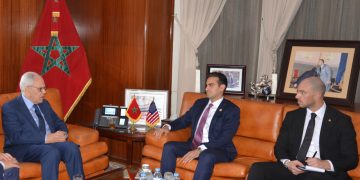
Now look at Rabat’s posture. Morocco did not recall its ambassador, as it did within hours of the 2007 royal visit. It issued no formal protest over the 2026 visit. Most of those who crossed went back within days; Madrid reports more than 11,000 further returns since August, and its foreign minister has publicly acknowledged Rabat’s cooperation. King Mohammed VI told Parliament that Moroccan sovereignty tolerates neither pressure nor blackmail, called relations with Spain a “sovereign choice,” and did not mention Ceuta. That is what building looks like: quiet cooperation while others rally. Two neighbors, two temperatures.
Spain’s position is plain: both cities are Spanish and part of the European Union. Nothing here calls for a siege mentality. Calm is neither weakness nor consent, and Rabat has never renounced its claim. But a neighbor that keeps cooperating on security, trade and migration while the question stays open is a partner worth engaging.
There is also a reason the noise is so loud: the strategic winds have shifted. Since Washington recognized Moroccan sovereignty over the Sahara in 2020 and endorsed Rabat’s autonomy plan as the only practical solution, Morocco’s ties with the United States have deepened. Madrid is uneasy. Spain’s Elcano Royal Institute warned in October that the real risk is losing influence over Washington’s North Africa agenda. The unease is understandable, but fear is a poor adviser. A Morocco close to Washington and patient with Madrid is an opportunity for Spain, not a threat.
Spain’s own conduct at Gibraltar shows how that can work. This July, Madrid signed an EU-UK agreement that tears down the last fence at Gibraltar while insisting, in its foreign minister’s words, that it is “not changing a single comma” of its sovereignty claim. Spain hopes Gibraltar will one day revert to it. Practical cooperation without conceding principle is exactly what Morocco practices on its own side of the Strait. The standard should be the same on both shores.
From restraint to a lasting framework
But restraint is a strategy only if it has a destination. Silence can read as strength or as drift. Morocco should pair its patience with a clear path, built in quiet periods and not in the heat of a crisis.
The precedent worth studying is Macao. After Portugal’s 1974 revolution, Lisbon proposed handing the territory to China at once. Beijing declined and chose to wait. The handover came in December 1999, with the two capitals on warm terms throughout: patience, a quiet formula, a treaty and a fixed date.
A peaceful resolution has recognizable ingredients. It moves the file out of rallies, royal tours and communiqués and into permanent working channels that function whatever the headlines say. It pursues change only through law, diplomacy and time, never through force or unilateral action. It applies on the African shore the standard Madrid applies at Gibraltar. It builds practical integration first, on borders, trade and migration, and keeps a long runway toward a formal agreement.
Madrid says the question is closed. History says such questions are rarely closed; they are postponed. In 2002, two countries nearly fought over a barren rock because no structure existed to settle the dispute. In 2026, there is still none. Spain should lower its voice and answer Morocco’s calm with cooperation. Morocco should turn its calm into a path. Both must act before the next crisis forces their hand.