


 Join on WhatsApp
  Join on Telegram
 Rabat – Morocco’s House of Representatives has adopted 21 bills covering various sectors during the second legislative session of the year 2019-2020, announced the House of Representatives’ Speaker, Habib El Malki.
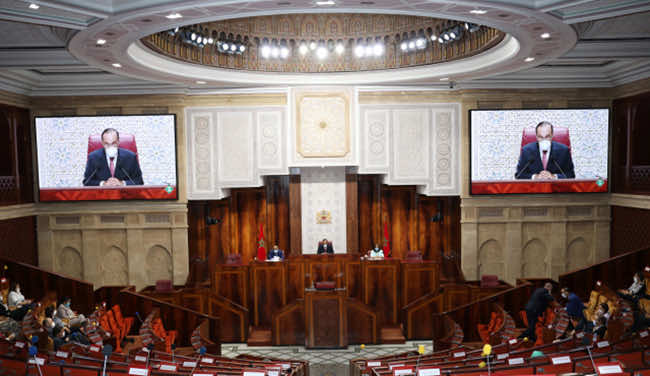
El Malki made the statement on Thursday, July 23, during the final parliamentary meeting of the spring legislative session. The session began on April 11 and extended over more than three months.
The legislative session witnessed a series of unprecedented measures, including the obligation of wearing face masks and separated seating. The House of Representatives also adopted a digital voting method, replacing the previous method of voting by hand raises.
Commenting on the House of Representatives’ achievements during the session, El Malki said the adoption of legal texts reflected a national unity.
“The adoption [of the bills] took place … within a framework of consensus and unanimity in the majority of texts, which reflects a national unity in the face of the COVID-19 repercussions,” he said.
El Malki affirmed the importance of the legislative initiatives the House of Representatives has taken since the start of the current mandate in 2016. The lower chamber of the Moroccan Parliament approved a total of 219 bills, he revealed. The Moroccan government has so far interacted with 13 propositions, while more than 200 bills are under consideration.
According to El Malki, the House of Representatives responded to Morocco’s needs in terms of legislation. The speaker commended the parliament’s “speed and efficiency” and the new communication strategy with the public. Online engagement with the House of Representatives’ social media pages grew by 300% in the spring legislative session alone.
COVID-19, topic of the hour
The COVID-19 pandemic was the most-discussed topic during the legislative session, El Malki said. Fifteen meetings had COVID-19 as the main topic, including three sessions with the presence of Head of Government Saad Eddine El Othmani.
The number of questions the House of Representatives received between April and July reached 3,390. The questions include 826 oral questions and 2,564 written questions. Forty-two of the oral questions were discussed during parliamentary meetings and 795 written questions received answers, El Malki announced.
The permanent parliamentary committees at the House of Representatives were also active during the legislative session, El Malki said. The committees held 53 meetings, including 31 to monitor the government’s action and interrogate ministers and heads of public establishments.
Growing digital presence
Regarding the House of Representatives’ new communication strategy, El Malki said the use of social networks and the update of the parliamentary chamber’s website played an important role in communication.
Subscribers to the House of Representatives’ YouTube channel increased by 300% between April and July, and the channel registered approximately 500,000 views. More than half the viewers (52%) are between 18 and 34 years old, El Malki revealed.
The speaker pledged to further strengthen the use of online tools, notably through positively responding to proposals citizens. All the proposals are transferred to the concerned parliamentary committees, he assured.


