

























































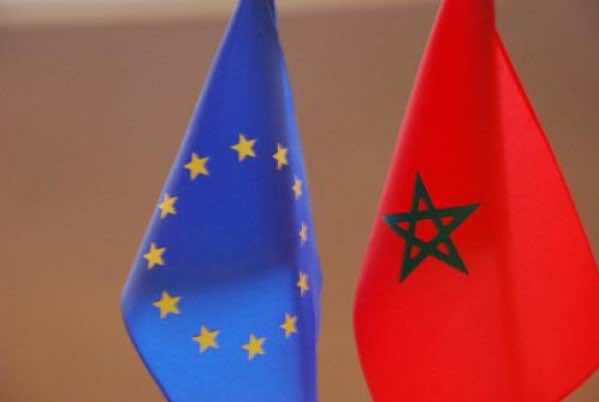
Rabat – The European Union has praised Morocco for the progress made in advancing human rights, and reiterated its commitment to support the reform process through the implementation of constitutional principles.
The EU said that five years after the adoption of the 2011 Constitution, Morocco has continued reforms in the key areas of migrant rights, women’s rights, and justice system reform, where new policies have been launched with the support of the EU, reported Maghreb Arab Press (MAP).
In its annaual report on human rights and democracy in 2016, which was adopted on October 16 by the foreign ministers of the EU member states, the EU named the reforms that have made significant progress as part of the 2011 Constitution: the adoption of organic laws on the supreme council of magistracy and the status of judges, the revision of the penal code, and the adoption of two organic laws on participatory democracy, namely the right of legislative initiative and the right of petition to strengthen the role of civil society.
In the area of governance, the EU pointed out that Morocco officially launched its national anti-corruption strategy with a contractual framework of 10 programs comprising 239 projects in the sectors and bodies concerned.
The EU commended the adoption of the draft to create the equality and anti -discrimination authority regarding women’s rights. It also lauded the implementation of the law against trafficking in human beings, mentioning among the 2016 achievements the launch of the second phase of regularization of illegal migrants.
The organization said that it has traditionally pursued with Morocco an open and constructive dialogue on democracy and human rights, praising the work done by the National Council for Human Rights (CNDH), especially its commissions operating in the southern provinces of Morocco and the quality of its contacts with civil society, human rights defenders, and regional delegations of the CNDH.
The EU also affirmed its support for numerous civil society organizations in Morocco,
explaining that the legislative framework has given a positive impetus, with a significant number of texts adopted or being finalized.