


















































By Rachid Acim
Morocco World News
Beni Mellal, Morocco, May 30, 2012
In a small village nearby the Atlas Mountains, a well-to-do family lived. The family had big farms, a herd of cattle ranging from bulls and cows, and many beautiful horses everyone would like to own. The family also had a very handsome child they would strongly care for. His name was Jawad. He was seven years old.
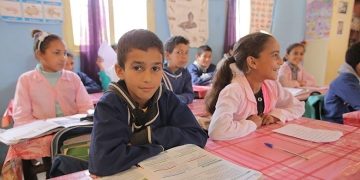
Like all children of his age, Jawad was very happy, well-dressed and excelled in school. The parents of other school children would begrudge Jawad’s parents for this handsome son, showing good manners, ongoing elegance and excellence at school.
The teachers of the school loved him fondly. Likewise, his classmates were happier in his company. He was all the time bringing them precious gifts, delicious food and lovely smiles. He was not mean to anyone he met in the village. He was not like the children who boasted of the opulence of their parents, nor the children interrupting the teacher, saying, “But first teacher, do you know who my father is?”
The teachers were fair to this child. They would give him the grades he really deserved. They never solicited to know his parents because they were like coins circulating in the village. The milk people drink came from Jawad’s parents’ big farms. So did the ripe vegetables and the fresh fruits growing in abundance in their fields.
Unlike other families, Jawad’s family was very honorable, hardworking and helpful to the impoverished. During the Grand Feast of Eid Lekbir, his parents would slaughter some sheep and hand them out to those in need. In Ramadan, his father would invite many people at home for breaking fast and dinner. Also in Ashoura, his mother would buy many round pieces of bread, dried fruits and attend the local graveyard to distribute amongst the poor, the Tolba and beggars.
For that alone, his parents were both revered and valued. As municipal elections approached, many families convinced Jawad’s father, Al-Haj Al-Mahjoub to be representative of their village. They congregated in his house and promised to grant him their voices since he was cultivated, righteous and so generous. The children used to admire him as long as he would hand them sweets and many coins to cheer them up. The beggars used to love him for the generosity of his heart, human kindness and open-handedness.
All agreed that no one was qualified to struggle for the values and virtues of the village except Al-Haj Al-Mahjoub, or Sidi Al-Haj as the villagers preferred to call him for short. Albeit he knew that such a big responsibility was not an honor for him but rather a heavy burden that he needed to shoulder; he had no way but to accept the offer. He could not say no to the people that were having much love and much admiration for him.
His adversary in the campaign was a man in his fifties, known among the villagers as Amoulay. The latter was a successful merchant, trading in carpets, mats and other expensive artifacts he brought from Fez and Marrakech. He was single and cold-blooded, allergic to veiled women. He thought, if ever he got married, his wife would steal his big fortune and let him down.
But regardless of such hostility to women, women would frequent his shop and purchase many items and expensive articles. Some women would tease him by excessive bargaining, shrilling at him repetitively with phrases like ‘Wa Lihoudi, Wa Lihoudi!’ Other women were critical of him and they could hardly drop by his shop. However, the majority wished they had been wives to this rich man, accumulating gold as well as silver in his sumptuous house he inhabited like a king.
Amoulay didn’t talk to Sidi Al-Haj for many years. He thought he was not helping people but rather bribing them to be on his side. He resorted to many evil tricks to take revenge from this noble man. Once he handed Jawad, Sidi Al Haj’s son, an outdated packet of chocolate biscuits, a nice pen and some entertaining magazines. He told the child not to tell his parents about that. Jawad naively took the gifts. On the way, he started eating his biscuits. Soon after, his stomach started to hurt him. He threw up everything. He had a fever and did not go to school for more than a week. Jawad’s parents became terribly sad. They took him to the gastroenterologist to treat his abdominal pain. The doctor cautioned the parents that their son had eaten poisoned food. Thus, they must be careful. He comforted them not to be worried and that he would regain his health soon.
Another incident was when Amoulay paid some drug dealers to deposit opium and hashish in one of Sidi Al-Haj farms. The gendarmeries didn’t capture Sidi Al-Haj because all people attested to his good conduct, rightful ethics and superb manners.
But aside from the above, many serious calamities befell on Sidi Al-Haj family. He never felt nervous nor angry. Rather, he was always very thankful to God for the good health he had, the faithful wife and the lovely people surrounding him, namely his cheerfully-good looking son Jawad, whom the visitors took for a Pakistani.
The most disastrous calamity that sadly bechanced the family was when both Sidi Al-Haj and his upright wife, Haja Lalla Aicha were found at midnight in one of the rural roads swimming in a shower of blood. The villagers could not believe this tragic incident. Gendarmeries conducted many investigations and concluded that an awful accident had occurred to the couple when they were heading for Khnifra city to pay their relatives a short visit.
After their unexpected death, everything changed horribly. The beggars turned to theft for survival. Children stopped playing outside and took up bad habits like smoking, gambling and the like. They became more violent and aggressive, feeling uneasy with studies at school. As for Jawad, he turned desolate, so miserable. He had no friends to play with anymore, no parents to laugh with.
His sole uncle Lahssen was not only cupid but very cruel towards him. He stole all his money and forced him to yield early to melancholy and self-reliance. After he had sold all the farms and properties of the family, Lahcen took the child to the city. There the students would gaze at him scoffingly and say, “Bedouin, your place is not here. Go back to your village.” They would all provoke him and beat him.
The school teacher punished him for his dirty clothes, incomprehensible silence and inability to memorize daily lessons in class. Each time Jawad would escape from school and intend his first village to complain to himself about misery and such injustice. He would sit adjacent to the grave of his mother and cry out in utter sorrow: “O Mom, come here, come here! The teacher beats me. She humiliates me among my school mates. She tells me: your mom is a careless woman. She doesn’t care for you as a child like other students.”
Beware, some words are like weapons. They can hurt and kill.
Rachid Acim is a high School Teacher of English in Beni Mellal, Morocco. He is a Freelance translator, writer and poet. Rachid is a contributor to Morocco World News. He can be reached at: ([email protected])
The views expressed in this article are the author’s own and do not necessarily reflect Morocco World News’ editorial policy.
© Morocco World News. All Rights Reserved.