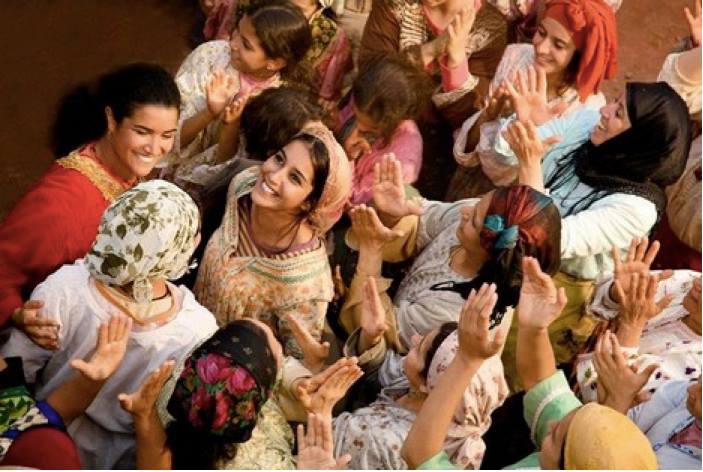
El Jadida – Ashura seems to be the most convenient ritual occasion in Moroccan lore to practice charming spells by some women on their husbands, burning ingredients in a small ritual fire at home or in the bonfire lighted by the boys in the street on the night of Ashura.
In fact, ever since the beginnings of the New Islamic Year till the tenth of Muharram, some Moroccan women are busy preparing for the festival. Primarily, they may carefully store some special body parts of the Great-Feast sacrificed ram like the ram’s muscle tail (diyyala), or the strips of meat cured in the sun (gaddid; sing. Gaddida [dried meat]), most of which are used in magic brews to give women power over men.
Because they belong to a patriarchal social system, sterile women in Morocco seem to occupy the lowest status and power position in the domestic world of marriage. Generally speaking, women’s power may derive from their active fertile sexuality. Children are considered a major source of feminine gender capital since women believe that child-birth and child-rearing and doctoring provide them with domestic power and due to the close bonds with their children, fathers may grow to be emotionally attached to their wives.
The birth of a son (‘azri) may bestow upon them honor, supply them with security and validate their presence in the patriarchal household because the son secures the continuity of the male line.
In their struggle to isolate husbands from their natal families to form their own, married women rely on the child-bearing capital. If pregnancy is retarded, they may resort to witchcraft (shur) antidote to release themselves from what they believe is the spell of sterility cast on them by potential rivals, or at the very least to insure their continual husbands’ sexual need for them. Ashura, as the tradition states, is the suitable time to practice the sterility antidote ritual called gaddida (lit. a strip of meat cured in the sun).
To organize the dried meat-strip ceremony for the benefit of the woman not yet capable of pregnancy, women, during the Great Feast, knock on doors and ask their neighbors to offer them one strip of meat salted and cured in the sun called (gaddida). They need to collect one hundred strips and one cut from one hundred victims and one. Then a couscous meal is prepared with the strips after Ashura day with a desired effect to rid the so-called sterile woman of all likely pregnancy-hindering magic spells.
Dried meat strips are believed to derive their baraka from their sacrificial origin and also from the salt, the food storage technique always used in the past to preserve food before the appearance of refrigeration. Non-salty food decayed and was believed to be eaten by spirits. Up to now, salt is used to avert evil influence by putting a pinch of it under pillows or in talismans. Salted meat cured in the sun is thought to be immunized against spirits and unlucky omen. In our maraboutic culture, unsalted meat is offered to the spirits in ritual cures. It is called l-hlu (sweet). Rachik (1990) has given a meticulous description of the isgar sacrificed to jinns without salt in the High Atlas.
The ingredient (salt) seems to dichotomize the culinary diet of humans and spirits. Its presence or absence even marks the boundaries between the worlds of the Divine/human (legitimate) and Occult (illegitimate). For instance, the Great Feast sacrifice is salted thus sacralized, addressed to Allah and prohibited to jinns.
To the opposite, the sacrifice for spirits is unsalted, so ‘spiritized’ and supposed to be eaten by jinns. Thus individuals who ritually eat unsalted food are thought to establish a social bond with spirits and communicate with them by sharing their food or imitating their non-cultural demonic habits unfit for human cultural consumption which is believed to be regulated by the sacred norms of God.
For Rachik, salt is used as a symbol to reinforce social relationships among people who have shared the same food. To express social communion and put people under the covenant of allegiance, average Moroccans may use expressions like “we have shared salt and food” (tsharkena l-melha u tt‘am). Salt therefore becomes a binding vow people do not dare to breach for fear of being exposed to evil vengeance though nowadays with the emergence of capitalistic values “salt and food” is considered by some to be less effective in establishing social bonds.
Back to the gaddida ceremony, just after Ashura celebrations, a day is fixed for its organization. Women say that the ceremony must take place after the flare-up of the bonfire (hetta ttarttaq shsha‘ala). If held before, the ceremony may end up in discord and quarrel.
The one hundred and one strips of dried meat collected are plunged in a semi-liquid dressing mixture consisting of olive oil, cold-antidote dressing mixture of folk-medicinal plants named l-msakhen (herb warmers) and shop-top spices (ras l-hanut).* Then it is kept immersed in the sauce for the whole night before the party. The following day, the pregnancy-seeking woman is prepared for the ceremony “as if to relive the nuptial night.” Her friends come to help her. She is dressed like a bride and adorned with henna. By the afternoon, women gather to sing and dance.
Sometimes, traditional female dancers (shikhat) are invited to animate the gathering. By the end of the party, the couscous cooked with strips in the special sauce is served to the gathering. The ‘sterile’ woman is the first to taste from the dish, the others follow eating. Certain necessary and sufficient conditions are required for the spell work to produce a placebo effect on the targeted woman. For example, she must hold faith (niya) in traditional cure and in its plethoric practices on top of sharing traditional healers’ worldview.
All in all, during the ritual, the ‘sterile’ woman purifies herself, rejuvenates her body and remolds herself into a new identity: a reproductive female protected from the uncertainties of the wheel of fortune. The meat-strip ceremony held after the New Year “explosion of bonfires” is laden with cultural significances. There is first an instance of sympathetic magic in which the fertility of the woman may be juxtaposed with that of the soil especially if we discover lots of practices in Ashura associated with soil fertility as is the custom in vegetation rituals.
Second, the ceremony may be classified as a purificatory ritual to follow Westermarck’s argument. ‘Sterile’ women seek to purify themselves from spells at the end of the year to insure a safe pregnancy the following year. That it is held after the fire celebrations insinuates that the fire has the power to cure sicknesses and cleanse the world from impurities and evil, thus the subsequent purificatory ritual of supplicating for pregnancy can bring in women’s eyes positive effects.
Third, the ritual is held in the period of Ashura because the latter is thought to be the occasion for women to further their needs and wishes in magical practices whilst attaining positive results via the aid of spirits. In short, male adults and children may also take part but women are considered the main social actors in Ashura festival. As we argued in a previous article, they are momentarily relieved from the oppressive male supervision and get a licensed space of freedom to express their frustrations and seek a magical source of security to defend their position in the private domestic sphere.
*As condiment l-msakhen (herb warmers) are used to treat common colds and sterility problems. L-msakhen include a number of ingredients: there is the use of the dressing mixture called ras l-hanut made of nwiwira (allspice), kebbaba (cubeb peppercorns), lsan ttayr (narrow leaved ash), dhar l-felfel (long pepper), qa‘ qulla (cardamom), kharqum ‘ud (turmeric root), skinjbir (ginger), l-bza? l-byad (white pepper), bsibisa (mace), etc., and other ingredients like kebbar (capers), habbet hlawa (aniseed), wden l-halluf (autumn buttercup), habb rshad (garden cress), za‘ter (marjoram), qrunfel (clove), jinjlan (sesame), kharwa‘ (castor oil plant), qurjlan/khadanjal (lesser galangal), shanuj/ habba sawda (blackseed/nigella), khzama (lavender), za‘fran l-hurr (saffron leaves), etc. These ingredients should be dried well, then sifted and ground. A measurable quantity should be used for the treatment of sicknesses. Usually, the patient first goes to the Turkish bath to warm herself, then comes home to eat a dish—customarily of domestic chicken—prepared with these spicy herbs. Afterwards, she has to go to bed. The term used is that “the patient should sweat on them” (khassha t‘rag ‘lihum). According to one of the interviewed herbalists (‘ashshab[s]), it is only experienced traditional women who know the exact ingredients and portions of such mixtures. The rest buy folk medicinal plants by trusting the spice seller/peddler (‘attar) or ‘ashshab to collect the mixture.
The views expressed in this article are the author’s own and do not necessarily reflect Morocco World News’ editorial policy