
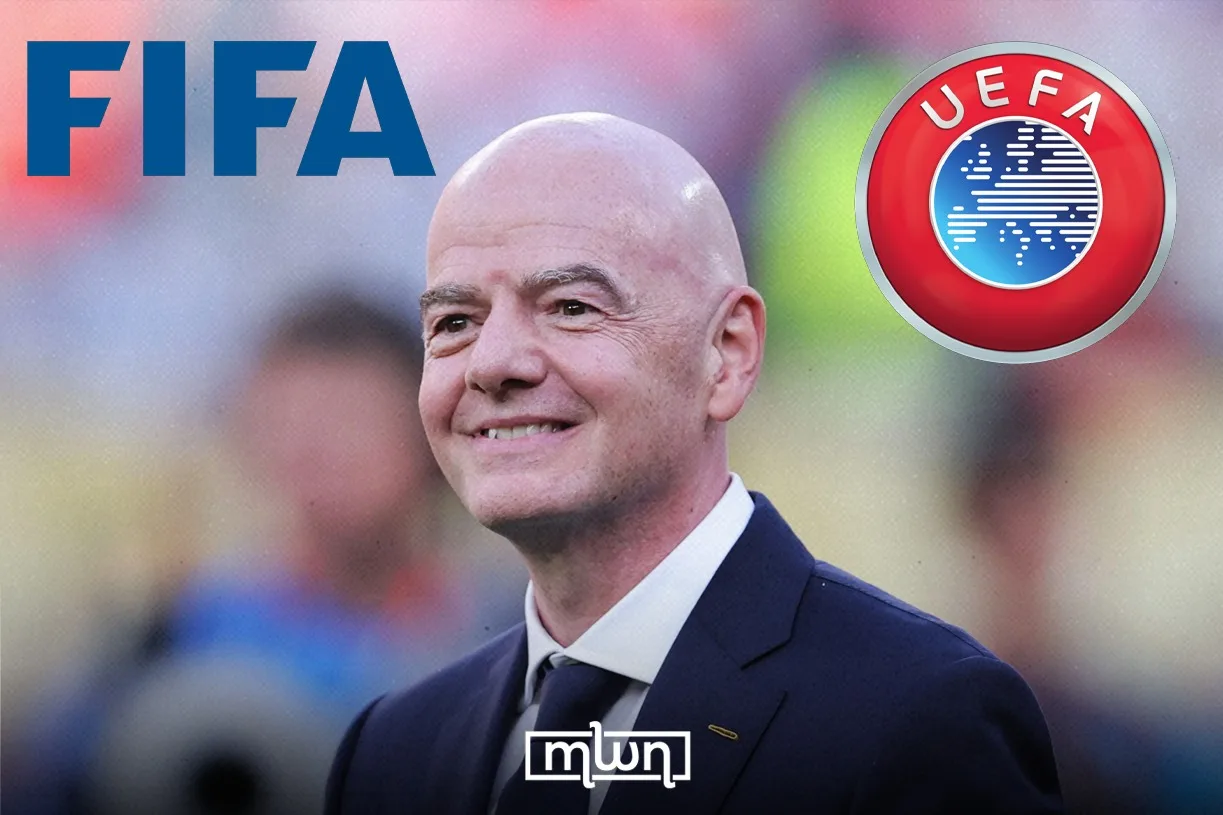
On July 28, FIFA announced it wants to sell a piece of the World Cup. The plan is to create a commercial subsidiary called FIFA Forward Enterprise (FFE), valued at $20 billion by JPMorgan, and sell a minority stake of up to 20% to private investors to raise up to $4.2 billion. FIFA would keep sole control; outside investors would get a slice of the business, not a say in the game.
That is the headline. The detail I cannot get past sits lower down, in the part framed as generosity.
The day after the announcement, Gianni Infantino sent member associations a five-page letter, seen by the Associated Press and others. In it, the offer takes shape. Approve the plan, and each of the 211 associations can access up to $40 million, $20 million in development funding for the 2027-30 cycle, up from the $8 million currently budgeted, plus an optional one-time $20 million. A $10 billion package, available from January 1, 2027. Reject it, Infantino writes, and members keep the previously planned Forward expansion: $2.7 billion. He gave them until September 19 to decide, 53 days.
Read those facts together, the money, the gap between yes and no, the clock, and the word “democratic” starts to strain. Refusing does not simply mean voting no. It means forgoing roughly three-quarters of the funding that a yes would unlock.
It helps to know what kind of body is making the offer. FIFA is a non-profit whose 2023-2026 commercial cycle brought in close to $13 billion, a record. This is an organization that has monetized its tournament more aggressively than any before it, now asking its members to approve selling part of the machine that does the monetizing, and attaching a number to the answer.
One more detail sits oddly against the language of consultation. The lead investor group is expected to be fronted by Thrive Eternal, the permanent-capital vehicle of Joshua Kushner’s Thrive Capital; Kushner is the brother of US President Donald Trump’s son-in-law, and JPMorgan is arranging the deal. The lead buyer, in other words, appears to have been identified before FIFA’s own members were formally asked anything.
A crisis of process, not just policy
Here is what makes the sequence hard to read as consultation. On a plan this large, the confederations that represent football’s continents were not consulted.
The Asian Football Confederation, which represents 47 nations, said it was not consulted on the proposal and is disappointed that a matter of such significance entered the public domain before the AFC family had been afforded the opportunity to examine and discuss it.
Concacaf, which represents 41 and just helped deliver the most lucrative tournament in the sport’s history, said it had learned of the plan through media reports rather than official channels. The European Leagues and the players’ union FIFPRO Europe condemned it too, the leagues calling it reckless and divisive and insisting the World Cup’s value is created “day in and day out by leagues, clubs, players and supporters who are being left without a voice or a vote on this matter.”
Then, on July 30, 48 hours after the announcement, UEFA turned objection into action. After an emergency meeting, its 55 member associations voted unanimously to boycott all FIFA competitions, men’s and women’s, if the plan proceeds. The language was not diplomatic. “We unanimously and unequivocally reject FIFA’s proposal,” the statement read. “The World Cup is not for sale. No part of it should ever be surrendered to private investors.”
It called the plan “irresponsible and indefensible” for being “conceived in secret and brought to the brink of approval without any meaningful consultation,” and added a line that reframes the whole dispute: “No one has the moral authority to sell what they merely hold in trust for the next generation.”
That is a quarter of FIFA’s membership, but the quarter that supplies many of the world’s biggest leagues, clubs and players is refusing to participate, which makes the threat one FIFA cannot easily ignore. And it happened before FIFA’s own September 19 deadline, the members voting with the only leverage they have, because the vote FIFA designed was never where the decision was going to be made.
Infantino has not backed down. He called the plan “a proposal, but not an obligation,” a “golden opportunity to turbocharge the development of the game globally,” and framed it as “part of a democratic process, a consultation process.” The gap between that word, “consultation,” and what UEFA, the AFC, CONCACAF and the leagues all describe – learning of the plan from the press, being asked to approve it against a deadline – is the whole story.
This is not the first attempt. In 2018, a FIFA committee rejected an Infantino-backed plan for $25 billion in private investment, reportedly backed by SoftBank and Saudi Arabia’s sovereign wealth fund. The idea did not survive scrutiny then. What is different now is the order of events: the money to members was announced first, a lead investor was already lined up, and the scrutiny came after; and this time it came as a boycott.
There is a governance question buried under the commercial one, and it is not whether private capital belongs in football. Formula One’s commercial rights sit with Liberty Media; leagues and clubs have taken outside investment for years. The question is narrower: when a body asks its members to approve selling part of itself, and attaches a payment, a penalty for refusal, and a deadline to that approval, what is actually being weighed: the merits of the plan, or the cost of saying no?
FIFA says nothing changes: it keeps sole control, investors get no operational role. On the mechanics, that may hold, though when The Times reported that a commissioner’s role at the new entity could be created for Infantino, FIFA called the idea undiscussed while adding that its president “will and must have leading roles in this entity.” The man leading FIFA through the sale could also help oversee the entity being sold.
The vote was meant to be described, afterwards, as the democratic will of world football’s 211 members. Instead, before a single ballot was cast, a quarter of that membership, the quarter that supplies many of the world’s biggest leagues, clubs and players, has said it will walk away.
The number FIFA wanted remembered was 211. The number that matters now is 55, and the word attached to it: unanimous.