






























































By Kimberly Avalos
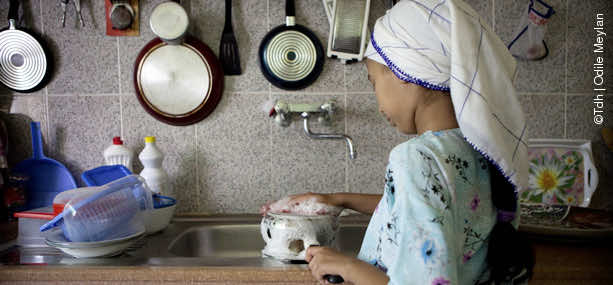
Rabat – The controversial bill on the exploitation of minors in domestic work—commonly known as “little maids”—was adopted on Tuesday by a majority vote, according to Al Huffington Post Maghreb.
The new law, which has experienced several twists and postponements, permanently forbids the work of all minors under the age of 16, according to Aujourdhui.Le Maroc.
According to the legislator, the text of Act no. 19.12 would structure and define the relationship among workers and their employer.
“This law represents a significant advance in the field of strengthening the fundamental right of this vulnerable category of society,” said Abdeslam Seddiki, Minister of Employment and Social Affairs. “By putting in place, for the first time, an appropriate legal framework for providing legal protection to these workers.”
The bill includes provisions requiring employers to take on a semi-annual medical examination for working minors, prohibits night work, prohibits subjecting grueling work, requires a written authorization allowing tutors to work.
However, the bill has crystallized the differences in a tussle concerning the minimum age for the “little maids.”
On one side, the opposition and some parties from the parliamentary majority, including the Party of Progress and Socialism (PPS), in particular, wished to raise the minimum age to 18 years. But the Justice and Development Party (PJD), which leads the coalition government wished to drop it to 16.
However, after a transitional period of 5 years, the legislation intends to terminate the employment of domestic workers under the age of 18 permanently, according to Aujourdhui.
INSAF, an NGO that fights against the exclusion of single mothers and abandoned children, issued a response on Facebook saying the vote was “contrary to the commitments of our country in terms of the rights of the child.”
“[It] doesn’t say a word on the situation of tens of thousands of minors currently being exploited in the houses….” read the statement.
The bill also revealed deep disagreements said Adil Tchikito, MP from the Istiqlal party and member of the Committee on Social Sectors in the House of Representatives.
Earlier in May, he told Al Huffinton Post Maghreb that Minister of Employment defended the bill but parliamentarians of his party opposed it.
This situation “created a real embarrassment not only in the majority, but even with the PPS,” said Tchikito, who added the party refused to go defend the bill in the May vote.
The first vote of the draft law took place in early May but remained to be voted in plenary before final adoption.