
 Join on WhatsApp
 Join on Telegram
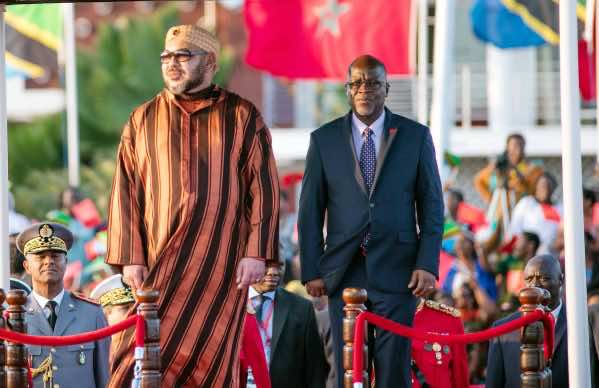
New York – Morocco’s King Mohammed VI has begun a tour to the East African countries of Rwanda, Ethiopia, and Tanzania, marking the king’s first tour to the region since his coronation in 1999.
Since he came to power, King Mohammed VI has made no secret of his long-term strategy to reunite Morocco with its African family, with the ultimate goal of playing a leading role in the continent.
Because of the Western Sahara dispute and its impact on Morocco’s international relations at the regional and global levels, the Moroccan monarch was aware that his task would be arduous, requiring an incremental approach to Morocco’s African neighbors. The first phase of his strategy was, therefore, to reinvigorate Morocco’s relations with its traditional allies in West Africa.
After several tours to West Africa, during which he strengthened Morocco’s economic and political relations with countries such as Gabon, Senegal, and Cote d’Ivoire, and secured their support for Morocco’s position on the Sahara, the Moroccan monarch is now embarking on the second phase of his strategy.
The “empty chair” policy that Morocco has adopted since it left the Organization of African Unity (today’s African Union), has done more harm than good to its standing in the continent and its position on the Western Sahara. Yet Moroccan officials are aware that in order to thwart Algeria’s schemes to undermine Morocco’s position on the conflict, Rabat needs to go beyond its comfort zone, reach out to countries known for their support for the Polisario, and most importantly return to the African Union.
First steps towards reuniting with Africa
King Mohammed VI took the first step in that direction last June when he received Rwandan President Paul Kagame in Rabat. The warm welcome afforded to the Rwandan leader heralded the beginning of a new era not only in the relations between Rwanda and Morocco, but also between Morocco and Anglophone Africa.
This foreign policy orientation took more shape when the king addressed a letter to the 27th Summit of the African Union, held in Rwanda’s capital, Kigali, in July. In the letter, the King announced Morocco’s intention to the return the African Union. The announcement was followed by an official request submitted by Morocco to the African Union in September.
Following Morocco’s decision to return to its African family, many Moroccan observers have pointed out that Rabat should not return to the organization unless the AU suspends the membership of the self-proclaimed Sahrawi Arab Democratic Republic. For these observers, if Morocco were to sit at the same table with this Polisario entity, it would mean a tacit recognition of SADR’s statehood.
To the contrary, Morocco should return to the African Union regardless of whether the SADR membership has been suspended or not. The steps that Morocco has taken in recent weeks indicate that it is determined to break away from the “empty chair” policy it has adopted over the past four decades. Moroccan officials are realizing more than ever that the best way to fight the Polisario and its backers is from inside the African Union.
King Mohammed VI’s tour to three key countries in East Africa, all of which have diplomatic relations with the Polisario, confirms this foreign policy orientation. Though 28 African countries have submitted a motion calling for the suspension of the Polisario membership, this move is not sufficient to achieve the eviction of the Polisario from the AU. A two-thirds majority is required to call for the modification of the AU charter to include a provision to suspend Polisario.
The right way to achieve this is to reach out to other African countries who have been outside of the realm of Moroccan foreign policy for several decades, especially English-speaking countries in Africa. The first step toward Morocco earning the trust of these countries and eventually persuading them to suspend their relations with the Polisario is to build economic, political, and religious bridges.
The important delegation that accompanied King Mohammed VI during his East African tour indicates that Morocco is determined to make the strengthening of its economic ties with Rwanda, Ethiopia, and Tanzania a stepping-stone towards obtaining the withdrawal of their recognition of the Polisario, and eventually their vote in favor of suspending its membership in the AU.
The 19 agreements Morocco signed with Rwanda and the 22 agreement it signed with Tanzania, along with the agreements that will be signed with Ethiopia, show that Rabat seeks to turn the economy, infrastructure, and agricultural projects into the cornerstones of its relationships with these three East African countries. By turning the economy into the main tool of its foreign policy in Africa, and championing the causes of Africa in international venues, Morocco is not only strengthening its position as one of the major players on the continent, but also following in the footsteps of China.
Morocco following in the footsteps of China
For the past six decades, China’s approach with Africa went from adopting anti-imperialist rhetoric to obtaining international support for the economic development of its African partners. Over the past two decades, and due to China’s growing demand for fossil fuel, it has launched an aggressive foreign policy that has enabled it to establish a solid footprint in many countries, especially in oil-producing countries. China has achieved this outcome thanks to the adoption of a strategy that has turned the promotion of infrastructure, economic and agriculture projects into the main tool that advances its foreign policy agenda.
By launching these projects, China has succeeded in securing a steady supply of oil from these countries. In addition, it has secured these countries’ support for its territorial integrity in international venues such as the United Nations. Like Morocco with questions over the Western Sahara, China seeks to secure the 54 African countries’ support for the One-China policy. Beijing’s growing presence in Africa has allowed it to influence many African countries, such as Niger, Chad and Malawi to sever their ties with Taiwan and secure their support for China’s Tibet policy.
While one cannot state with certainty that Morocco will secure Rwanda, Ethiopia and Tanzania’s support for Morocco’s Western Sahara policy in the immediate future, Morocco’s new approach towards these countries is, at least, expected to persuade them to adopt a position of neutrality and abide by the political process launched under the aegis of the United Nations.
The international and regional contexts provide all the cards that allow Morocco to achieve an unprecedented breakthrough in this part of Africa. In addition to the reputation that Morocco has gained in recent years in combating terrorism and promoting the true tenets of Islam, and its key role in South-South cooperation, the expertise its companies have accumulated has enabled them to be key players in spurring sub-Saharan development and launching income-generating activities based on a win-win approach. Most importantly, because of the deterioration of its financial deficit due to the drop in oil prices and its political instability, Algeria no longer has the same influence in the continent as it did in the past.
There is no doubt that Algeria will do all it can to abort Morocco’s new foreign policy towards East Africa, and undermine Rabat’s efforts to achieve a political solution to the Western Sahara based on Morocco’s autonomy plan. However, with Morocco’s determination to fight back and play in Algeria’s field, Algeria could face an uphill battle to isolate Morocco on the continent and obtain support for its schemes and hostile foreign policy agenda against Rabat.
Samir Bennis is the co-founder of and editor-in-chief of Morocco World News. You can follow him on Twitter @SamirBennis