 Join on WhatsApp
 Join on Telegram
Rabat – A Saudi pro-government media outlet, Al Riyadh, has published an editorial touting Moroccan diplomacy under King Mohammed VI’s leadership.
The editorial comes after Saudi-owned television channel Al Arabiya aired a documentary on Western Sahara last week putting Morocco on the same footing with the Polisario Front.
The video clip referred to Western Sahara as an “occupied” region and presented Polisario as recognized by the international community. However, the Polisario Front has lost recognition from several countries in recent years.
In a possible attempt to defuse tension between the two kingdoms, Al Riyadh, known for its proximity to the Saudi royal family, has written about the conflict with a more Morocco-friendly narrative.
In its editorial, Al Riyadh called the region the “Moroccan Sahara” while Al Arabiya had called it Western Sahara.
Read Also: Facts about Western Sahara Conflict that You Should Know
The term “Western Sahara” is probably not an issue, but Al Arabiya’s timeline and its mentioning pro-Polisario concepts like “occupation” and “colonization” seem to have provoked Morocco’s withdrawal from Saudi Arabia’s Yemen coalition.
Too little too late, Riyadh?
Al Riyadh commended the new strategy that Morocco has adopted in the conflict under the leadership of King Mohammed VI.
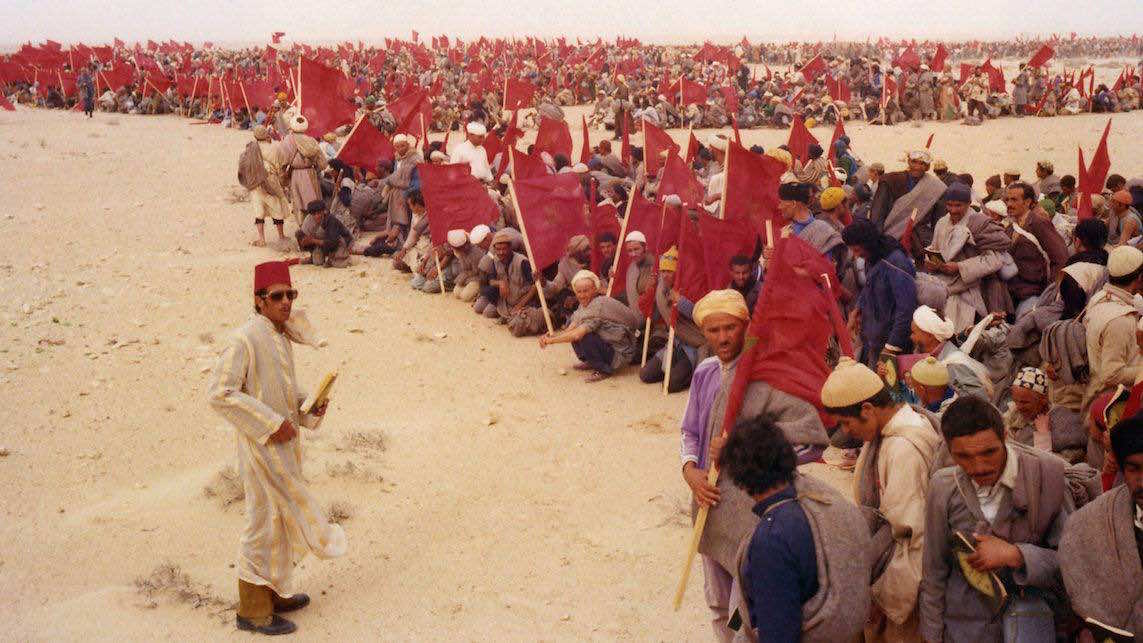
The newspaper wrote: “If Moroccan diplomatic efforts had previously been characterized by improvisation and mismanagement of means … King Mohammed VI created a breakthrough in dealing with the conflict through a series of speeches dedicated to the memory of the Green March.”
Al Riyadh added that Morocco’s strategy has more precise components and objectives “in accordance with the pillars of the firm faith of the Moroccan people and their national rights and territorial integrity backed by historical evidence.”
Read Also: Saudi Television Airs Polisario-Friendly Documentary, Crosses Red Line in Relationship with Morocco
Saudi Arabia-Morocco relations may have suffered from Morocco’s neutral position in the Gulf crisis. Morocco offered to mediate between the Saudi coalition and Qatar instead of siding with one of the parties.
A year later, in the first months of 2018, Morocco found Saudi Arabia to be hostile to its bid to host the 2026 World Cup. Turki Al Sheikh, then head of the Saudi sports authority, lobbied against Morocco’s 2026 bid and implied it was because of Morocco’s friendliness to Qatar.
The second anti-Moroccan action came in December 2018, when the Union of Arab Football Associations (UAFA), chaired by Al Sheikh, posted on social media a Moroccan map divided into three parts, excluding Western Sahara from Morocco.
While UAFA apologized and deleted the map, Egypt’s Pyramid football club, owned by Al Sheikh, posted a similar map, making the maps associated with Al Sheikh appear uncoincidental.
Moroccan Western Sahara expert Abdelfattah El Fatihi told Morocco World News that the “schism in diplomatic ties between Morocco and Saudi Arabia is now a reality.” He added that the tension is in its “initial phase.”
Read Also: Morocco Should Reconsider Alliance with Saudi Arabia and UAE
The hostility behind the video clip “appeared to be clear” since the television channel, which is “loyal to Wahhabism in Saudi Arabia,” attempted to “spoil the diplomatic ties between the countries through a detrimental report to Morocco’s territorial integrity.”
El Fatihi agreed that the crisis was preceded by Saudi Arabia’s decision to vote against Morocco’s 2026 World Cup bid and its objection to Morocco’s mediation proposal in the Gulf crisis.
“The reality of an aggressive practice towards Morocco was evident in a documentary that included many historical and political inaccuracies about the issue of Morocco’s territorial integrity,” he added.
Tension shift
Al Riyadh said that Rabat’s challenge in Western Sahara “remains the process of mobilizing all the components of the Moroccan people and the official bodies of the state” to inform citizens of the legal and historical grounds for Morocco’s claims.
“This will provide an elite capable of assuming historical responsibility in defending the territorial integrity in a rational and realistic manner.”
The Moroccan government has reportedly recalled its ambassador to Saudi Arabia, Mustapha El Mansouri, to discuss the diplomatic ties between the two kingdoms, especially after the display of the documentary by Al Arabiya.
El Mansouri told a Moroccan media outlet that the situation is just a phase that both countries will end soon.
He added that the diplomatic ties will resume their previous strength because both countries have strong historical bonds.
But it remains to be seen if Morocco and Saudi Arabia will shed the tension for good since Rabat announced its withdrawal from the Saudi coalition in the Yemen conflict.
Last night, a source from the Moroccan government reportedly told AP of Morocco’s withdrawal from the coalition due to Saudi Arabia’s provocative move against Moroccan territorial integrity.
Commenting on the withdrawal, Fatihi said that Morocco’s participation in the Saudi alliance “was based on a consensual course aimed primarily at protecting the country’s territorial integrity and supporting the legitimacy of Yemen.”
Last month, Morocco’s Minister of Foreign Affairs Nasser Bourita told Al Jazeera in an interview that Moroccan participation in the Yemen civil war has changed for humanitarian reasons.
He added that Morocco supports the Gulf’s plans and would be against anything from Yemen that undermined the stability of the UAE and Saudi Arabia. Bourita, however, expressed Morocco’s concerns over the humanitarian aspects of the Yemen war, emphasizing that the Yemeni people do not deserve the suffering they are experiencing.
A week after Bourita’s interview, Al Arabiya, an Al Jazeera competitor, released its pro-Polisario documentary on the Western Sahara conflict.