 Join on WhatsApp
 Join on Telegram
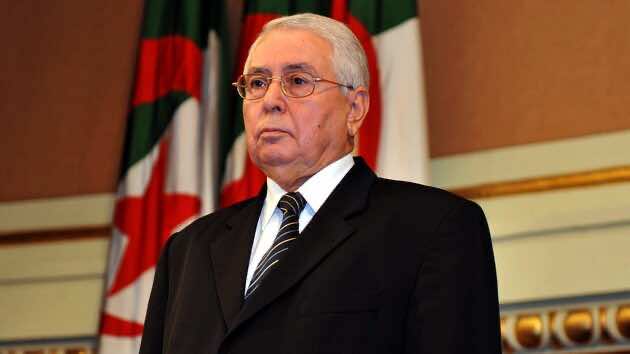
Rabat – Algeria’ s interim President, Abdelkader Bensalah, yesterday received several foreign diplomats at a collective credentials presentation ceremony, Algerian news outlet APS reported.
The diplomats attending the ceremony hailed from Bangladesh, Benin, France, Guinea Bissau, Morocco, Namibia, Vietnam, and Yemen.
Presenting his letter of credence to the Algerian leader, Morocco’s ambassador to Algeria, Lahcen Abdelkhalek, conveyed King Mohammed VI’s “greetings and regards” to President Bensalah and the Algerian people.
Continuing where the King had left off in his latest “frank dialogue” speech in which he offered that Morocco and Algeria put behind them their tumultuous relations, the King’s message to President Bensalah renewed Morocco’s commitment to paving the way to a much friendlier chapter with its Algerian neighbor.
According to Agence-France Presse (AFP), Abdelkhalek’s letter of credence contained a large section expressing King Mohammed VI’s “genuine concern” to see the relations improve between Rabat and Algiers.
The letter “reiterated the King’s commitment to consolidating between the two countries brotherly relations on the basis of mutual trust, solidarity, and neighborliness in all domains.” Key to the King’s message to the Algerian president was Morocco’s desire to cement “a tradition of cooperation and coordination to meet regional and international challenges.”
In response, Bensalah also conveyed his “greetings and regards” to the Moroccan King. The Algerian president also indicated that strengthening bilateral ties with Morocco is among his interests.
The ceremony of presentation of credentials is much more than a mere presentation of letters of credence by a newly appointed foreign ambassador to the highest authority of his country of service.
Beyond its ceremonial and symbolic weight in establishing official diplomatic ties between two countries, the ceremony means that the host country is granting the foreign official all the rights to represent and defend their country’s policies and interests within the framework of the Vienna Convention, AFP noted.
Pointing out that yesterday’s ceremony was the first of its kind in Algeria since 2016—presumably due to the dire health condition of the country’s former president—AFP indicated that the completion of the ceremony means that foreign ambassadors in Algeria “can now undertake a number of official missions.”
The Western Sahara dilemma
Aside from the tense political atmosphere in Algeria, with anti-establishment demonstrations requesting a radical overhaul of political leadership, the news comes amidst a flurry of developments in the well-established—but subtle and indirect—Morocco-Algeria tension on the Western Sahara front.
The latest UN resolutions on Western Sahara have notably urged Algeria to shoulder its responsibility in the conflict by showing more willingness to engage in settlement discussions.
Morocco, which has consistently argued that Algeria is a full-throated participant in the territorial dispute, has welcomed the move.
Although there have been suggestions that a change of regime in Algeria will not change much in Algiers’ Western Sahara stance, Rabat is clearly pinning its hopes on the fact that more involvement and political will from Algiers will be pivotal in finally ending the decades-long dispute.
As the current Algerian leadership appears to be more preoccupied with weathering the domestic storms coming its way from an economically frustrated and politically desperate population, it remains to be seen whether much will budge in Algeria’s Western Sahara efforts—and most in Algiers-Rabat diplomatic ties.