Rabat – Every October, high in the Anti-Atlas mountains of Morocco, the women of Amalou village prepare pomegranate molasses, using an ancient technique handed down through generations.
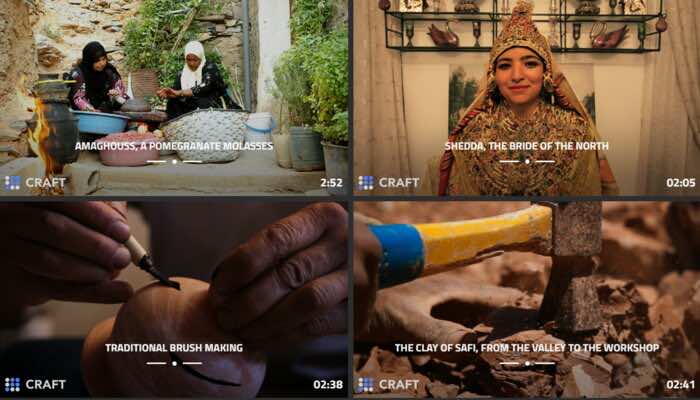
Grinding the ruby fruit by hand in a stone mill, they collect the pink juice in big terracotta jars, then cook it for 24 hours over a wood fire. The molasses, or “amaghouss” in Tamazight (Berber), was used as a natural medicine, Soltana and Meriem tell us in a two and a half minute documentary.
You can learn about amaghouss, and hundreds of other unique cultural, historical and natural features of Morocco on “Marocopedia”.
Marocopedia is a website dedicated to digitalizing Moroccan cultural heritage. Midway between a digital museum and a web TV documentary channel, it collects stories about Morocco and its people in “mini-documentaries”, which are available for free online.
Marocopedia is a unique project, the first of its kind in Morocco, the MENA region, and Africa.
Its purpose? To document and catalogue Morocco’s cultural heritage and share it with the world.
A Digital Culture Museum
The original project idea was quite different, Maha Sano Bouzerda, co-founder of Marocopedia, and Robin Wijnhold, Project Manager & Chief Editor, told Morocco World News.
“Originally, we wanted to make a TV show for young people, producing Moroccan children’s tales. But when we embarked on this adventure, we were met with a real challenge: the lack of cultural documentation on each region.”
They lacked the material needed to build culturally accurate stories, such as information on people, traditions, the natural environment, and local history; all the things used to paint a picture of human experience.
Understanding Moroccan heritage had to come first.
“We didn’t set off to create a website to catalogue heritage, but in the end we sort of had to because of the lack of data on oral traditions,” Robin and Maha explained.
Authentic, Original Material
Over a six year period, the Marocopedia team filmed more than 300 documentaries, across the regions of Tata, Safi, the Atlas Mountains, and northern Morocco.
The documentaries are categorized into six themes: nature, craft, music, history, people, and initiatives, and are available in French, English, and Arabic. They are also sometimes filmed in Tamazight, then subtitled.
The content is broad. Viewers can meet Hajj Sevilla, the 73 year old mussel farmer, who is reviving the mussel population of the Cala Iris bay, they can learn about the rock climbing club of the Todgha Gorge, or watch an Amazigh (berber) flute performance.
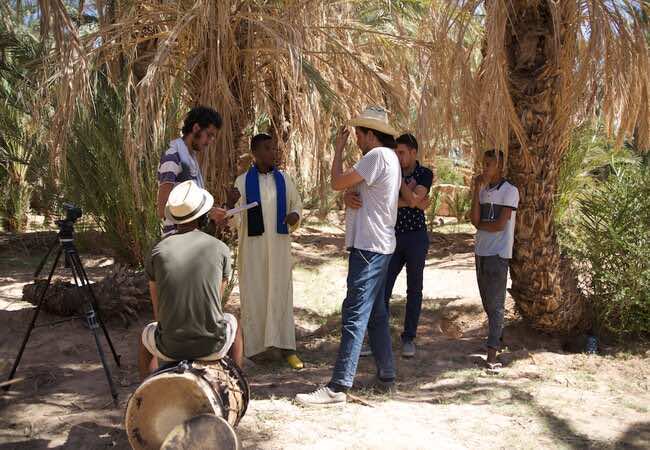
Most ideas for the films were developed through discussions with locals.
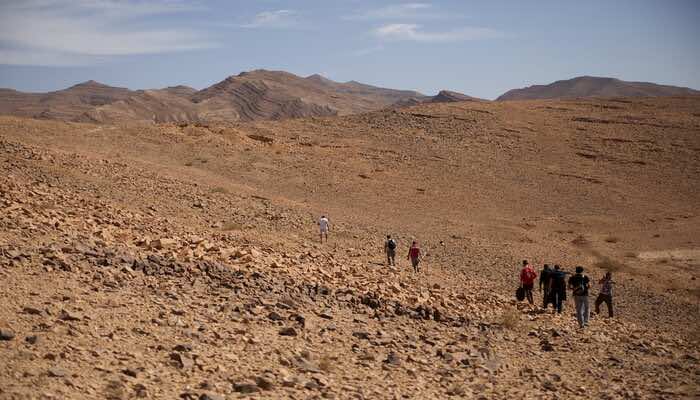
“Given hardly any information was available online, we couldn’t decide in advance what topics to film. It was often once we were there, talking to locals and doing field work that we decided what to film.”
The team is currently preparing to produce more documentaries on the southern provinces of the country, and is aiming to eventually cover all regions of Morocco.
Read also: Fez’s Annual Festival Celebrates Andalusian Music
Special Documentary Series
Every Monday Marocopedia publishes a new documentary on the website.
This month, it is revealing a special series called “The Last Craftsmen,” in partnership with NET-MED Youth, an international NGO that helps build young people’s capacity. It will showcase three crafts that have until now never been documented.
The first one released on Monday is about Abdelhak Khanboubi, a famous potter who works from his small studio in Safi, a town between Casablanca and Agadir.
“These three craftsmen are full of humanity, and they have dedicated their lives to artisanship,” note Robin and Maha.
The purpose of the series and the partnership with NED-MED Youth is to re-engage Moroccan youth with cultural practices, in a hope to revive the practices in the places they have already disappeared, they explain.
Local and Global Reach
Marocopedia is targeting a Moroccan audience, but also international viewers.
“The public, whether from Morocco or overseas, is interested in our content because it doesn’t exist in other Moroccan media, or on any other websites about cultural heritage,” Robin and Maha note. It is “fresh and exclusive.”
The team has big plans. It wants to share its expertise and experience with other African countries, and to eventually create another platform dedicated to digitalizing African culture.
Marocopedia doesn’t receive direct funding. The organization works in partnership with NGOs like UNESCO and the Roberto Cimetta Fund, as well as the embassies of Morocco and the Netherlands. They are currently looking for partnerships with universities who want to develop anthropological projects.
Human Connection
Marocopedia is about sharing digital content, but it is also about building human connections.
Each video is published with the contact details of the person being filmed, so that viewers can reach out and learn more from them directly if they want to.
The artisans can use the videos to promote their work, inviting Moroccans and the international community to discover their crafts, Robin and Maha note.
After Marocopedia published the documentary on the rare “sloughi” sighthound, the breeder went on to sell a number of his dogs. He thanked the team warmly for raising the breed’s profile, and contributing to preserving the animal.

“The breeder wanted to give us two dogs to thank us, but unfortunately we live in the city and this type of dog needs a lot of space to run.”
After the six year filming period, the Marocopedia team has kept in touch with many of the people they met.
“Each time we publish a video we get thank you messages, and this gives us yet another reason to continue on the Marocopedia adventure,” Robin and Maha add.