


 Join on WhatsApp
  Join on Telegram
 Rabat – Michal Kurtyka is President of the UN Conference of Parties (COP) 24, responsible for overseeing international cooperation on the UN Framework Convention on Climate Change (UNFCCC) in its 24th year. Kurtyka organized and oversaw COP24 in Katowice, where 196 countries agreed on the Katowice Rulebook to concretely implement the 2015 Paris Agreement’s principles.
Kurtyka will apply his leadership at the UN Climate Action Summit in New York on September 23. He will take part in sharing a Just Transition report, developed following the “Solidarity and Just Transition” conference in Warsaw this July. The COP24 Presidency will also work alongside the Secretariat of the UNFCCC to organize a 25th anniversary event for the United Nations Framework Convention on Climate Change (UNFCCC).
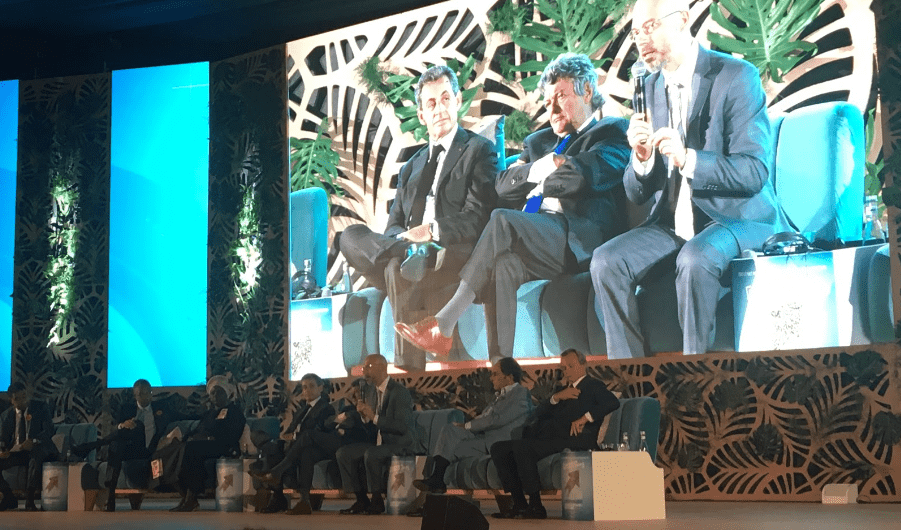
A week before the summit, Kurtyka agreed to sit down with me at the General Confederation of Moroccan Enterprises’s (CGEM) second annual Universite d’Ete (Summer University), focused on entrepreneurship, in Casablanca. Secretary of State for Poland’s Ministry of Environment, the high-ranking technocrat’s approachable, kind demeanor invited a meaningful exchange.
I explained Morocco World News’s participation in Covering Climate Now, and asked for Kurtyka’s insight on environmental and social development issues through a developing country lens. This interview has been edited and condensed.
Morocco is not an historic polluter. Morocco is set to suffer some of the greater impacts of climate change. Many Moroccans are unfamiliar with the term ‘climate change’ and its implications, at least through this terminology. As we communicate these issues, what are the three most important messages to convey on climate change?
Michal Kurtyka: Sometimes speaking about climate change, it’s useful not to use the term climate change. What touches people is lack of water, shrinking fisheries resources, droughts, hurricanes, and health problems linked with pollution. It’s useful to give examples which touch everyday life.
When I speak with my Moroccan friends and colleagues, we immediately focus our attention on the issue of waste. That is a visible example of how our civilization is wasting resources, and contributing to pollution. We have to imagine that there are other substances that we don’t see, which are equally or even more polluting.
Through this, we can both mobilize communities around local challenges, give a sense to their action, and slowly raise awareness of the challenges of a global change.
The second issue would be water. 16 million hours are spent everyday by African women going for water. The world’s water is becoming scarcer and scarcer. How much time will African women, Moroccan women in many rural areas, spend going for water? There is then a practical challenge on how to mobilize government and local communities, how to engage businesses, to make water more available.
Last but not least in this first round of discussion is urban air pollution. We have solutions available in terms of ecological mobility, which is polluting less and which is opening completely new chapters in resource use. I think it also questions the way we live. For example, switching people from individual transport to public transport is very impactful in terms of both air pollution in cities, and climate.
King Mohammed VI’s COP24 speech argued for concrete, proactive measures, and constant mobilization from the developed world to help developing countries in technology transfer and honoring financial commitments. How did COP24 successfully address those priorities, and how should the conversation shift so these issues can receive better justice at future summits?
Michal Kurtyka: In Katowice, we achieved a historical milestone in global climate policy. Agreed in Paris in 2015 was a set of 29 articles, the golden rules of the coming climate policy. The problem was rules lacked implementation guidelines.
In Marrakech, Fijiain COP, and then in Katowice, we successfully closed the Katowice Rulebook. Global climate policy will have a fresh start from 2021 replacing the Kyoto Protocol, providing top-down guidelines from the international legal perspective. We are opening a completely new chapter.
Now that we have the legal framework, the question is how to fill this framework with concrete actions. I think the king is completely right saying now we need concrete technologies and financial resources–“means of implementation” in the Paris Agreement–to enable the transition.
We detailed the meaning of technology transfer in the Kawotice Rulebook. We also detailed the financial process to take place between developed and developing countries every two years, to link needs with fresh resources coming from developed countries.
There’s a strong consensus that to meet Nationally Determined Contributions, national governments need to seriously engage the private sector. What kind of policies will allow corporate activity to play a role in this without further harming people in the global south, and to be part of the solution to the climate apartheid?
Michal Kurtyka: I think again what we need is to complete this top-down approach with a bottom-up approach.
When I travel in Africa, I see a lot of communities, a lot of engaged people, who look around them and see deficits of public services and infrastructures. It provides them with food for thought. I would like that this food for thought enable Morocco, and other African countries, to fight for the future, to create new companies.
We are talking here about “l’entrepreneuriat,” entrepreneurship. It is extremely important for Africa to transform these NGOs and these people looking around and seeing contaminated water and droughts, into new business solutions close to their hearts.
And it is possible.
A quickly developing sector for Morocco is photovoltaic (PV) pumps – pumping water with PV electricity. This new sector is enabled by technology transfer. A major part of such a system’s value added is at the local level, where installers place these PV pumps, then take care of them to make sure they function properly in the long run. There is a very important local dimension of this technological transfer which needs to be exploited by people from Morocco and from Africa.
There is also concern on the organization of the global climate progress. Until now, until Katowice, we spend a lot of time discussing between governments. Starting from COP25 which is approaching in Santiago, we will meet progressively to speak more and more about the bottom-up, linking many different actors – companies, cities, regions, etc, so that concrete solutions can be applied when they are most needed.
You were part of the first UN Security Council talk involving climate migration. How would you like to see the climate migration narrative develop at future environmental summits?
Michal Kurtyka: Sometimes people do not realize there are more environmental refugees than there are economic refugees. A lot of them are intrastate, but a lot of them are going out from their country of origin. This number is only growing in time. Increased pressure from changing weather patterns, from climate changes, will increase migratory flows. Whatever we do, this issue will be part of the conversation.
Right now, at the level of the security council, there’s not unanimity. There are countries which do not want this link to be deepened. I think that the right governance to speak about this subject will be more and more present in the debate.
Many feel frustrated with inaction when they don’t see results from intergovernmental talks at a community level, and dismiss the value of international summits. What can you share from your experience to show Moroccans, people in the region, young people, that there is reason to have faith in the system?
Michal Kurtyka: I spent a lot of time negotiating between 196 parties in order to get them to an agreement. I can assure you that I understand when people say that they are frustrated. I was frustrated many times during this process.
There are things in life we know are not optimal, but all others are even worse. I think of having a consensus at the level of our planet earth, of all countries agreeing that something should be done. The Katowice Rulebook was accepted by unanimity. That’s a hard job, maybe it isn’t bringing the immediate results people expect, but it’s a necessary step.
This is why it’s so important to complete this top-down framework with bottom-up dynamics.
What keeps you going?
At this point in our conversation, my recording cut. But, where technology failed, the proverbially mighty pen persisted. It turns out that this dilemma was timed well – Kurtyka answered my final question highlighting a shift from technology to people.
I mentioned my own frustrations studying and working around climate issues, and the overwhelming feeling that sometimes comes from facing seemingly insurmountable odds. I asked, “What keeps you going?”
After his first sigh and long pause of the interview, he replied, “That’s a good question.”
Kurtyka explained that as an engineer and physicist, he first saw climate challenges through a technical lens. Working on solutions such as renewable energy technologies, Kurtyka was drawn further into the realm of climate change.
Inevitably, his engineering mind connected to real people suffering, and the struggles of those most vulnerable to a global challenge.
Ultimately, Michal Kurtyka attributed the inspiration that keeps him focused, that helped him negotiate gridlock between 196 countries, that drives his leadership efforts everyday, to “learning what it means to be a human in the 21st century.”


