Ifrane – In usual times, the prices of crude oil fluctuate. In extraordinary times, like those the international community is encountering due to the outbreak of COVID-19, the oil industry undergoes a severe shock. Supply is far exceeding demand because economic activity worldwide has slowed down.
Experts argue the pandemic can disrupt the progress of many countries in the renewable energy sector, depending on the length of confinement and lockdowns. However, policy-makers can still turn this challenge into an opportunity by providing enough stimulus.
In the Maghreb, Morocco’s renewable energy sector is resilient and will positively shape the post-pandemic region, especially because other Maghrebi countries like Algeria and Tunisia have also set strategies to uphold a smooth transition towards renewables.
Renewable energy: some context
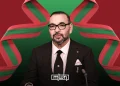
Morocco’s pivot to renewable energy is not new. In the 1970s, King Hassan II announced a plan to enhance hydraulic security by constructing a remarkable number of dams across the kingdom. In 1999, the succession of King Mohammed VI to the throne gave impetus to other types of renewable energy, especially solar and wind.
In 2009, Morocco issued the National Energy Strategy (NES) to diversify the supply of energy under the motto of efficiency. Currently, Morocco aims to increase the share of renewables in its total power production capacity to 52% by 2030.
Three realities favor Morocco. First, its geographical location at the crossroads of the Mediterranean Sea and the Atlantic ocean creates the conditions for a Mediterranean climate with abundant solar irradiation, intense winds, hot summers, and humid winters. This diversity is suitable for renewable energies, particularly solar and wind.
Moreover, Morocco is near Europe, with whom it shares mutual concerns about energy security. Morocco and Europe are united by ambitious plans to enhance grid connectivity at a time when energy needs are exponentially growing, and the abundance of solar irradiation in the Maghreb offers Morocco an edge.
Read also: Morocco Lights the Way to More Solar Power Production
Second, Morocco is a stable country. Its constitutional monarchy ensures resilience while allowing ad hoc maneuvers. In 2011, the Arab uprisings constituted a tipping point in the history of the Middle East and North Africa as protests overthrew autocrats and civil wars erupted in countries like Libya, Syria, and Yemen.
While Morocco faced many of the concerns that pushed other societies to explode, particularly unemployment and inequality, it did not become a theater of violent protests. This intriguing reality, is due to the fact a large segment of Moroccans support King Mohammed VI.
The abundance of political legitimacy set the floor for the enaction of hasty measures to preclude violent protests, such as the enaction of a new constitution, the promotion of the Justice and Development Party (PJD) to the government for the first time, and the implementation of economic reforms under the aegis of the International Monetary Fund.
With this ability to absorb shocks, Morocco has built a solid reputation that secures foreign investment and fosters a conducive environment for a resilient energy strategy.
Third, the foreign policy of Morocco towards Africa frames its national energy strategy. Since the ascension of King Mohammed VI to the throne, Morocco has embarked on a distinct foreign policy paradigm favoring Africa for economic, political, and security motives. This coincides with the need to adapt to a globalized world through the diversification of alliances and the expansion of institutional networks.
Over the past two decades, Rabat has expanded its trade relations with sub-Saharan countries but also the position of banks and companies, such as BMCE Bank of Africa and Maroc Telecom.
Moreover, Morocco has adopted a soft approach to security threats like terrorism and has been a buffer between sub-Saharan Africa and Europe to manage the flow of migration. These developments allowed Morocco to become a major contributor to security and development in Africa.
What makes Morocco eager to possess renewables?
The first motive is to safeguard the planet. Over recent years, the pace at which climate has been deteriorating is alarming, and this is due to transport and industrialization. The climate and the geography of Morocco are an asset but also a liability in the sense that seasons of drought have become recurrent, and the consequences of water scarcity jeopardize the agricultural sector.
Moreover, the country’s dependency on fossil fuels contributes to the global increase of CO2 emissions, a danger to the temperature on Earth.
In this context, Morocco has adopted a number of green policies in accordance with the Paris Agreement. The development of renewables is one of the initiatives by which Morocco aims to adapt to the consequences of climate change while leaving a smaller global print to curb further deterioration.
The second motive is Morocco’s dependence on energy imports. Between 1990 and 2017, the total primary energy supply (calculated as millions of tons of oil equivalent, or MTOE) grew 162.5%, and electricity consumption per capita (Megawatt hours per capita) grew 155.6% growth according to data from the International Energy Agency.
The growth rates indicate Morocco has undergone a remarkable transition as far as demographics, urbanization, and economic growth.
Read also: Morocco Gets Closer to 2020 Renewable Energy Objective
However, the energy needed to achieve various aspirations exceeded the energy produced domestically, and rendering the import of fossil energy a necessity rather than a choice. The import of large volumes burdened the economy because the deficit in the balance of trade came predominantly from energy imports. So, the alleviation of Rabat’s energy dependency necessitates domestic energy sources, in this case, renewable energies.
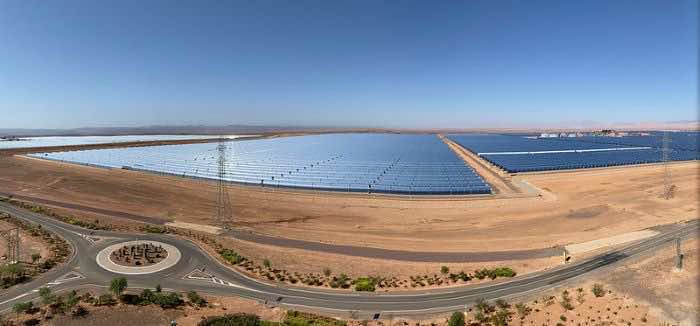
The third motive is the benefits associated with the investment in renewables, specifically solar energy. In Ouarzazate, the Noor Power Complex uses Concentrated Solar Power (CSP) which offers Morocco a competitive advantage. In fact, the use of parabolic troughs instead of dishes or towers allows the absorption of sunlight throughout the day because the troughs keep rotating to match the direction of solar irradiation.
Moreover, CSP technology is more efficient than conventional photovoltaic (PV) technology as far as energy storage is concerned. In fact, innovators conceived the CSP troughs to allow the solar plant to function a couple of hours beyond sunset, thus avoiding energy waste and maximizing yield.
By 2022, a power plant in Midelt (Noor Midelt I) is expected to use the two technologies altogether. Consequently, the Moroccan goal of 2030 rests on a robust strategy whose mottos are efficiency and reliability.
The Moroccan experience is a model for other countries to preserve the environment. Indeed, the country has benefited to the maximum from its geographical position and Mediterranean climate to get an edge in the field of renewables, particularly solar energy.
Moreover, other Maghrebi countries like Algeria and Tunisia have the same assets, which set the stage for strategies to curb CO2 emissions and contribute to global action against climate change.
The outbreak of COVID-19 has come with speculations on the negative impact of the virus on global efforts for the energy mix. In Morocco, the energy sector is resilient, and this will have positive implications on the post-coronavirus Maghreb and Mediterranean basin.