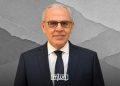
Rabat – Mouhssin Saidi’s parents never imagined their son would travel the world as an engineer working for Germany at the United Nations. At the same time, the cultural lessons and language skills they passed down to him have, in many ways, shaped the trajectory of his career, as well as his experience as a father.
“I was born in Germany but my parents both came from Tangier before I was born. They said it was very important that their children don’t forget their roots. It started with language.
In our household, my mother spoke with us in Arabic and my father talked to us in German; so we could be fluent in both languages. This was very important for our schooling and careers.”
Saidi is a senior auditor at the German Supreme Audit Institution (SAI). In the institution’s 300 years of operating, he was the first, and so far the only, Moroccan or Muslim to join their team after he began his career at SAI 20 years ago.

“People are often surprised when the German team shows up with a Moroccan. The work requires a very high level of German proficiency,” says Saidi.
Saidi explained to Morocco World News that his role within the auditing institution is critical for Germany’s partnerships with Arab and Muslim countries.
Although Germany hosts a large number of immigrants from Morocco and approximately 5.7% of German population is Muslim, the relationship between migrants and Germans has, at times, been tense, as cultural values are often misunderstood.
Despite this, Saidi has found ways to let his background and religion shine, sharing his cultural competencies through his work.
“I have the experience, with my language skills and culture, to know how to work in these countries. It opens a lot of doors.” Saidi is often assigned as a team leader for projects in Ramallah, Beirut, or Doha. “I know how to greet people there and how to be polite.”
Beginning as ‘guest worker’ migrants, Saidi’s family made sure to return to Morocco each year
Saidi worked his way up from a small engineering office to esteemed positions within the German government and also with the UN.
He has worked as a senior auditor for various UN branches including the budget for the UN Office of the High Commissioner for Human Rights (OHCHR), the UN Industrial Development Organization, and the UN Peacekeeping Missions worldwide.
Auditors like Saidi review organizations’ accounts to ensure the legality and validity of their financial records. Their role may also include acting as an advisor to ensure risk aversion and cost-saving methods.
His work with OHCHR took him around the world to cities including Geneva, Jerusalem, Ramallah, Kiev, Guatemala City, Santiago de Chile, New York, Beirut, and Doha, reporting on financial, compliance, and performance issues. His family is very proud of the work he does and the opportunities he has to travel.
“My mother says she is very proud to see me traveling to places she has only ever seen on TV,” says Saidi.
Saidi’s parents, both from Tangier, migrated to Germany in 1963 as “guest workers.” Guest workers, or “Gastarbeiter” in German, refers to migrants who moved to Germany between 1955 and 1973 under the national guest worker program.
The agreement allowed immigrant workers to support industrial sector jobs following labor shortages resulting from World War II. Germany signed its agreement with Morocco in 1963.

In Germany, Saidi’s father worked as a crane operator and his mother as a housekeeper. Their yearly sojourns to Morocco include five-day road trips from Germany to Tangier.
Although his parents could not afford to travel beyond the family home in Morocco, the six-week holiday was part of Saidi’s parents’ effort to teach their children about their Moroccan heritage, something Saidi is now passing down to his own children.
Passing on lessons learned from his parents
At 53 years old, Saidi is married and has two daughters, ages 16 and 17.
“For our children, we started very early teaching them Arabic and German. We also started to bring the girls to English school. For me as a father, it is important that my girls have a good education and they can live in different worlds. I want them to understand how different cultures work.
Now we usually go to Morocco for a few weeks every year. We try to spend one week with family and then spend another couple of weeks exploring the country so my children can know about it. They love spending their holidays in Morocco with all their cousins.”
Saidi says that the most important lessons for him to teach his children from his Moroccan roots are religion and respect for other people, especially elders. “The kindness of people in Morocco –the way people live together–my daughters should know this. It is important.”
Although Saidi said he is happy living in Berlin and probably will not move to Morocco, he is determined to continue sharing his multi-cultural experience through his work and is inspiring others to immerse themselves in similar cross-cultural ways.
“For the young Moroccan generation in Europe, I want to tell them it is possible to be both a European citizen and a Moroccan citizen. This is very positive because when you grow up in two worlds–for example, the Arab and German world–you know and you can read different mentalities.
You can understand how people work and deal with each other. They are different worlds and when you have language skills and mentality to deal with this, many doors open.”