 Join on WhatsApp
 Join on Telegram
Rabat – Besides its significance in Islam, Eid Al-Adha (feast of sacrifice) has a social and cultural value in Morocco.
Cultural significance is embodied in how Moroccans consider preparations for the feast. Communities across Morocco have their own set of cultures, principles, and societal norms that govern how they celebrate Eid Al-Adha.
Moroccans celebrate Eid by slaughtering a sheep, goat, or a cow of a different breed; and believe it or not: Sheep breeds matter for many people in the country.

There are several commonly renowned breeds that go beyond just providing livestock, instead, they are what define a specific line as unique and different.
The following information is intended to help visitors gain a greater understanding of Morocco’s Eid Al-Adha culture beyond the feast’s religious significance.
The Food and Agriculture Organization of the United Nations (FAO) said that the sheep population in Morocco consists of 99 % native breeds and, while 1% of exotic breeds exist.
The sheep population in Morocco is composed of different breeds that are scattered across 12 different regions in the country.
Sardi, the renowned breed
Let us start with the most common breed known among Moroccans. It is also common among the royal family.
The royal palace broadcasts the rituals of Eid Al-Adha every year, depicting the Muslim slaughter of livestock.
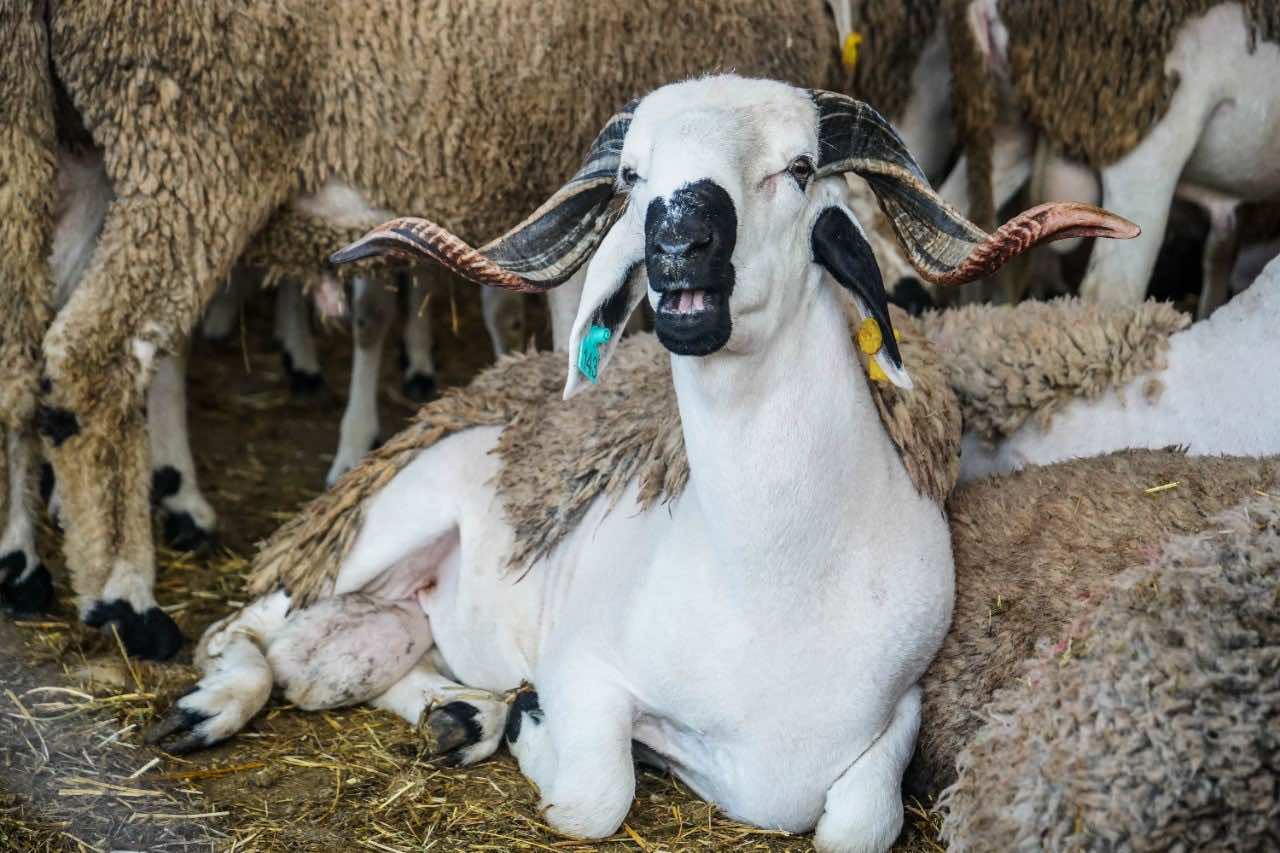
There is a traditional ritual performed at the royal palace in which two giant sheep are slaughtered, which are either completely white or have a combination of black and white on their faces, called Sardi.
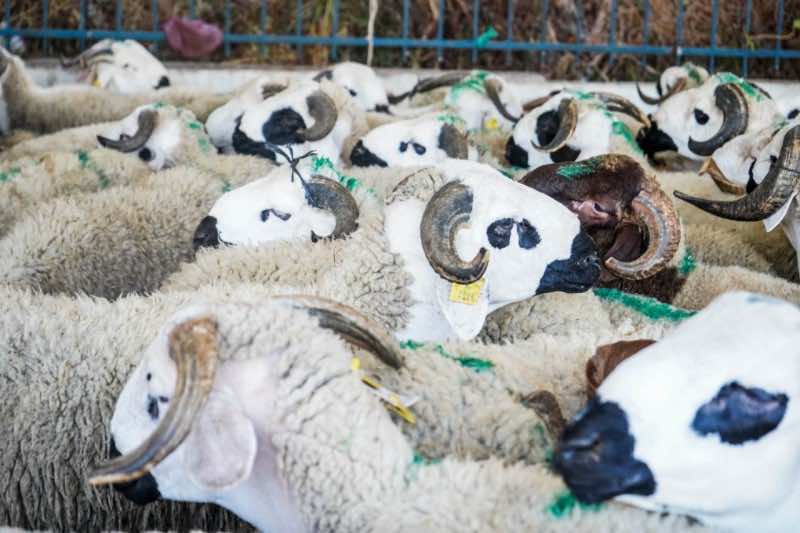
Sardi breeds are available at different prices. The prices can range between $200 and $660; yes that is true.
Sardi is known for its large size and fit shape. They are also the most popular choice for Moroccans (Middle and upper class) during Eid Al-Adha.
This breed originated from Chaouia-Ouardigha in north-central Morocco and in Tadla-Azilal, central Morocco.
Research from the Digital Collections said that the Sardi “does not reproduce very efficiently as compared to other breeds.”
The research emphasized that the average fertility rate is estimated around 90 % and 98%.
D’Man, a favorite for many
Although Sardi is the most common breed among several communities and categories in the country, other people consider D’man a favorite for its characteristics.
D’Man is more common in the south east regions of Morocco, and the oasis regions in the Sahara, including in Ta-Ta and Errachidia.
Compared to Sardi, D’Man has high fertility and can reproduce many times over the course of one year.

People consider this breed to have a low cholesterol level and to have a high meat content because of its morphology, despite its small size.
Boujaad, the largest in size
Boujaad’s breed name is derived from Beejaad or Boujaad, located in Khouribga Province in the Beni-Mellal-Khenifra region.
Boujaad is also common under the name of “the yellow breed ” and is also known for its high fertility rate.
Timahdit, the Middle Atlas breed
Timahdite originated from the Middle Atlas Mountains. Research said that the breed is known for its ability to adapt easily to “the latitude.”
Another notable feature of the breed is how easily it fattens up and how productive it can be.
Beni Guil, the Oriental’s breed
The stock originated from the country’s east, including Oujda, Figuig, Jerada, and Taza.
The breed is known for its ability to endure dry weather conditions and climatic fluctuations.
The breed is known for its meat and milk products, as well as its quality.
Souqs and garages are already full of stock across the country. The North African country is set to celebrate Eid on July 21.
Preparations are ongoing and can be sensed in every corner of the country, with women and men flocking to the souqs to buy barbecue sticks and other necessary equipment.