Rabat – Morocco is a diverse country whose borders extend from the northernmost coasts of Tangier to the southern Saharan sands of Dakhla and transportation is not always straightforward. Moroccans utilize a wide array of modes of transportation to traverse the vast countryside.
The most prominent modes of transportation for inner-city travel in Morocco are petit taxi ( taxi saghir), grand taxi (taxi kabir), Careem, the city bus, and even a tramway system in Rabat and Casablanca. As for long distance travel, Morocco offers an extensive train system as well as regional bus routes, grand taxi routes, and a growing domestic air travel industry.
Petit Taxi
The most used mode of transportation in Morocco for day-to-day life is the petit taxi. Whether your destination is around the corner or across town, the petit taxi will take you there. Morocco’s petit taxi is highly intricate as every city has its own set of rules. In addition, each city has a specific color for its petit taxis, making them highly visible and recognizable.
The most notorious petit taxi color is Casablanca’s red taxi. Other colors include blue (Rabat), gold (Marrakech), light blue with a yellow stripe (Tangier), and many more.
When travelling by petit taxi, it is important to remember that there should be no haggling or set prices before departure as the meter determines the petit taxi trip price. Some taxi drivers may avoid using the meter but it is unlawful to do so. If the meter does not work, tell the driver to let you out or speak with a policeman as the passenger has the right to an operational meter and a fair price.
Additionally, petit taxis may only operate within the city limits. If a driver offers to take you between cities in a petit taxi, it is safe to assume they want to take advantage of the situation.
Depending on the city and distance, petit taxi trip prices can range from MAD 7 to 50 ($0.78 to $5.58) as the counter increases gradually throughout the trip.
Grand taxi
Another safe and efficient mode of transportation in Morocco is the grand taxi. Although the grand taxi is meterless, inter-city and intra-city routes often have set prices for each passenger.
As for inter-city travel, grand taxis operate between cities and also smaller towns on the outskirts of larger municipalities. For example, a specific grand taxi in Meknes will transport travelers to the smaller, mountainous city of Ifrane as there is no train system connecting the two cities. Grand taxi fees vary depending on the route and season. In the summer, grand taxi prices can increase slightly due to the high demand from travelers.
An inter-city grand taxi trip could cost as little as MAD 50 or upwards of MAD 300 ($33.49).
However, grand taxis also offer set routes within the city limits. The grand taxi is the preferred mode of transportation for cost conscious travelers that do not mind arriving within a general vicinity of their desired location. Although grand taxis do not drop passengers off at specific locations, passengers may stop anywhere along the taxi’s set route by simply telling the driver “ay blasa hnaya”.
Travel by grand taxi within the city limits is often a set price of MAD 3 to 10 ($0.33 to $1.12) depending on the route.
Careem
The subsidiary of the US’ Uber service, Careem, operates in the larger cities of Morocco such as Rabat, Casablanca, Tangier, and Marrakech. By simply downloading the application, travelers can travel both intercity and intracity with Careem. The prices for intercity travel are comparable to that of a petit taxi.
However, please note that the Moroccan taxi drivers can be extremely hostile to Careem drivers and passengers as it directly impacts taxi drivers’ livelihoods. Many Careem drivers will request that passengers request a pick-up from locations away from petit taxi stands. Taxi drivers essentially have a monopoly over train stations, bus stations, and airports. If you wish to call a Careem from one of these locations, you must walk away from the main pick-up area to hail a driver without any hassle.
Buses
Morocco is currently revamping many of its cities’ bus systems. For example, Casablanca added 450 new buses to its fleet of 700 in February 2021.
Read also: New Casablanca Buses to Hit the Road Next Monday
Although the multiple bus routes may appear daunting at first, Morocco’s city bus system is a viable form of transportation and is extremely cost effective. The new Casablanca bus system costs just MAD 5 per trip.
For passengers that wish to hop on and off the bus, you will simply board and pay the fee to the driver or navigator. Buses operate along a specific route and will sometimes stop to pick up passengers along the way regardless of whether it’s a bus stop or not.
Another form of bus travel is with regional transportation companies such as CTM. Many Moroccans utilize the bus system to travel between cities as the prices are usually cheap. Additionally, the bus is nostalgic for many Moroccans as families will often load up their bags and travel via bus to vacation hotspots in the summer.
Tramway
Morocco’s final inner-city travel option is the tramway. Located in Rabat and Casablanca, the light rails stretch across the majority of the neighborhoods within the city and stop frequently. Similar to the bus, the tramway has a set price of MAD 6 per ride in both cities.
The tramway is an excellent option for travelers that wish to traverse the city for cheap. Passengers typically wait 7-10 minutes for the tram as there are multiple lines and trams in both cities. In addition, cleaning crews sanitize the tramways daily and the Rabat tram now offers free Wifi onboard.
Rabat’s tramway system extends from the neighboring city of Sale to the southernmost neighborhoods of Rabat. As for Casablanca, travelers can start their journey outside the city in the northern neighborhood of Anassi and will wind up in Casablanca’s coastal area of Ain Diab or in the southern neighborhood of Florida.
Train
Transportation by rail in Morocco is a surreal experience. The prices, in comparison to US or European rail travel, are extremely affordable and the service is often times better.
With multiple types of trains, passengers will have no trouble finding a train route that fits their budget and time constraints. The cheapest rail option, the intercity TNR train, operates between Casablanca’s Casa Port station and Kenitra. It stops in many of the smaller stations along the route but offers a comfortable ride with no seating assignments. Tickets aboard the TNR range from MAD 30 to 70 ($3.35 to $7.81) depending on the distance and travel time.
Morocco’s most common train is the Al-Atlas. The train line runs from Tangier to Marrakech and reaches as far east as Oujda, which lies along the Morocco-Algeria border. Depending on whether or not you wish to book first class or second class, the Al-Atlas train is relatively affordable with a first-class ticket’s maximum price of MAD 529 ($59.05) from Tangier to Marrakech.
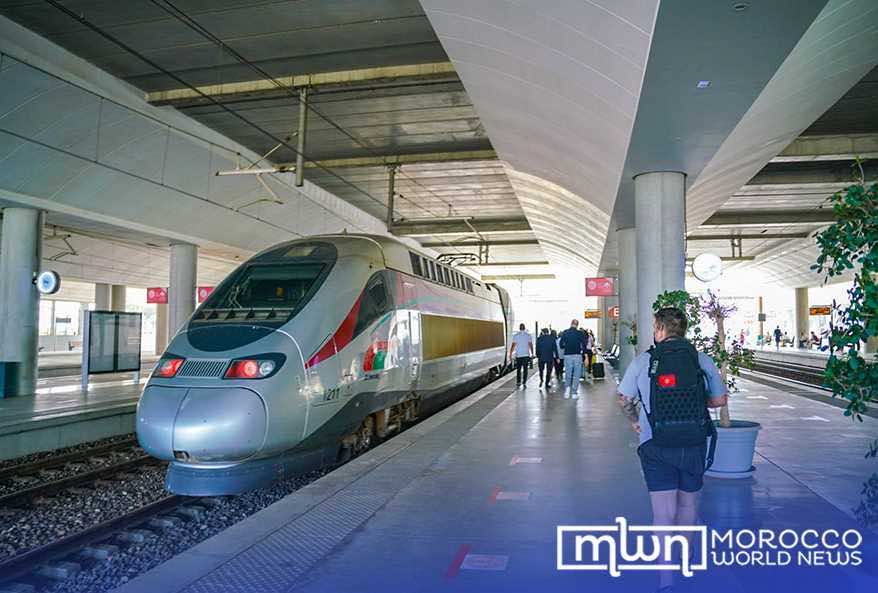
However, in 2018, Morocco’s National Office of Railways (ONCF) inaugurated the continent’s first high-speed rail service, Al-Boraq. Morocco’s high-speed train runs from Tangier to Casablanca’s Casa Voyageurs train station. The train only stops twice (Rabat Agdal and Kenitra) and travels at speeds upwards of 310 kilometers per hour (192 m/ph). Although the tickets for a ride aboard Al-Boraq are slightly more expensive than the two other train types, it is highly recommended as it is Africa’s only high-speed train service and the kingdom has ensured that the experience is of the highest quality.
Air Travel
Morocco is over 2,000 kilometers long from the kingdom’s northern region of Tangier-Tetouan to the southern border with Mauritania. Travel by bus or train is not always a viable option. For those wishing to reach Morocco’s southern gems such as Agadir, Laayoune, or Dakhla, air travel is a great option. Morocco’s flag carrier Royal Air Maroc offers multiple daily flights to connect the farthest regions of the kingdom.
A flight from Casablanca’s Mohammed V Airport to Dakhla may cost around MAD 2000 ($223). Rather than drive for 19 hours across the Sahara, travelers will embark on a short, two and a half hour flight and reach Morocco’s southern pearl Dakhla.
When traveling in Morocco, you must take multiple factors into account. Regardless of budgetary restrictions, time constraints, or desired level of comfort, Morocco offers a mode of transportation for seasoned travelers and novices alike.