




















































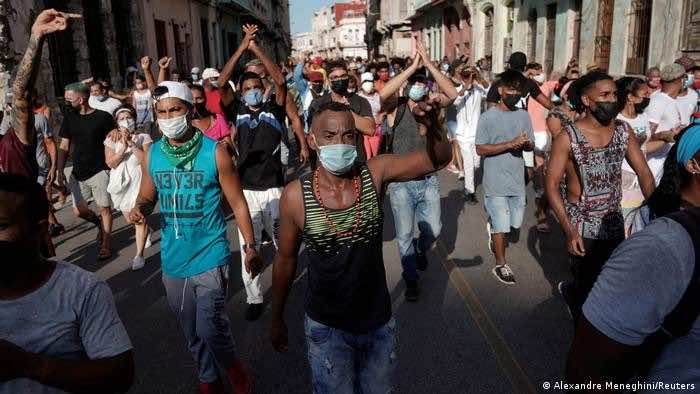
Rabat – One of the largest demonstrations in Cuban history took place this Sunday, July 11. Public anger over the recent decision to end the convertible peso system was primarily economically motivated, aggravated by the pandemic, and US sanctions
A large number of Cubans took to the streets to protest the economic despair they’ve been experiencing, along with their dissatisfaction with the way their government has been handling the COVID-19 pandemic.
For months now, the Cuban government has been lacking in foreign currency, making it difficult to import food and medicine. This resulted in shortages throughout the island, and a surge in price for basic consumer goods.
The country’s dire economic situation is only exacerbated by the remnants of the Trump administration.
The previous US administration reinstated the island on the State Sponsors of Terrorism list, reversing Barack Obama’s decision to exempt it from the list in 2015.
Trump also reversed many of Obama’s policies that laid the groundwork for normalizing diplomatic ties with Cuba.
Over the span of four-years, the Trump administration imposed 240 measures against Cuba, including the banning of American cruise ships that uses Cuba as a port of call, blacklisting several Cuban companies and business owners, prosecuting foreign companies operating in Cuba, and limiting the ability for Cubans working abroad to send money back home.
This last sanction in particular makes it impossible to send remittances to the island, contributing greatly to the unfortunate economic hardships many Cubans are complaining about today.
In addition to the foreign factors affecting the Cuban economy, the pandemic had halted all touristic activity, resulting in a crisis within the vital sector.
Back in January of this year, Cuba formally ended its dual currency system, devaluing the peso resulting in prices to surge.
Protesters are demanding better living conditions, after months of crisis.
The US House Democrats are urging Biden to lift Trump’s sanctions on Cuba to elevate some of the pressure faced by the Cuban people.
Cuban president Diaz-Canel called for caution among the Cubans on Monday, saying “we will avoid revolutionary violence, but we will repress counter-revolutionary violence.”
Government supporters held demonstrations on both Sunday and Monday, with occasional violent clashes between the rwo parties.