Rabat – Morocco’s Tangier Med has announced that port passage formalities for import and export container activities and international road transport (TIR) trucks will be fully dematerialized starting from November 15.
Operators can now complete the formalities of the port passage online and file the necessary documents with the services responsible for the management of Import-Export activities, said Tangier Med in a statement.
Users can access the service from the “Port Community System” of Tanger Med’s site that is accessible on all electronic devices.
The platform offers a range of operational services such as traceability of freight units, remote billing, and online payment.
Tangier Med indicated that the total dematerialization of the port passage will become “mandatory” by February 15, 2022.
As part of the platform’s test phase this year, Tangier Med supported several operators who have signed up to participate in the digitization process to carry out their formalities online.
Tangier Med’s statement noted that the port is committed to continue providing support to all operators wishing to benefit from the new service, mainly through training sessions and local support to make the transition phase a success.
The statement added that the total dematerialization of port passage for imports and exports makes it possible to streamline operations and guarantee a high level of security of the flow of goods.
The platform is also designed to meet customer expectations and strengthen transparency and predictability in terms of logistics competitiveness.
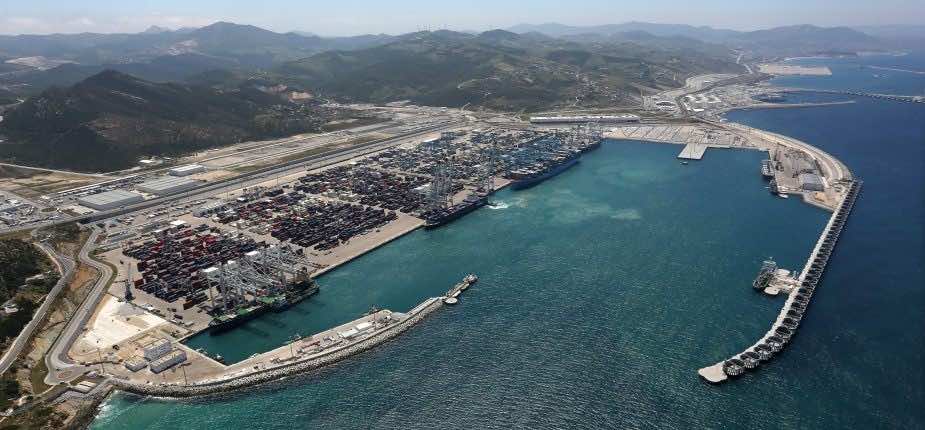
According to Lloyd’s Ranking List of the world’s best 100 ports in 2021, Morocco is leading the way in the African continent with the major trade hub Tangier Med.
Tangier Med Port was ranked 25th worldwide, surpassing several established international ports such as the Piraeus Port in Greece, the Port of Valencia and the Port of Algeciras in Spain.
The Tangier Med Special Agency occupied the top of the list of ports in Africa for the fourth consecutive year due to the port’s strategic location, trade activities, and pivotal role as a gateway to Africa for European investors.