Rabat – Morocco’s Mohammed VI Polytechnic University (UM6P) is organizing on March 9 and 10, the 12th edition of the Arbois Round Tables, which features multidisciplinary scientific conferences on the strategic, economic, environmental, and health related issues of food security.
Food security is becoming an alarming issue worldwide that affects vulnerable households in almost every country. The COVID-19 pandemic, which slowed down the global economy and created severe supply chain disruptions, has further exposed more people to food insecurity.
The two-day event focuses on food insecurity as a main issue that holds many nations from achieving sustainable development.
Several international panelists debated over food production, the impact of global warming on agriculture, water, and renewable energies, as well as available agricultural techniques that allow healthier nutrition.
Themed “Feeding the world: the challenges and the limits,” the renowned experts used the first day of the event to highlight the latest scientific advances in their respective fields, to promote innovation and scientific research as means to ensure sustainable agriculture.
Initially held at Aix-Marseille University, this constitutes the first of the Arbois Round Tables to be held in an African country. The conferences encompass a think tank of approximately 40 leading figures in research and development.
“Organizing the 12th edition in Morocco symbolizes the desire of the Arbois Round Tables to open up to an African continent in full scientific, cultural and economic emergence, for which sustainable nutrition remains a major goal for development,” the UM6P said in a statement.
With much more uncertainties identified in times of COVID-19 that lead to severe food insecurity, the UM6P calls for “strengthening communication between the scientific community and the public” in search for answers and solutions based on science.
Sustainable agriculture at the core of UM6P’s research program
In a technology-driven world, research and innovation are becoming an important tool to strengthen agricultural practices aimed at ensuring food sustainability.
The UM6P has put sustainable agriculture at the core of its research and innovation system since the university’s 2017 inauguration by King Mohammed VI.
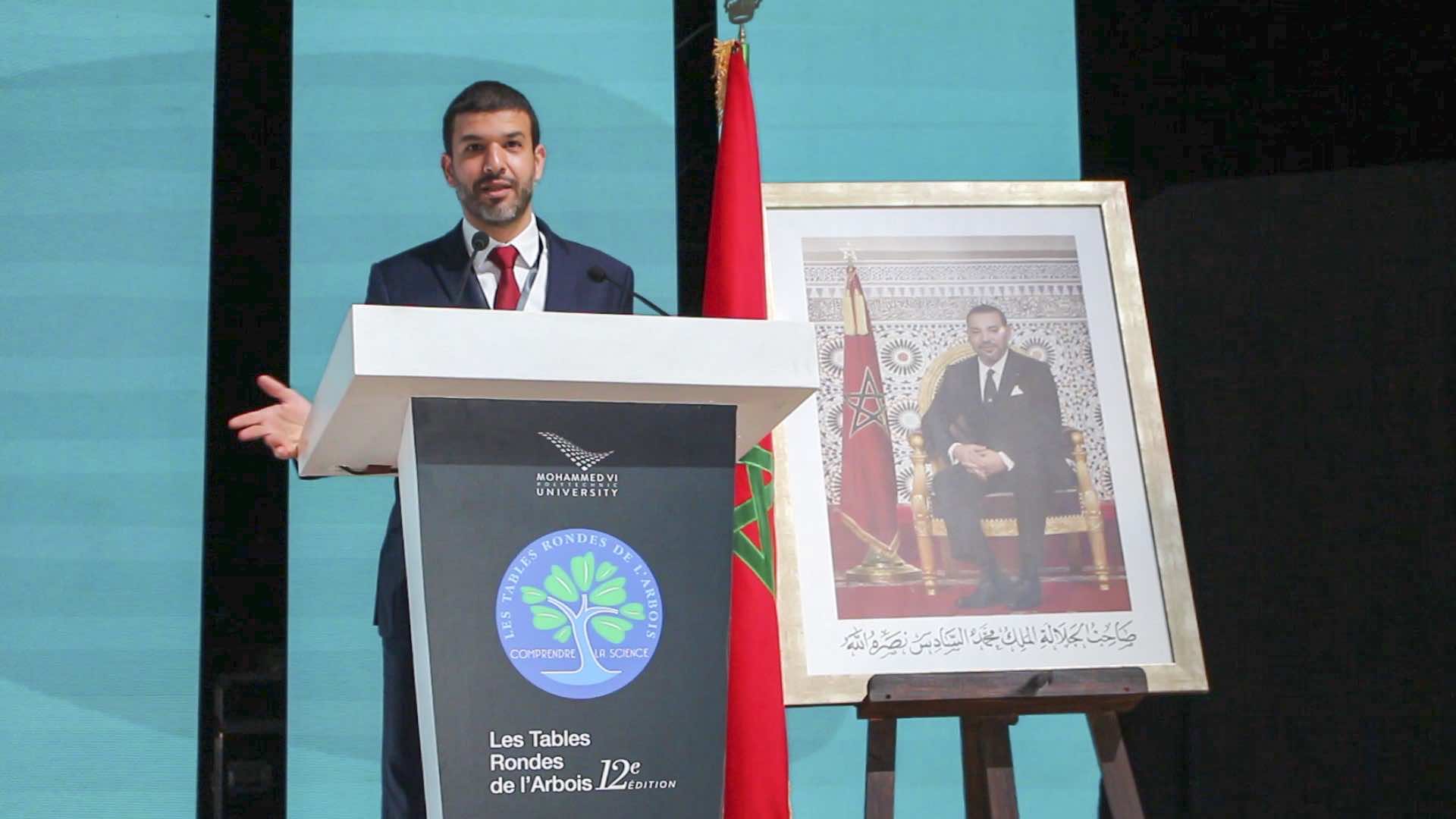
In his opening speech, UM6P President Hicham El Habti stressed that the global economy is experiencing a surge in the prices of basic food products, with their production being a major challenge to meet the needs of the growing global population.
“Food security is the sinequanone condition for any development model. Besides production, it is necessary to tackle nutrition as well, which can be the most intersectoral development issue that exists as it involves a plethora of ecosystems that are difficult to dissociate from each other,” El Habti said.
With agriculture being a pivotal economic activity that transforms economies to reach several goals such as ensuring food security, it is a key element to improve nutrition.
In his speech, El Habti highlighted commitments by the scientific and international community to achieve the sustainable development goals (SDGs), recalling the 2020 UN Food Systems Summit and the COP26 summit that took place last year to accelerate innovation to tackle climate change, agriculture, and other persisting challenges.
“Africa’s sustainable agriculture features among the central elements of the UM6P research and innovation system,” El Habti noted. He added that UM6P has created laboratories, developed agritech platforms in Morocco, and supported several agricultural startups to strengthen the agricultural ecosystem.
Organizing the Arbois Round Tables testifies to UM6P’s continuous commitment to further boost research, innovation, and international academic cooperation to ensure a strategic sustainable development and improve the agricultural sector in Morocco and across Africa.
In a statement to Morocco World News, UM6P’s president underlined the pivotal role of the university’s experimental farm, in which researchers and students are able to develop innovative fertilizers and technologies while carrying out planting tests.
“Our aim is to share our innovation with farmers in Morocco and beyond. On top of research and development (R&D), we focus on building a close connection with farmers to learn more about their concerns so we can niche our R&D and innovations to respond to their needs,” El Habti added.
Food insecurity and agricultural challenges
A growing world population leads to increased demand for agricultural products.
For Alan Kirman, professor at the School for Advanced Studies in the Social Sciences (EHESS) in France, “global finance that was hit hard by the COVID-19 crisis highlighted the interconnectedness of the human-made systems on which we rely on such as food supply, global value chains, and health systems.”
Alongside the farm sector that was severely impacted amid the healthcare crisis, Kirman highlighted that fishing, an alternative source of food, continues to be impacted by global warming.
Climate change has caused the redistribution of marine fish stocks, which has negatively impacted equitable distribution of food provisioning services, he explained.
Of precipitation and water availability, they have witnessed several changes due to planned infrastructure projects such as hydropower in some regions, Kirman noted.
Meanwhile, Roberto Berutti, Member of Commissioner Janusz Wojciechowski’s Cabinet to the European Commission stressed that the European Union is actively engaged in sustainability and international cooperation.
“Agriculture’s missions consist of feeding citizens all over the world and ensuring food security for future generations,” Berutti said.
In a panel “Research and Innovation for new agricultural practices as seen by the EU,” Berutti underlined the necessity to boost collective efforts to ensure the viability for ecological systems for the long term, which agriculture relies on a lot.
The panelists reached a consensus that research and innovation are the available solutions to accelerate progress towards a sustainable and resilient future of agriculture and food, which can also contribute to reducing poverty in many vulnerable countries.