

























































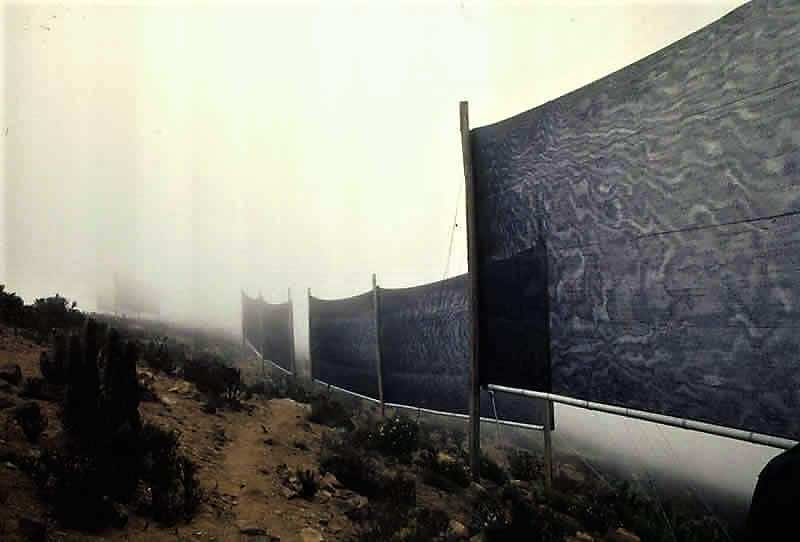
Rabat – A short documentary by online magazine Kcet has highlighted the benefits of “fog harvesting” projects in Morocco. The practice of harvesting fog through finely weaved nets is allowing residents of Id Soussane to perform basic water-intensive tasks such as washing clothes and cleaning their houses purely from water resources generated through the innovative technique.
“They don’t have to worry about water,” Id Soussane resident Khadija Ghouate told the documentarians as she emphasized that basic tasks requiring water, such as doing laundry and mopping floors, were considered a rarity in the village because of a lack of water.
Read also: British Startup to Build Carbon Capture Farm in Morocco
Because of the severe lack of water in the area, residents had to wash clothes only once a year when water was available from a local river that stood dry most of the year. The time and labor-intensive practice of making trips to wells to gather much-needed water is now mostly obsolete, Ghouate highlighted.
Water has been a primary cause of poverty and insecurity in the region, stated Jamila Bargach who is the director of the innovative Dar Si Hmad program. Her program intends to bring sustainable livelihood to underserved areas, promote education, and alleviate poverty.
Before fog harvesting was introduced in the rural community, many people would often go thirsty, prioritizing water for their children, elderly family members and livestock.
Given the worsening conditions as a result of climate change, the local community was provided with a water harvesting program, which uses nets to catch water droplets from the air, and preserve the moisture for human consumption. The low-tech solution makes use of the prevalence of fog in many mountainous areas that contain plenty of water.
Read also: Xlinks to Build Morocco-UK Undersea Cable in Scotland Factory
The practice of fog harvesting is cheap, requires little technical knowledge and has practical applications especially for remote communities. As Morocco seeks to alleviate fears of drought and rising temperatures, innovative solutions such as the project in Id Soussane shows that providing practical solutions to key problems does not have to require billions of dollars.