 Join on WhatsApp
 Join on Telegram
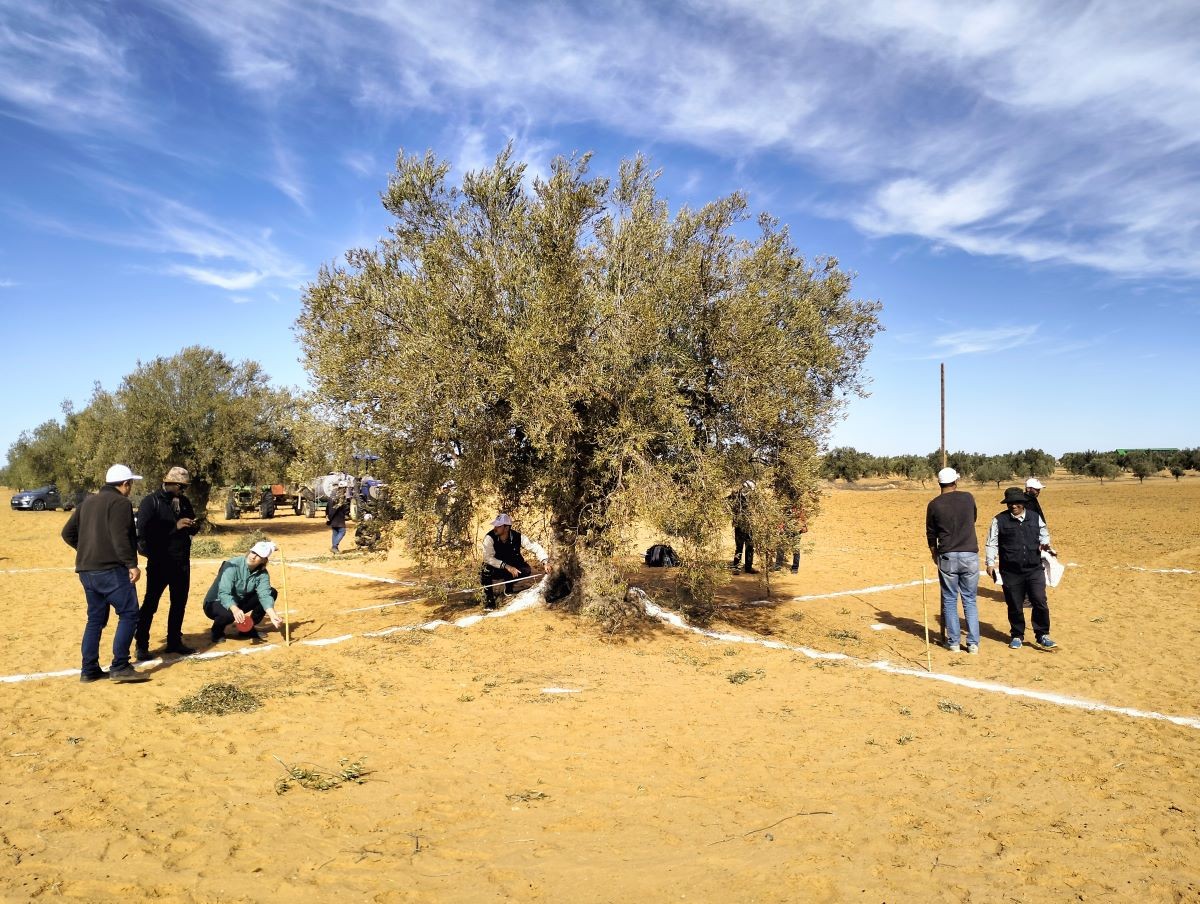
Rabat – A team of scientists and researchers from the African Plant Nutrition Institute (APNI) and the Tunisian Olive Institute (OIT) studied biomass accumulation and carbon sequestration of a century-old olive tree in Tunisia.
The research, carried out under APNI’s “African Tree Crop Systems (ATCS)” and “Resilient Agriculture for African Dryland (RAFAD)” initiatives, systematically gathered data from the tree’s roots, branches, leaves, and other parts to analyze carbon and nutrient content.
While further studies remain to be conducted in other regions, a press release shows confidence that the plantations have a positive effect on the soil and climate.
“The determination of the climate change mitigation role of these centenary trees … is very important to increase awareness amongst stakeholders on the importance of maintaining these plantations and to propose strategies that can further lengthen their viability and sustainability,” said Dr. Ajmi Larbi, Head of the Integrated Olive Production Laboratory at OIT.
The researcher also added that the trees grew in arid environments with less than 200 mm of precipitation, and have mitigated climate change either by storing carbon in their structures, or preventing soil erosion and desertification.
The research came about when OIT put forward plans to extract the tree, giving the APNI scientists a rare opportunity to study its roots and structures, and generate data that would be impossible to obtain otherwise.
Read also: APNI, INRA Organize Workshop for Olive Trees Production in Morocco
The data generated through the project is also expected to be of use when studying ways to strengthen crops throughout North Africa, RAFD leader Hakim Boulal suggested.
Future work is now planned to complement the project’s insights, particularly through the studying of younger trees. The results of the study are also expected to be of use in improving nutrient management strategies for similar crops throughout the North Africa region.