Join on WhatsApp
 Join on Telegram
Rabat – The handicraft industry is an important lever to preserve the tangible and intangible heritage of Morocco, says Aziz Akhannouch, Morocco’s Head of Government.
While delivering a speech at the eighth session of the National Week of Handicraft Industry on Wednesday in Casablanca, Akhannouch shed light on the important role the industry plays in safeguarding Morocco’s cultural heritage.
The Head of Government highlighted the pivotal role of traditional industries in the nation’s economic fabric and social cohesion.
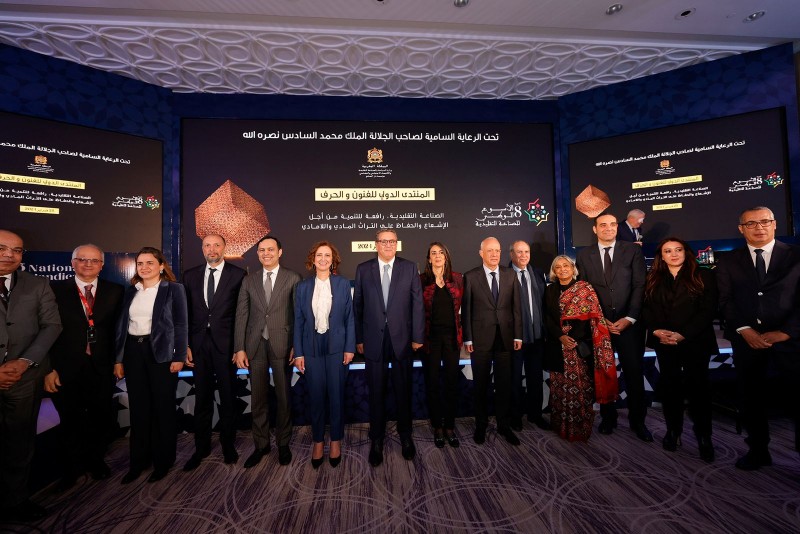
Collective picture on the sidelines of the event
Noting the sector’s significant contributions to employment and GDP, Akhannouch emphasized the importance of preserving and promoting traditional craftsmanship as a driver of sustainable development.
The establishment of the National Register of Traditional Industry (RNA) was highlighted as a landmark achievement, he recalled. With over 389,000 registered craftsmen, the RNA serves as a vital tool for promoting collaboration and implementing targeted development programs.
In addition to economic considerations, the Head of Government reiterated the government’s dedication to enhancing social protections for artisans.
The industry is a “real driver for the development of the attractiveness of the Moroccan tourist destination, where about 10% of tourism revenues in hard currency result from purchases of traditional industry products,” he said.
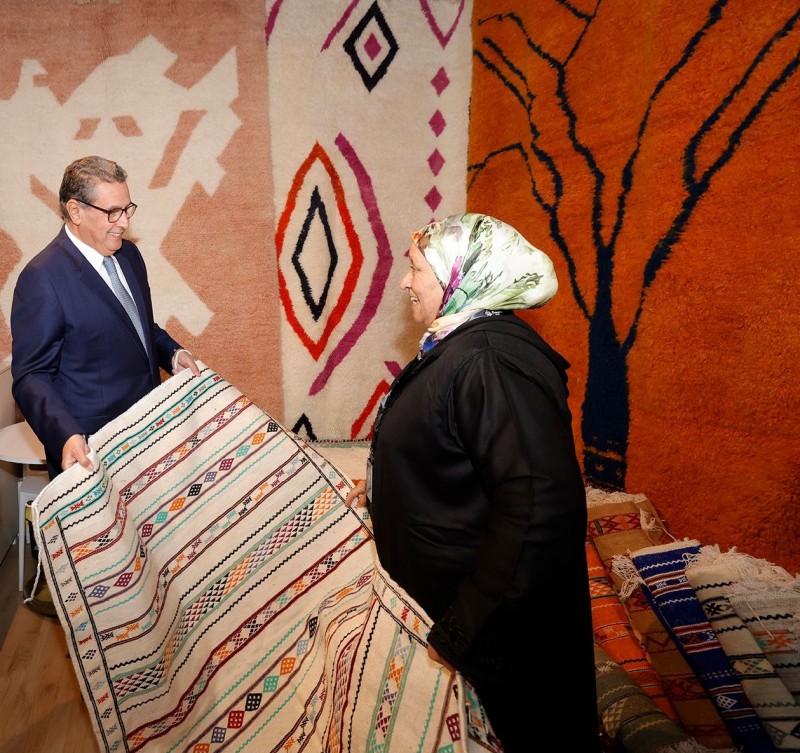
Akhannouch taking a tour in the handicrafts exhibition
The recent expansion of mandatory health insurance coverage to over 641,000 traditional craftsmen represents a significant milestone in ensuring the well-being and livelihoods of workers in the sector.
Regarding the state’s efforts to support the sector, Akhannouch explained that “the government has worked on refining and enhancing support mechanisms for sector stakeholders and developing new programs for artisans.”
According to Akahnnouch, the programs “aim to assist artisans to improve their productivity, understand markets, and guide them towards exportation.”
In addition, the iniatives “encourage the establishment of associations and professional clusters, as well as the creation of centers of excellence for various branches of traditional industries such as weaving and pottery,” he added.
Reflecting on the remarkable growth of traditional industry exports, which surpassed MAD 1 billion ($98 million) in both 2022 and 2023, the Head of Government commended the resilience and ingenuity of Moroccan artisans.
“The sector, with its significant social dimension, contributes approximately 7% to the gross domestic product and employs about 20% of the active population,” he noted.
Looking ahead, the Akhannouch outlined key priorities for advancing the traditional industry sector, including promoting gender equality, fostering youth engagement, and enhancing market access for artisans.
By leveraging innovative partnerships and harnessing technological advancements, Morocco aims to position its traditional industries as engines of inclusive growth and prosperity.
Read Also: Moroccan Exports of Handicrafts Increased by 21% in July 2022