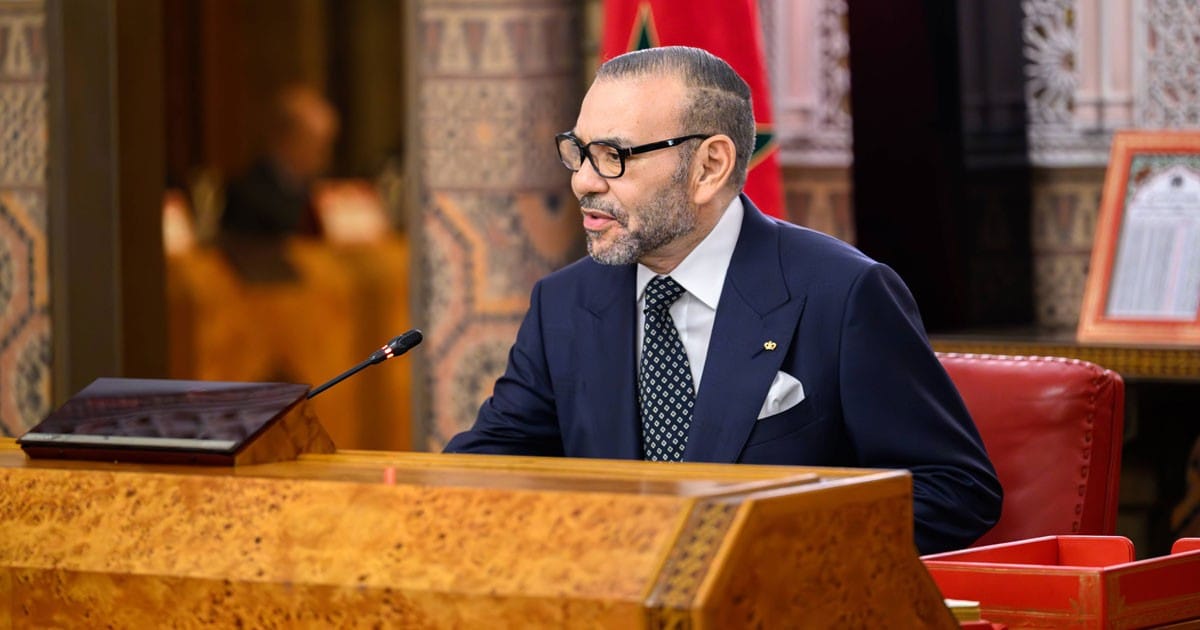
King Mohammed VI chaired today at the Royal Palace in Casablanca a council of ministers focused on adopting the strategic guidelines of the country’s shareholding policy, a draft organic law in addition to several draft decrees concerning the military sector.
The meeting also witnessed appointments to senior positions.
Minister of Economy Nadia Fettah El Alaoui presented the shareholding policy guidelines, highlighting that the reform aims to restructure the public portfolio, improve its management, and implement key sector reforms to improve public service quality and accelerate the development of the State’s shareholding policy.
A statement from the royal cabinet said that this newly-introduced policy covers seven guidelines, including strengthening national sovereignty through supporting different vital sectors as health, water; and food security.
The policy also seeks to promote continental and international integration to meet geostrategic challenges and enhance South-South cooperation, especially with African Union countries.
The guidelines’ premier goal is to encourage private investment through cooperation with the private sector as well as boosting economic competitiveness and promoting productive employment.
The rest of guidelines cover ensuring territorial equity, promoting responsible natural resource management, strengthening resilience to climate change as well as improving government and public establishments performance.
Following the adoption of the guidelines, the council also approved a draft organic law amending the regulation on senior appointments.
The draft law proposes the addition of several establishments to the list of strategic public offices, including Grand Atlas Development Agency, the High Authority of Health, Territorial health groupings, among several others.
The proposal stipulates the removal of the higher institute of magistrate from the list of strategic public establishments
The council approved four decrees relating to the military sector in line with King Mohammed VI instructions.
The approval includes a draft decree on the establishment of the creation of two defense industrial acceleration zones aimed at setting up industrial zones to accommodate defense industries related to defense and security equipment, weapons and munitions.
The military related decrees also include amending the special status of teaching researchers in medicine, pharmacy, and dentistry to emphasize scientific excellence and streamline the professional promotion process.
One of the decrees also seeks creating a military attache post at Morocco’s embassy in Brasilia.
The council witnessed appointments; including appointing Mustapha Fares as Director General of the National ports Agency (ANP); Adil El Fakir as Managing Director of the National Airports Office; Tarik Moufaddal as Chief Executive Office of the Moroccan Agency for sustainable Energy (MASEN); and Mohamemd Cherkaoui Eddeqaqi as Managing Director of Moroccan National Highway Company.