 Join on WhatsApp
 Join on Telegram
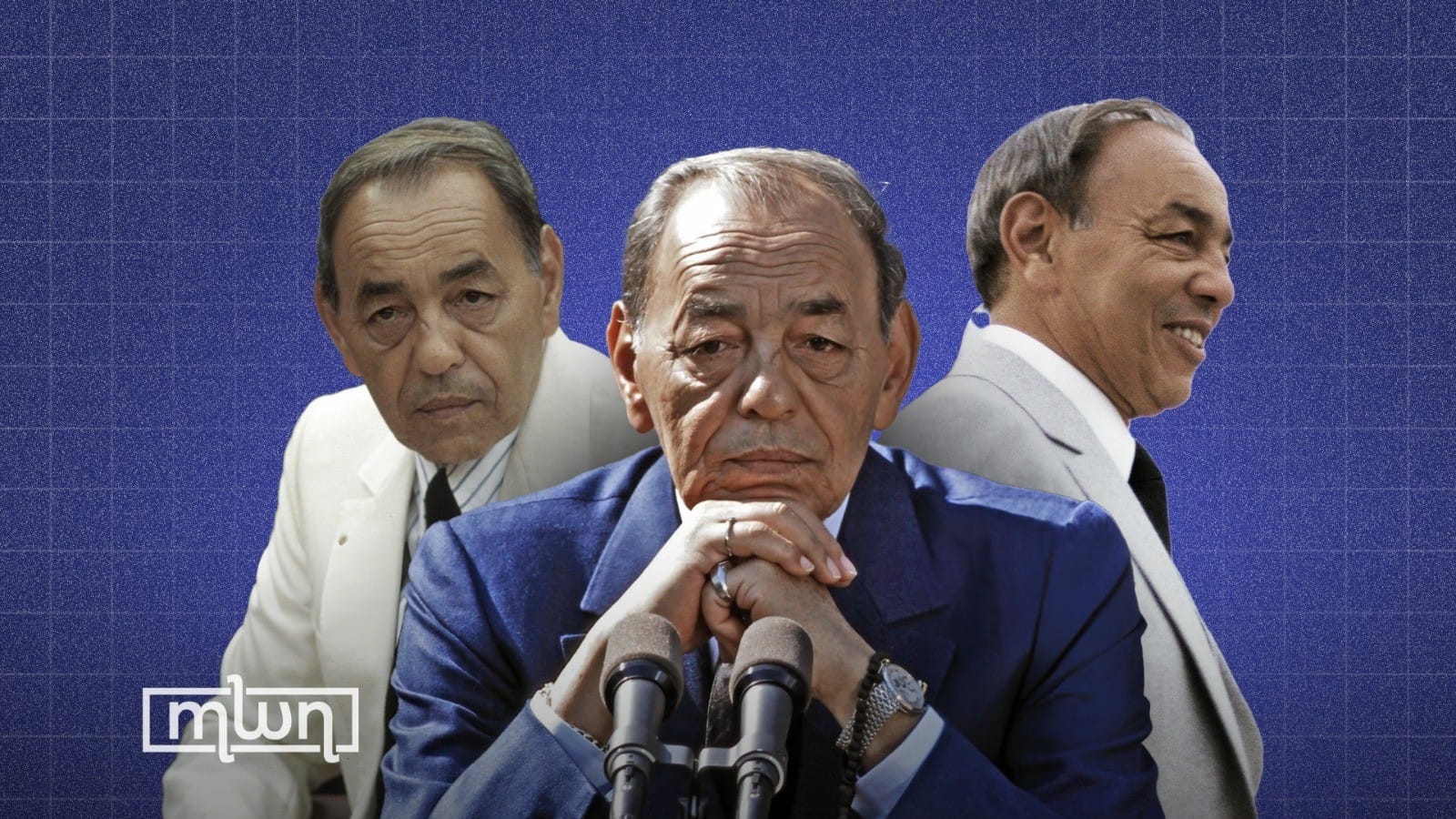
Marrakech – On this day, as Morocco commemorates the 25th anniversary of the passing of King Hassan II, we remember a remarkable leader who left an indelible mark on the nation.
Described as the architect of the victorious Green March, the builder of dams, and the unifier of the country, King Hassan II’s legacy extends far beyond the realm of politics.
As he once said, “Le style, c’est l’homme” (The style is the man), and indeed, his impeccable style and commanding presence will forever remain etched in the memories of the Moroccan people.
Early life and ascension to the throne
Born on July 9, 1929, in Rabat, Moulay El-Hassan, who would later be known as King Hassan II, was the eldest son of King Mohammed V and his second wife, Lalla Abla.
During his youth, the young prince, growing up during the French protectorate, received a diverse education, studying under Muslim scholars at the royal palace before attending the Imperial College in Rabat.
In 1947, he obtained his baccalaureate with honors and pursued higher education between Morocco and France, earning a degree in public law from the University of Bordeaux in 1951.
In 1953, the French colonial authorities deposed King Mohammed V and exiled the royal family, first to Corsica and then to Madagascar.
Prince Moulay El-Hassan accompanied his father in exile, serving as a vital link between the Moroccan people and the outside world.
He played a crucial role in the negotiations that led to the return of his father to Morocco in 1955 and the country’s subsequent independence in 1956.
Following Morocco’s independence, Prince Moulay El-Hassan was appointed Chief of Staff of the Royal Moroccan Army in 1957 and later became the Commander-in-Chief.
In July 1957, he was officially designated as the Crown Prince and served as Deputy Prime Minister and Minister of Defense.
Upon the sudden death of his father in 1961, Moulay El-Hassan ascended to the throne as King Hassan II, becoming the 17th monarch of the Alaouite dynasty.
Domestic challenges and reforms
King Hassan II’s reign was marked by periods of political turbulence and domestic challenges.
In the early years, the country faced social unrest, student protests, and even assassination attempts against the King.
However, the monarch aptly responded with a combination of political maneuvering, economic reforms, and gradual democratization.
King Hassan II introduced Morocco’s first constitution in 1962, which established a constitutional monarchy and a multi-party system.
Throughout his reign, King Hassan II worked to modernize Morocco’s infrastructure, expand industries, and improve the lives of his people.
He initiated large-scale projects such as the construction of dams, the development of the mining sector, and the establishment of schools and universities.
He also sought to unite the country by promoting rural development and the integration of various ethnic and cultural groups.
Foreign policy and Western Sahara dispute
King Hassan II played a significant role in shaping Morocco’s foreign policy and international relations.
He was a strong advocate of Arab and Islamic causes, chairing the Al-Quds Committee and hosting several Islamic Summit Conferences in Morocco.
He also maintained close ties with the West, particularly France and the United States, while navigating the complex geopolitical landscape of the Cold War era.
One of King Hassan II’s most notable foreign policy achievements was his role in the Middle East peace process.
He acted as an intermediary between Egypt and Israel, facilitating secret meetings that paved the way for Egyptian President Anwar Sadat’s historic visit to Jerusalem in 1977.
He also hosted in Morocco Israeli leaders, such as Prime Minister Shimon Peres, demonstrating his commitment to dialogue and peaceful resolution of regional conflicts.
The Western Sahara dispute was a defining issue during King Hassan II’s reign.
In 1975, he organized the Green March, a mass mobilization of 350,000 Moroccan civilians who crossed into the disputed region in southern Morocco to assert the country’s sovereignty over the territory following Spain’s colonial withdrawal.
In August 1974, Spain declared its intention to hold a self-determination referendum in the first half of 1975. Morocco protested this decision and brought the issue before the International Court of Justice in The Hague.
Spain had no legitimate grounds to organize such a plebiscite, Morocco protested, arguing that the Western Sahara region had historical ties to the Kingdom of Morocco prior to Spanish colonization.
The ICJ acknowledged the existence of legal ties of allegiance between some Sahrawi tribes of the territory and Morocco.
In his memoir, “The Memory of a King,” Hassan II recounted how, following this, the idea for the march came to him in the middle of the night in the summer of 1975, envisioning a peaceful mass gathering in the form of a march to reclaim the Sahara.
In a speech on October 16, 1975, King Hassan II called upon Moroccans to participate in the Green March.
“We must march from the north of Morocco to its south, and from the east of Morocco to its west,” he said. “My dear people, we must move as one man, in order and discipline, to join the Sahara and reunite with our brothers in the Sahara.”
The response from Moroccans was overwhelming, with people from all over the country registering to participate in the march.
The number of participants amounted to 350,000 volunteers, with women making up ten percent of the total.
On November 5, 1975, King Hassan II delivered another historic speech, broadcasted on radio and television, announcing the start of the Green March: “Tomorrow, God willing, you will cross the border. Tomorrow, God willing, the Green March will begin. Tomorrow, God willing, you will tread upon a land that is yours, touch the sands that are yours, and embrace a land that is part of your dear homeland.”
This speech remains etched in the heart and mind of every Moroccan, marking a pivotal moment in the nation’s history and the beginning of a march that is celebrated as a national holiday each year.
This led to a prolonged conflict with the Polisario Front, a separatist group backed by Algeria and, at the time, also supported by Libya.
Despite the ongoing dispute, King Hassan II worked towards a peaceful resolution, agreeing to a ceasefire with the Polisario Front in 1991 and supporting a UN-sponsored referendum to determine the future of the Western Sahara.
Legacy and succession
King Hassan II’s legacy is one of a visionary leader who navigated Morocco through challenging times, working tirelessly to modernize and unify the country.
He was a skilled diplomat who played a crucial role in regional and international affairs, particularly in the Middle East peace process.
Upon his passing on July 23, 1999, King Hassan II was succeeded by his eldest son, Crown Prince Mohammed, who ascended to the throne as King Mohammed VI.
The transition of power was smooth, in accordance with the Moroccan constitution, ensuring the continuity of the Alaouite dynasty and the stability of the kingdom.
As we commemorate the 25th anniversary of King Hassan II’s passing, we remember a leader who left an indelible mark on Morocco and the world.
His vision, style, and unwavering commitment to his country’s progress and unity continue to inspire generations of Moroccans.
Through his diplomatic efforts, economic reforms, and gradual democratization, King Hassan II laid the foundation for a modern, prosperous, and stable Morocco.