
 Join on WhatsApp
 Join on Telegram
Rabat – Korean authorities said on Monday they had initiated a formal investigation into messaging platform Telegram for allegedly facilitating the distribution of deepfake pornography, including explicit AI-generated images of minors.
The Seoul National Police Agency (NPA) began the probe last week, focusing on Telegram’s possible complicity in these crimes. Woo Jong-soo, head of the investigation bureau at the NPA, said during a press briefing that the encrypted nature of Telegram has allowed it to become a haven for illicit activities, with the platform remaining largely unresponsive to previous police requests for cooperation in other investigations.
“Telegram has been non-responsive to our previous requests for account information during investigations of earlier Telegram-linked crimes,” he said, France 24 reported.
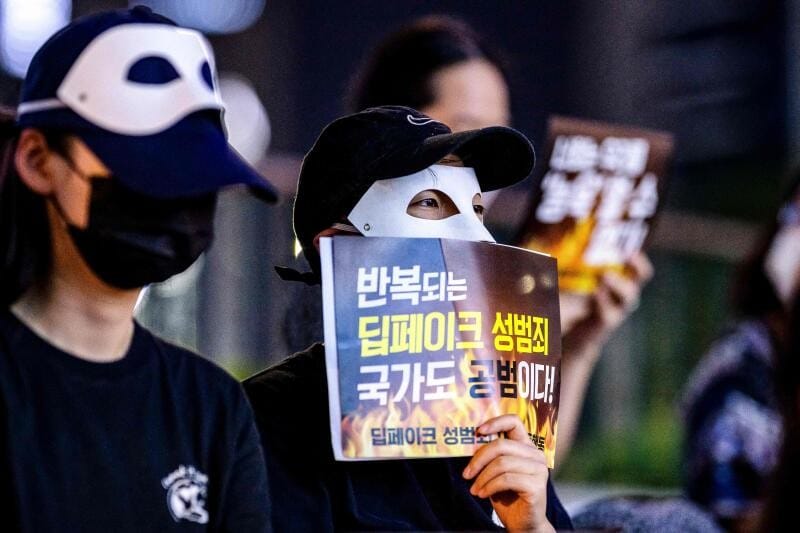
Deepfake pornography involves superimposing the faces of victims onto explicit images or videos using AI technology, often without their consent. Recent reports revealed that university students had been operating illegal Telegram chat rooms, with some reportedly having hundreds of thousands of members, to share deepfake pornographic material of female classmates.
The investigation gained urgency after Telegram’s founder, Pavel Durov, was arrested in France last month for charges related to his alleged failure to curb extremist and illegal content on Telegram.
His arrest has reignited scrutiny surrounding the platform’s accused history as a conduit for various cybersex crimes in South Korea, including the notorious “Nth Room” case, where women and minors were coerced into sharing explicit content that was then circulated in Telegram chat rooms.
However, Durov’s arrest also sparked uproar on social media for those defending Telegram, assering that his detainment is a violation of freedom of speech.
Within this regard, Telegram became a widely used messaging service in South Korea during two major migration waves in 2014 and 2016, prompted by concerns over government surveillance of domestic messaging apps like KakaoTalk, according to Korean outlet Hankyoreh.
Despite its popularity, Telegram’s strong encryption and resistance to cooperation with law enforcement have led to it being criticized as a “cesspit” for cyber sex crimes, the report added.
Recent reports have indicated that graduates of Seoul National University used deepfake technology to create and distribute explicit videos of their former classmates on Telegram. The ensuing public outcry led to the current investigation, but the police have faced challenges due to Telegram’s servers being located abroad and its refusal to share user data.
South Korea’s legal framework, including the “Nth Room Prevention Act” enacted in December 2021, requires internet service providers to remove sexually offensive material. However, the law does not apply to Telegram due to the private nature of its chat rooms, complicating efforts to hold the platform accountable.