 Join on WhatsApp
 Join on Telegram
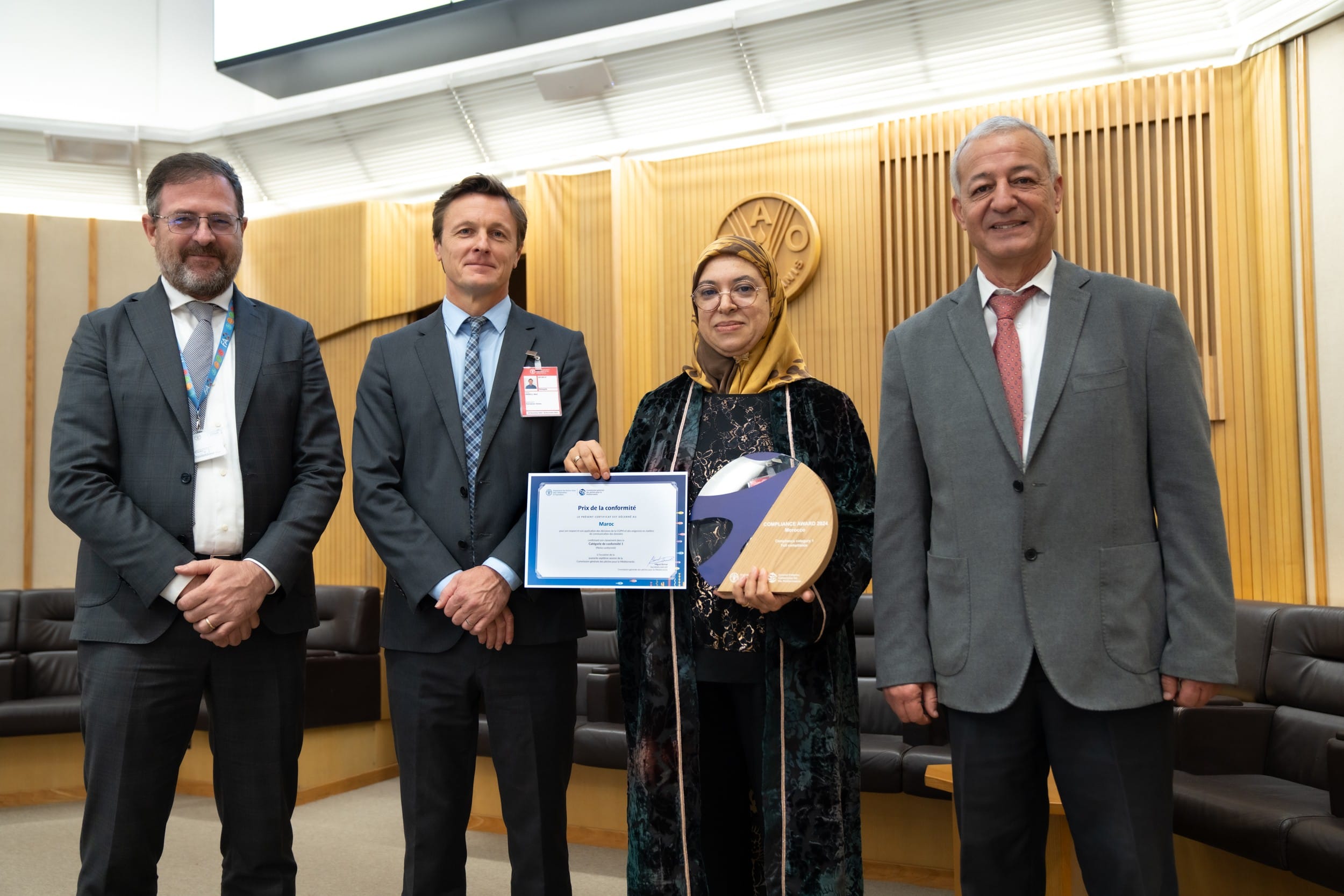
Rabat – Morocco has been recognized as a regional leader in sustainable fisheries, earning the prestigious “Compliance Award” for its successful implementation of key policies from the General Fisheries Commission for the Mediterranean (GFCM) into national legislation.
This recognition, presented at the 47th session of the GFCM in Rome by the UN Food and Agriculture Organization (FAO), reflects Morocco’s proactive commitment to sustainable practices in the Mediterranean and the Black Sea.
Alongside Morocco, 19 other countries and the European Union (EU) took impressive steps to promote sustainability in fisheries and aquaculture by adopting 17 key decisions, including 12 binding recommendations.
The GFCM session brought together members to review and approve proposals based on the latest scientific research, further advancing regional sustainability efforts.
Miguel Bernal, GFCM’s Executive Secretary, noted the collaborative effort in his remarks, calling the session “a culmination of a year of intensive work” looking to address the challenges facing the fisheries and aquaculture sectors.
Meanwhile, Mohammed Malouli Idrissi, Director of Morcco’s Tangier Center at the National Institute of Fisheries Research, affirmed that the newly adopted decisions “commit this sector further to sustainability so it can continue playing a vital role in ensuring livelihoods, food security, and nutrition in the Mediterranean.” Malouli Idrissi also serves as the Chair of the GFCM’s Scientific Advisory Committee on Fisheries,
Critical steps for sustainable fishing
Although the percentage of overfished stocks in the Mediterranean and Black Sea has fallen to its lowest level in a decade (below 60%), fishing pressure remains double the sustainable threshold. To combat this, the GFCM has implemented measures targeting key species such as European eel, red coral, European hake, and common spiny dogfish.
In the Black Sea, the group approved a modest increase in catch limits for turbot, a species that has shown significant recovery since a 2017 management plan boosted its biomass threefold.
Another notable decision was the creation of a protected area in the Adriatic’s Otranto Channel, where bottom trawling is prohibited to safeguard vital marine ecosystems, including bamboo coral and shrimp habitats.
This new zone, the eleventh regulated by the GFCM, underlines the commission’s commitment to both marine biodiversity and the economic stability of the fishing sector.
The GFCM session also focused on the challenges posed by climate change on sustainable aquaculture. To address this, members agreed to establish a regional network for monitoring aquatic diseases and introduced principles for responsible aquaculture investment, striving to bolster food security and attract greater investment in the sector.
Efforts to combat illegal, unreported, and unregulated fishing
The GFCM commended Morocco, along with Albania, Algeria, Egypt, Montenegro, Türkiye, and the EU, for their significant progress in combating illegal, unreported, and unregulated (IUU) fishing.
These nations have made considerable strides in revising their national regulations to directly address IUU practices, aligning their efforts with the GFCM’s Regional Action Plan. This alignment strengthens their legal frameworks and enhances compliance across the Mediterranean and Black Sea regions.
As part of its ongoing commitment to fight IUU fishing, the GFCM outlined additional measures to empower member countries to monitor compliance more effectively. These measures include improved inspection programs and using advanced vessel monitoring systems. These systems are designed to improve transparency and ensure stricter enforcement of fishing regulations.
Through these efforts, the GFCM aims to create a more robust system for managing and protecting marine resources, by fostering greater cooperation among member states in the fight against IUU fishing.
The annual session set the stage for continued regional collaboration to build a resilient, sustainable future for the fisheries and aquaculture sectors.
With Morocco’s recognition as a leader in compliance and sustainable practices, the country remains a key player in shaping the future of Mediterranean and Black Sea fisheries.
Read Also: Morocco, Russia Explore Fisheries Cooperation Opportunities