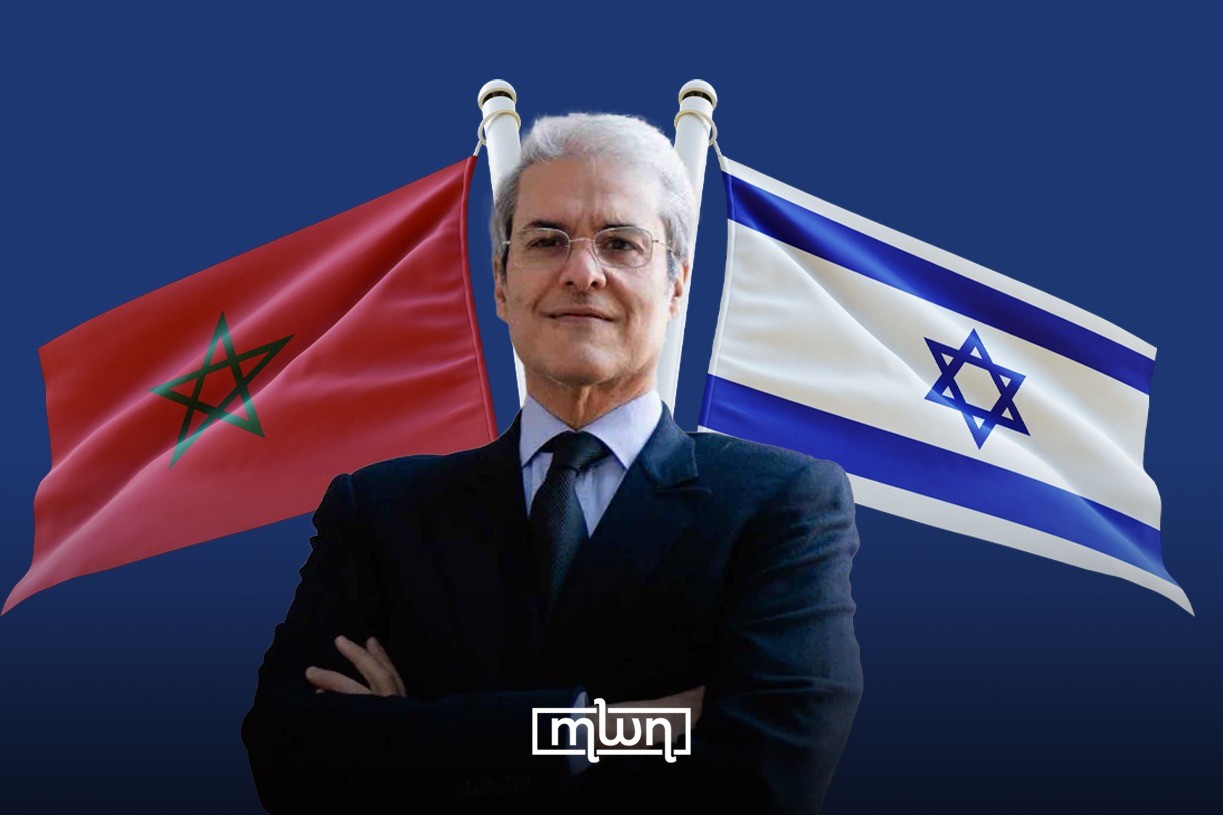
Doha – In a recent interview with France 24’s flagship program “TÊTE À TÊTE,” Moulay Hicham El Alaoui, cousin of King Mohammed VI and lecturer at the University of Berkeley, described Morocco’s normalization of relations with Israel as “a problem” in light of the ongoing genocide in Gaza.
“It’s a problem because I think there’s a differentiation between embracing our Jewish citizens of Moroccan heritage because of their belonging to our country and having a general posture of tolerance towards Judaism,” Moulay Hicham stated during the December 4 interview.
“It’s another thing to support, or give legitimacy to a specific government that is on the far right and that is mistreating Palestinians in every sense of the word,” Moulay Hicham added.
The royal family member, acknowledging his position as “just one Moroccan among 40 million,” expressed his personal views on Morocco’s diplomatic stance with Israel, which was established in 2020 alongside similar US-brokered agreements by the United Arab Emirates, Bahrain, and later Sudan in 2021.
In response to growing concerns about these diplomatic ties, Moroccan Foreign Minister Nasser Bourita defended the kingdom’s position in a November 2 interview with Le Point.
“Morocco has strongly condemned, at the highest levels, Israeli attacks on civilians, hospitals, and schools, deeming them unacceptable,” Bourita stated, emphasizing that maintaining relations with Tel Aviv does not indicate endorsement of Israeli government actions.
“This approach should not be seen as abandoning the Palestinian cause. Morocco’s position on Palestine remains a priority,” Bourita added, noting Morocco’s significant Jewish heritage. Morocco was once home to a quarter million Jews, though today only 2,000 remain in the country, with about a million Jews of Moroccan origin now based in Israel.
The diplomatic discourse unfolds against the backdrop of an intensifying genocide in Gaza. According to the latest figures, more than 42,000 Palestinians, including over 13,300 children, have been killed, with 97,000 more injured since October 7, 2023.
In a landmark report released today, Amnesty International concluded that Israel is committing genocide against Palestinians in Gaza, documenting systematic destruction that experts say has occurred at an unprecedented level and speed in 21st-century conflicts.
Despite these tensions, Morocco has maintained its historical support for the Palestinian cause. Palestinian Foreign Minister Riyad Al-Maliki, speaking at the recent MEDays forum on December 1 in Tangier, praised King Mohammed VI’s commitment to Palestine through initiatives such as the Bayt Mal Al Quds Agency.
Morocco has also provided humanitarian aid to 2,000 families in Gaza and consistently advocated for a Palestinian state based on 1967 borders with East Jerusalem as its capital.
Moulay Hicham on democracy and Islam
In the same France 24 interview, Moulay Hicham, author of “Pacted Democracy in the Middle East: Tunisia and Egypt in Comparative Perspective,” offered comprehensive insights on democracy in the Arab world.
He argued that “the problem is not with Islam, but with the interpretation of Islam,” challenging Orientalist perspectives.
“Many orientalists see Islam as an ideology. Then there is no way to democracy. But if Islam is a faith and people live their faith in different ways depending on where they are in the world at different times in the world, then that becomes an entirely different system of religiosity,” he explained.
His comparative study of Tunisia and Egypt during the Arab Spring demonstrates how structural conditions shaped different outcomes. “In the case of Egypt, there was a disparity, disequilibrium between the Islamists and the secularists, and there was a presence of the army which distorted the political game,” he noted.
In contrast, Tunisia initially achieved relative success due to greater parity between political forces and the absence of a military equivalent to Egypt’s.
Addressing the current state of democracy in the region, Moulay Hicham emphasized that failures in democratic transitions were not due to inherent characteristics of Islam but rather because “the revolutionary forces or the forces of change have sat back and have just been content with watching the process unfold as observers and not participants.”
He also pointed to significant external influences, noting that “there has been enormous geopolitical intervention from certain Gulf countries that have made the process derail.”
When discussing monarchies in the region, he highlighted how each country’s specific circumstances, from hydrocarbon resources to regional conflicts, have shaped their political evolution differently.
Read also: Benkirane: ‘No Moral Justification’ for Morocco’s Ties with Israel Amid Gaza Genocide