
 Join on WhatsApp
 Join on Telegram
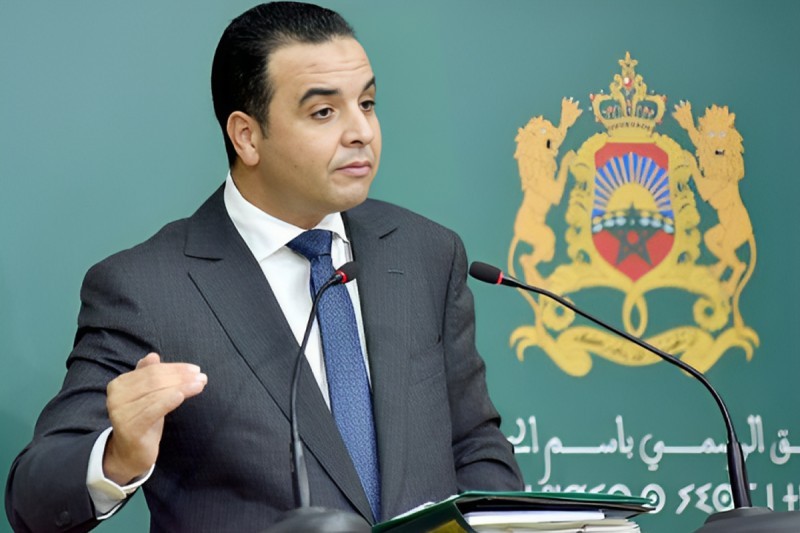
Rabat – During a press briefing following the weekly government council meeting on Thursday, government spokesperson Mustapha Baitas outlined the Moroccan government’s priorities, namely anti-corruption policies, public debt management, and investment expansion.
According to Baitas, 76% of the objectives outlined in Morocco’s National Anti-Corruption Strategy have been accomplished. He emphasized important initiatives aimed at improving transparency, including the adoption of the Public Services Code, the simplification of administrative procedures, and the introduction of new public procurement regulations.
On the economic front, Baitas reported that Morocco’s public debt has decreased from 71% to 69%. He attributed this progress to the government’s efforts in controlling the budget deficit and implementing structural reforms to stabilize the economy.
In terms of investment, Baitas revealed that the National Investment Commission approved projects worth MAD 200 billion ($19.6 billion) in 2024, with the creation of 82,000 expected jobs. He also noted that foreign direct investment (FDI) reached a record high of MAD 39.6 billion ($3.9 billion) between January and November 2024.
The government aims to achieve MAD 335 billion ($33.5 billion) in public investment by the end of 2025, in line with projections outlined in the finance bill.
Dam Projects to Enhance Water Management
The government spokesperson also provided an update on Morocco’s key dam projects. Baitas confirmed that financial allocations for these projects have been revised upward several times, reaching a total of MAD 147 billion ($14.7 billion).
He highlighted the progress of the connection between the Oued El Makhazine and Dar Khrofa dams, a crucial initiative aimed at optimizing the distribution of water resources.
The project is currently in its second phase, which focuses on linking the Loukkos basin to Tangier. The first phase, completed in 2021, established a connection between the Dar Khrofa dam and the El Hachf water treatment station.
Designed to bolster water resource management, the initiative will facilitate the transfer of 75 million cubic meters of water each year, with an ambitious goal of reaching 100 million cubic meters. It will also prevent surplus water from being wasted at the Oued El Makhazine dam during the rainy season.