
 Join on WhatsApp
 Join on Telegram
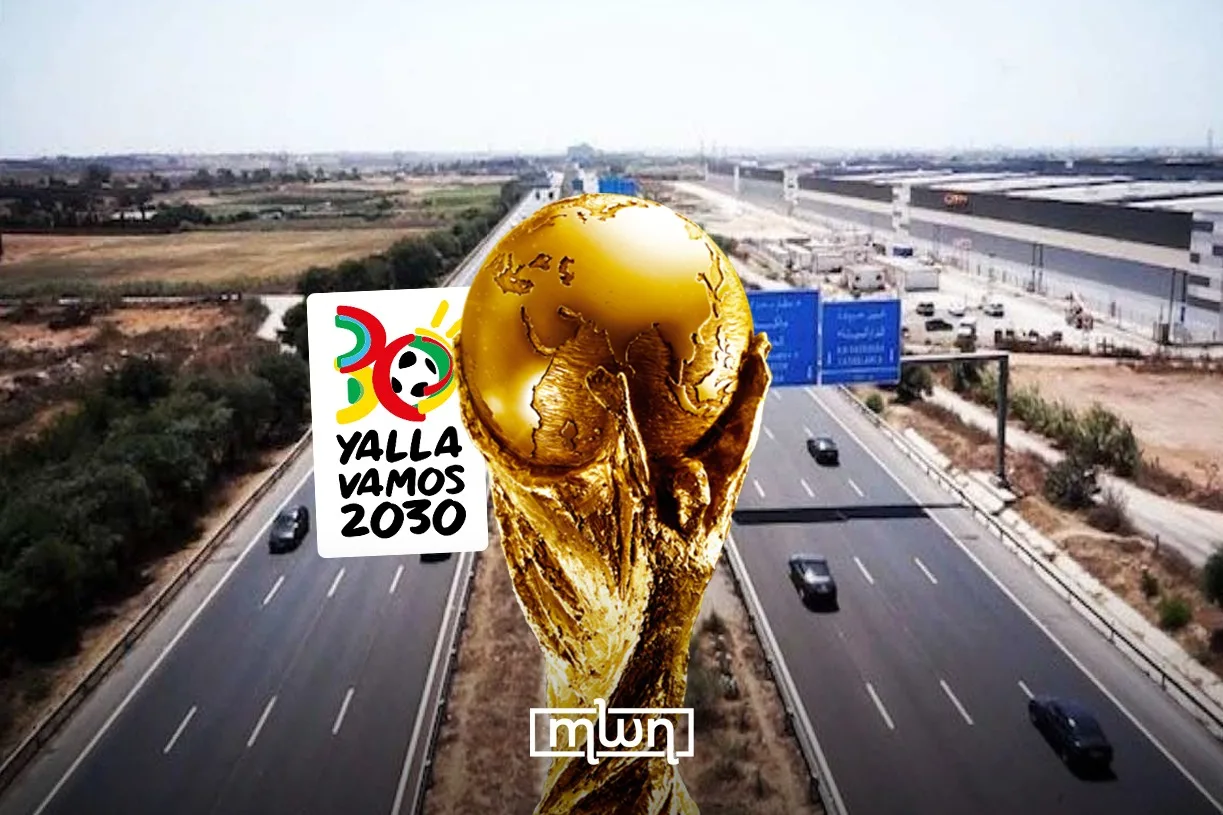
Rabat – Morocco has unveiled ambitious plans to invest MAD 12.5 billion (~ $1.25 billion) in strategic highway infrastructure projects ahead of the 2030 FIFA World Cup.
Government officials and the National Highway Company of Morocco (ADM) formalized the initiative through two protocols signed Friday in Rabat.
Water and Equipment Minister Nizar Baraka, Budget Minister Fouzi Lekjaa, Director General of the National Agency for Strategic Management of State Holdings Abdellatif Zaghnoun, ADM Director General Mohammed Cherkaoui Eddeqaqi, and Deposit and Management Fund (CDG) Director General Khalid Safir all participated in the signing ceremony.
An ADM statement said that these protocols demonstrate the commitment of all stakeholders to developing Morocco’s highway infrastructure in accordance with King Mohammed VI’s vision.
The investment agreement covers the period from 2025 to 2032 and focuses on three major projects: the Continental Rabat-Casablanca Highway, the Tit Mellil-Berrechid Highway, and transforming the Ain Harrouda and Sidi Maarouf junctions.
Officials designed these strategic projects to improve accessibility to the Grand Stadium of Casablanca in preparation for Morocco’s co-hosting of the 2030 FIFA World Cup, ease traffic flow along the busy Rabat-Casablanca corridor, and strengthen connectivity throughout the Casablanca region.
The Continental Rabat-Casablanca Highway alone will require an estimated budget of MAD 6.5 billion (~$0.65 billion).
This 60-kilometer route will directly connect the Rabat bypass highway from the Ain Atiq junction to the Casablanca bypass at the Tit Mellil junction.
The Tit Mellil-Berrechid Highway will serve as a critical link in Morocco’s expanding highway network, connecting the eastern suburbs of Casablanca with the southern transportation corridor.
Engineers have designed this 30-kilometer stretch to alleviate congestion on existing routes while providing more direct access to the Grand Stadium complex.
Read also: Morocco’s $735 Million Highway Plan: 1,000 km of New Motorways by 2030
Transportation officials expect this new highway to reduce travel times by up to 40% between these rapidly growing urban areas, benefiting both daily commuters and the thousands of football fans who will travel to matches during the World Cup.
The transformation of the Ain Harrouda and Sidi Maarouf junctions represents another key component of the country’s transportation strategy.
These major intersections currently experience significant bottlenecks during peak hours, creating delays for travelers entering and exiting Casablanca.
The redesign will introduce multi-level interchanges, smart traffic management systems, and dedicated lanes for public transportation.
Transportation planners estimate these improvements will increase traffic capacity by 60% at these crucial nodes while enhancing safety for all road users, creating a modern gateway experience for visitors to the North African country’s economic capital.
To finance this ambitious program, the agreement outlines plans to mobilize MAD 16 billion (~$1.6 billion) through what officials describe as an “innovative and responsible approach.”
This approach aims to maintain ADM’s sustainability while limiting reliance on the state budget.
The parties also signed a separate financing protocol between ADM, the Ministry of Economy and Finance, the Ministry of Equipment and Water, CDG, and CDG Capital to secure MAD 1.2 billion (~$0.12 billion).
This funding will compensate property owners affected by land acquisitions necessary for the Continental Rabat-Casablanca Highway — a crucial step before construction can begin.
ADM reports that while they progress with the land acquisition process, the company continues to finalize construction contracts for various segments of the project, demonstrating Morocco’s commitment to completing these critical infrastructure improvements well before the 2030 FIFA World Cup.