Rabat – European stock markets crashed on Monday, facing their worst day since the COVID-19 outbreak in March 2020. Investors rushed to sell shares in the wake of growing fears of inflation and a worsening global economy.
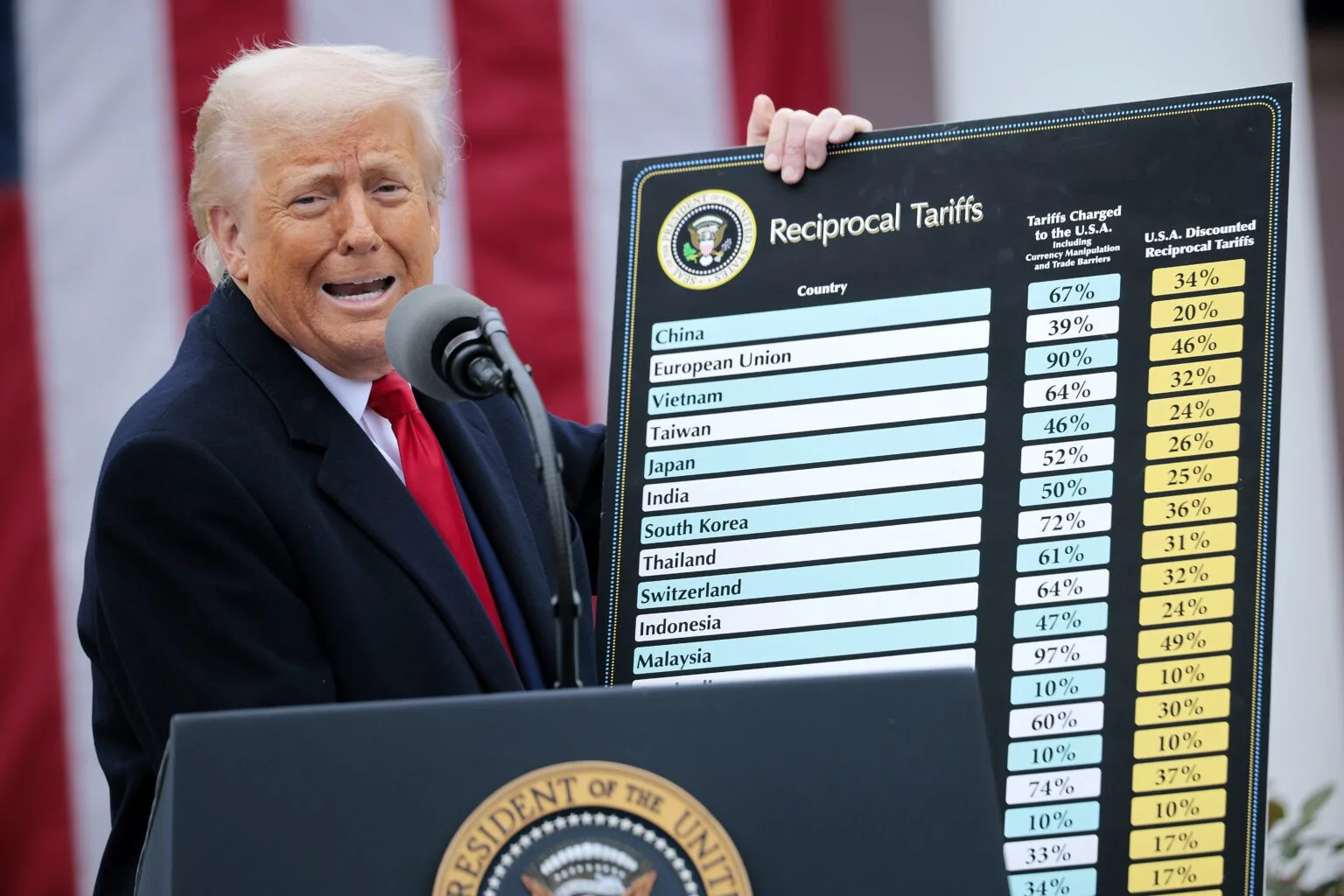
The panic followed new trade tariffs announced by US President Donald Trump, which are now causing a global market downturn.
The Euro STOXX 50 index fell by 6% in early morning trading, with total losses over the past three days reaching 14%. The broader STOXX 600 dropped 5.7%. Germany’s DAX was hit the hardest, falling 7.2% – its worst session since March 2020. Other major drops included Italy’s FTSE MIB (-6.5%) and Spain’s IBEX 35 (-6%).
Markets in Asia also crashed. Hong Kong’s Hang Seng Index fell 13% overnight, its worst one-day drop since the 1997 handover. Japan’s Nikkei dropped 8.6%, and China’s Shanghai Composite fell 7%.
The sell-off began after Donald Trump announced new tariffs on Chinese and European products. These include a 34% tariff on Chinese imports and an extra 20% on goods from the European Union. These moves come on top of previous tariff increases.
Trump defended the tariffs, calling them a way to fix “massive financial deficits” and saying the income from tariffs was “a beautiful thing to behold.”
He claims that the “reciprocal” tariff policy is meant to create a fair trade system and ensure that US businesses are not at a disadvantage.
European leaders are already planning how to respond. Spain’s Economy Minister Carlos Cuerpo said Europe has “the necessary tools” for retaliation.
At the same time, US Federal Reserve Chair Jerome Powell warned that the tariffs could cause “larger-than-expected” damage to the economy. He also said the federal government is not planning to cut interest rates anytime soon.
Bank stocks were among the biggest losers. Spain’s Banco Sabadell dropped 10%, Romania’s Raiffeisen Bank lost 9.2%, and the Netherlands’ ING Groep fell 8.6%. Other banks, including Commerzbank, CaixaBank, and Intesa Sanpaolo, also suffered big losses.
Industrial companies were also hit hard. German weapons and vehicle maker Rheinmetall AG lost 15.3%, while engine maker MTU Aero and steel giant Thyssenkrupp both dropped nearly 10%. Big names like Airbus, Siemens Energy, and HeidelbergCement also saw steep declines.
Luxury brands, which depend heavily on global trade, were not spared. Kering fell almost 10%, while Richemont, Burberry, and Hermès also dropped sharply.