 Join on WhatsApp
 Join on Telegram
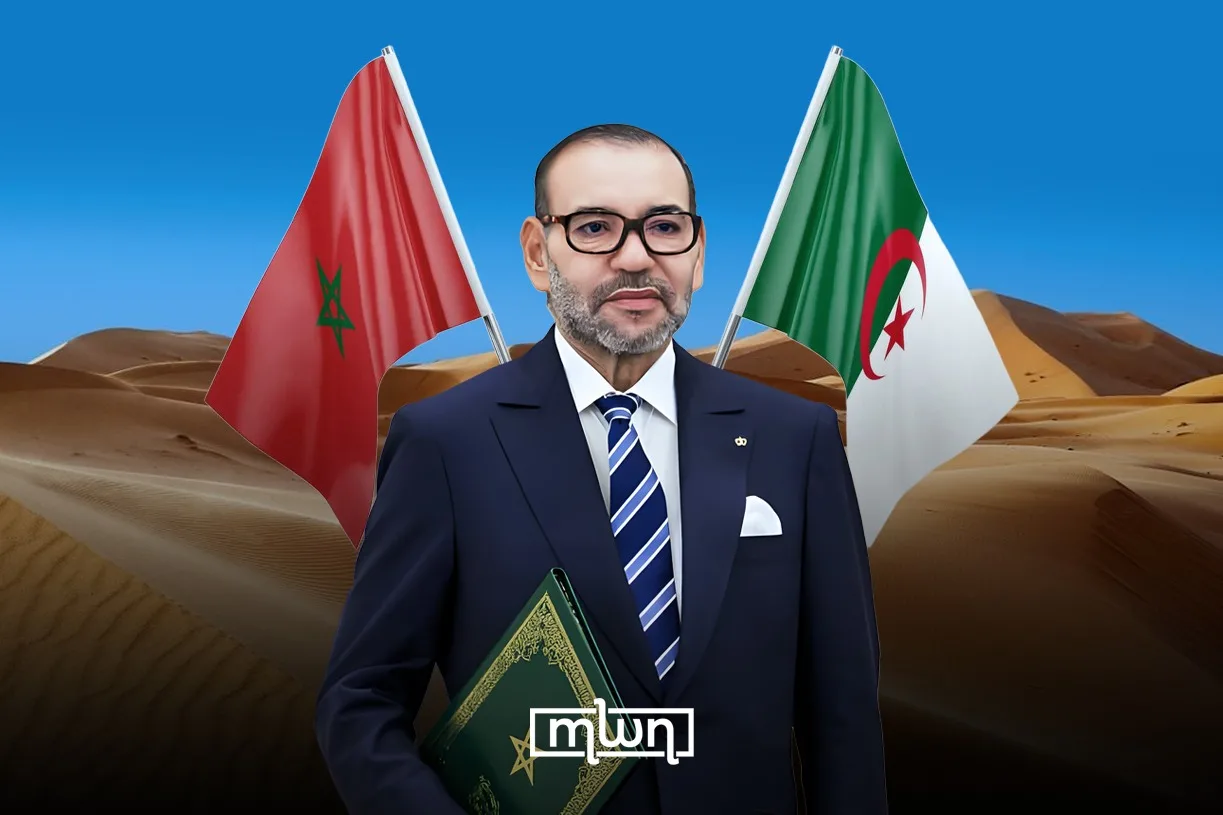
Fez – If King Mohammed VI’s speech on Tuesday night confirmed anything, it is the fact that the Moroccan sovereign looks to remain faithful to the wise policies his father, King Hassan II, and his grandfather, King Mohammed V, adopted towards Algeria. “I wish to reiterate my resolve to remain open to our regional environment, especially our immediate neighbors and the relationship with our brothers and sisters in Algeria,” the King announced in his multidimensional speech. “My position, as the King of Morocco, is as clear as it is consistent: the Algerian people are our brothers and sisters; they share deep-rooted human and historical ties with the Moroccan people. The bonds of language, religion, geography, and a common destiny unite us.”
Relatedly, what transpired from such a dense, multilayered royal address to Morocco in celebration of King Moammed VI’s 26th year at the helm of the country is Rabat’s growing calm and assurance as it gradually but boldly lays the groundwork for the coming decisive denouement in favor of full Moroccan sovereignty over the Sahara. It is now a truism in diplomatic circles that Morocco has over the past ten years achieved significant unprecedented, unparalleled successes in support of its territorial integrity. Or, as I have argued elsewhere, the central lesson to glean from developments in the Sahara dossier since the December 2020 US recognition is that Morocco is gradually moving closer to irreversibly settling the dispute over the Sahara dispute in its favor.
A decade of unprecedented diplomatic gains in the struggle for the Sahara
Indeed, following that game-defining US endorsement of the Moroccan position on the Western Sahara chessboard, Morocco took its diplomatic prowess to new heights by convincing other major international powers, namely Spain, France, the United Kingdom, and Portugal, to support its autonomy plan as the only solution to end the Sahara conflict. By contrast, Algerian diplomacy has experienced an unprecedented decline and a series of setbacks over the same period.
Since Morocco’s return to the African Union, in particular, Algerian diplomacy has been basically clueless and rudderless while Morocco laid brick after brick to consolidate its newfound continental leadership, deepen its strategic continental depth, and – ultimately – ensure that the regional balance of power remain permanently, dramatically shifted in its favor.
In recent weeks, the Algerian regime suffered another painful blow in Africa when Ghana officially and unequivocally declared its support for the Moroccan Autonomy Plan. The West African country described the plan as the “sole realistic” solution for achieving a mutually acceptable political resolution to the Sahara dispute.
This means that Ghana, once among the countries that maintained diplomatic relations with the Tindouf-based, self-proclaimed republic, has now joined the growing list of nations that have, in recent years, extended direct or indirect support for Morocco’s autonomy initiative and Moroccan sovereignty over the Sahara.
Ghana’s new stance came less than two weeks after Kenya – once a staunch supporter of Algeria’s separatist agenda – reaffirmed its support for the Moroccan autonomy plan, describing it as the only viable framework for resolving the dispute over the Sahara.
Algeria once wielded significant influence over much of Africa, and the country would routinely use the African Union as a platform for advancing the separatist agenda of its Polisario protégé. But as the geopolitical winds blowing in Morocco’s direction show no signs of abating, Algiers is now increasingly disconnected from the shifting geopolitical tide as it desperately watches the irreversible collapse of the house of cards it spent decades constructing with its petrodollars.
Algeria’s enduring conundrum
Despite these commendable achievements, the King’s speech on Tuesday night struck the usual chord of sobriety, caution, and measure. Driving this attitude is the Moroccan monarch’s belief, as he implicitly suggested in his speech, that one cannot insult the future. Or that Morocco’s interests — as well as those of the broader Maghreb region — ultimately lie in establishing an economic bloc with neighboring countries, foremost among them Algeria. As the King himself explained, “I have always reached out to our brothers in Algeria and said Morocco was ready for frank, responsible, fraternal and sincere dialogue on the various issues pending between the two countries. My firm commitment to reaching out to our brothers in Algeria stems from a belief in the unity of our peoples and in our ability to overcome, together, this unfortunate situation.”
That is why, in yesterday’s speech as in many others before, the King’s celebration of Morocco’s storied diplomatic gains did not blind him from both acknowledging the challenges ahead as he extended an olive branch to the Algerian regime. For him, Throne Day celebrations offer “an opportunity to reflect on where the nation stands: the gains we have achieved, the projects to come, and the challenges lying ahead, as we look to the future with confidence and optimism.” As is well known, this latest royal offer for dialogue and reconciliation with Algiers comes as the Algerian regime continues to walk on its decades-old path of playing all the political cards at its disposal to prolong the Sahara conflict and prevent Morocco from reclaiming its southern provinces.
And so, the question now is whether and how the Algerian regime will respond to the King’s message. Will Algiers break an entrenched historical cycle and take King Mohammed VI up on his offer of friendship? Unless there is a political earthquake and a fundamental transformation in the ideology and behavior of the Algerian regime – which remains a highly unlikely scenario – or that the US administration puts unprecedented pressure on it to come to the negotiations table with Morocco- which too remains to be seen – I doubt that Algiers will respond positively to the King’s conciliatory message. In fact, I expect the Algerian press to launch a fresh barrage of attacks questioning the Moroccan monarch’s “true” intentions and to intensify its relentless propaganda campaign to demonize Morocco.
There are three main reasons why the regime would be unwilling to respond positively to King Mohammed VI. First, reconciliation with Morocco would mean that the Algerian regime, devoid of political legitimacy and weighing heavily on the Algerian people for six decades, would lose its only political card: the demonization of Morocco and its portrayal as an existential threat to Algeria’s unity, stability and security. This alleged threat has been used to rally the Algerian people around the military regime.
Second, since gaining independence, Algeria has viewed its relations with Morocco as a zero-sum game, and the fomentation of separatism in southern Morocco has been the ideal means to achieve that goal. Imbued with the megalomaniacal belief that Algeria was the rightful hegemon of the Maghreb region, Houari Boumediene harbored ambitions to give his country access to the Atlantic Ocean. As outlined in a 1977 CIA memo, by establishing an independent state in Western Sahara, Algeria would not cut off Morocco from its African hinterland, thereby deepening its isolation and depriving it of the region’s natural resources, but it would also secure an outlet for the region’s natural resources (mainly iron ore), which are trapped in Tindouf.
Third, and definitely more importantly, the regime fears that Morocco might raise the issue of the Eastern Sahara once the Western Sahara dispute is resolved. As a result, I expect the Algerian regime to throw all that remains of its dwindling geopolitical weight and regional (or ideological) appeal behind maintaining the Sahara conflict in its current state. Ultimately, Algiers continues to view preventing a definitive resolution in Morocco’s favor as a political insurance policy to preempt any future Moroccan attempt to revive the issue of the Eastern Sahara border.
Samir Bennis is the co-founder and publisher of Morocco World News. You can follow him on Twitter @SamirBennis.