Marrakech – The Asian Infrastructure Investment Bank (AIIB) will provide Morocco with a $200 million loan to strengthen the country’s climate change resilience, the Chinese Embassy in Morocco announced on Tuesday.
The financing will target priority projects focused on reinforcing environmental and water infrastructure and improving the resilience of economic sectors most exposed to climate risks. This loan is part of a co-financing program with the World Bank, which has already committed $350 million through its Results-Based Financing mechanism.
Morocco faces serious climate vulnerability, according to a World Bank report published in September 2024. Temperatures in the country have been increasing by an average of 0.2°C per decade since the 1960s, double the global average of +0.1°C, according to the Intergovernmental Panel on Climate Change (IPCC).
This accelerated warming has led to more frequent and intense extreme weather events, including heatwaves, floods, and droughts.
Alongside the ratification of the Paris Agreement on September 21, 2016, Morocco submitted its Nationally Determined Contribution (NDC) to the secretariat of the United Nations Framework Convention on Climate Change.
The Paris Agreement places NDCs at the heart of the international response mechanism against the causes of climate change.
The AIIB funding will support Morocco’s NDC program and focuses on two main strategic axes. The first involves developing climate infrastructure, notably through the acquisition of all-weather meteorological radars to improve real-time forecasting, risk management, and environmental monitoring.
The second axis aims to strengthen the resilience of oasis ecosystems through the creation of agricultural cooperatives, enhancement of the date palm sector, and planting of climate-resilient species such as argan, cactus, carob, olive, almond, and caper plants. The program will also support the rehabilitation of traditional hydraulic infrastructure.
Several national entities will be involved in implementing the program, including the Agricultural Development Agency (ADA), the National Agency for the Development of Oasis Zones and Argan (ANDZOA), the General Directorate of Meteorology (DGM), the Directorate of Irrigation and Agricultural Space Management (DIAEA), and the National Institute for Agricultural Research (INRA).
The financing is designed to generate joint benefits in terms of greenhouse gas emission mitigation and resilience of territories exposed to climate hazards.
It will strengthen rural value chains, create green jobs, and consolidate institutional coordination mechanisms in climate finance, environmental data, and risk management.
AIIB’s Eastern leadership
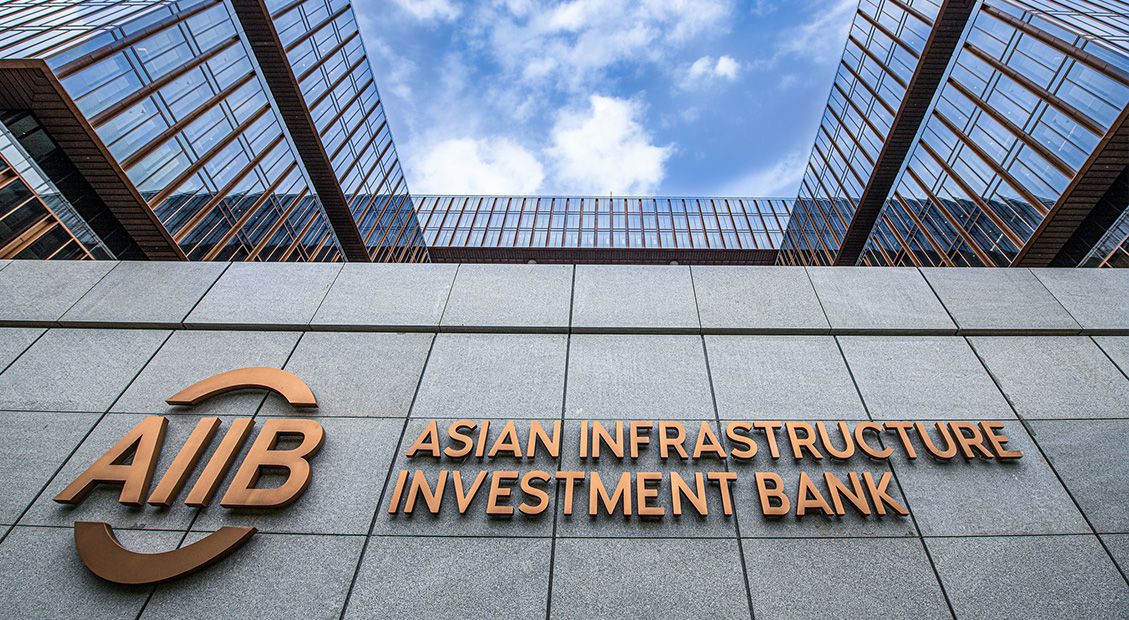
Morocco joined the AIIB in 2019. The institution, established by China in 2015, aims to finance infrastructure projects in its member countries and represents an effort to challenge Western dominance in the governance of existing multilateral lenders. It currently has 110 regional and non-regional member countries, including 19 African nations.
The total implementation of Morocco’s NDC program will require financing of $900 million, with $200 million from the AIIB, $350 million from the World Bank, and the remaining $350 million from the state.
In June 2021, Morocco submitted a revised NDC that increased its greenhouse gas emission reduction target to 45.5% by 2030, of which 18.3% is unconditional.
Read also: World Bank Releases $250 Million to Support Morocco’s Agri-Food Systems Program