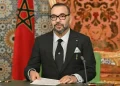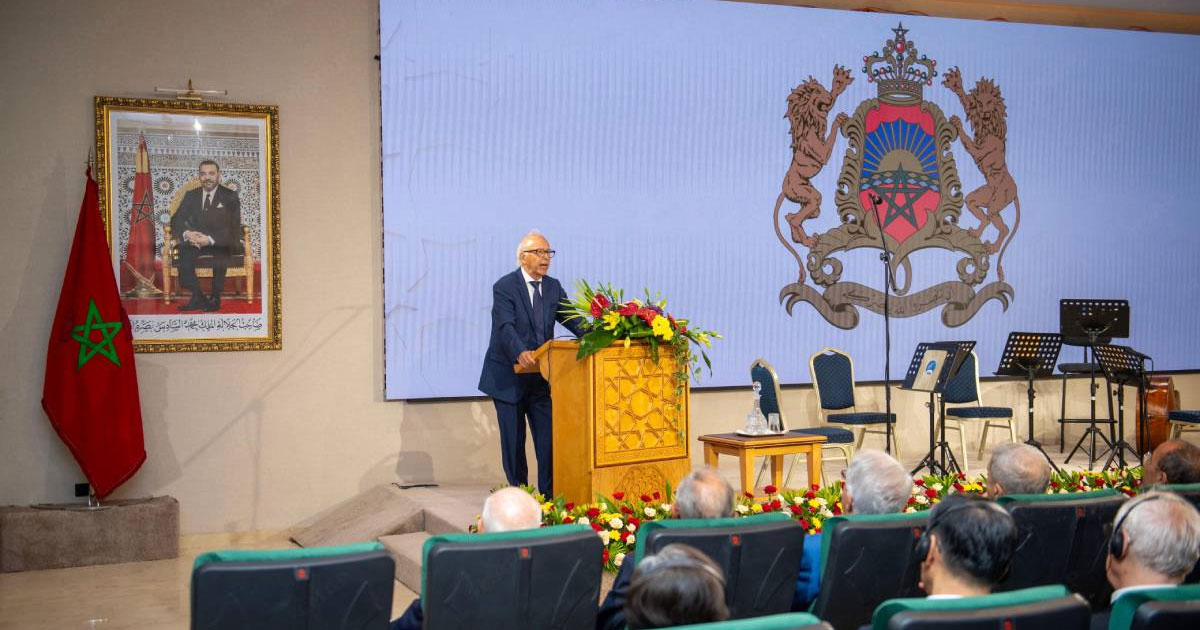
Marrakech – King Mohammed VI addressed the 82nd session of the Institute of International Law (IIL) on Sunday, as the prestigious organization opened its proceedings at the Royal Academy of Morocco in Rabat.
In his message, read by IIL President Mohamed Bennouna, the King welcomed participants to Morocco, noting that Africa had not hosted the institute’s proceedings since the Cairo session in 1987.
“It is a great honor for the Kingdom of Morocco and for the city of Rabat to host the 82nd session of the Institute of International Law,” the sovereign stated in his address.
The King praised the institute’s historical significance since its founding in 1873, describing it as “not just a witness to the world’s upheavals” but “an astute observer, a relevant analyst, a norm initiator and a strong voice of universal legal conscience.”
The monarch also commended the institute for receiving the Nobel Peace Prize in 1904, saying it acknowledged “a masterful work in the service of international law.”
King Mohammed VI observed that the Rabat session comes at a critical moment for international law. “The world is changing before our eyes, certainties are eroding, landmarks are blurring, alliances are being questioned, and International Law – challenged in its very capacity to order international relations – is too often mistreated,” he said.
The agenda for the session includes pressing topics such as pandemics, which the King described as “global crises that test not only the health of populations but also the fundamental principles on which the world’s architecture rests.”
“Through tensions between national sovereignty and international cooperation, between security imperatives and solidarity requirements, a systemic crisis does not just disturb the established order; it reveals its flaws and accelerates its mutations,” the sovereign explained.
The King called on participants to “identify these transformations, not only to understand the recent past but to outline the contours of a more resilient international law that is up to the challenges of tomorrow.”
‘There is no viable order without rules’
Regarding Morocco’s approach to international relations, King Mohammed VI affirmed that “the Kingdom of Morocco has always framed its external action in a legalistic, structured approach, based on respect for international law and the principles of the United Nations Charter.”
“There is no viable order without rules. It is in this conviction that Moroccan diplomacy is anchored,” the monarch stated.
The sovereign also pointed out that “no great progress is achieved in isolation” and that “international dynamics are not simple games of balance between States; they rely on values, consensual principles, and institutions capable of structuring cooperation and ensuring the permanence of these principles.”
The King hailed the institute as “a fervent defender of the peaceful settlement of disputes, riveted to the principles of the United Nations Charter,” which has managed, “over time, to listen to the world, open up to diversity, and integrate the voices of all cultures and sensibilities.”
Speaking with pride, the King recalled that not only was Morocco chosen as the location for the session, but that the institute is currently under a Moroccan presidency, which he described as “a fervent defender of international law.” This, he continued, is “in our eyes, the best proof” of the institute’s principles.
The 82nd session of the Institute of International Law, which runs until August 31, will address various topics of international concern, including “Rules for the prevention of damage applicable to the environment of areas beyond national jurisdiction,” “International intellectual property law and pandemics: access to medicines, prevention, preparedness and response” and the “Status and functions of assemblies of States parties to a treaty.”
Founded on September 8, 1873, in Grand, Belgium, the Institute of International Law is the oldest existing international law institution, celebrating its 150th anniversary in 2023.
Its primary objective is to promote the progress of international law, and it has consultative status with the United Nations Economic and Social Council, allowing it to play a role in UN deliberations.
In 1904, the Institute received the Nobel Peace Prize in recognition of its action in favor of arbitration between States as a peaceful means of conflict resolution, making it the first institution to receive this award.