
 Join on WhatsApp
 Join on Telegram
Rabat – Heavy rainfall over the past 24 hours has brought some relief to Morocco’s dams and increased water storage across several regions.
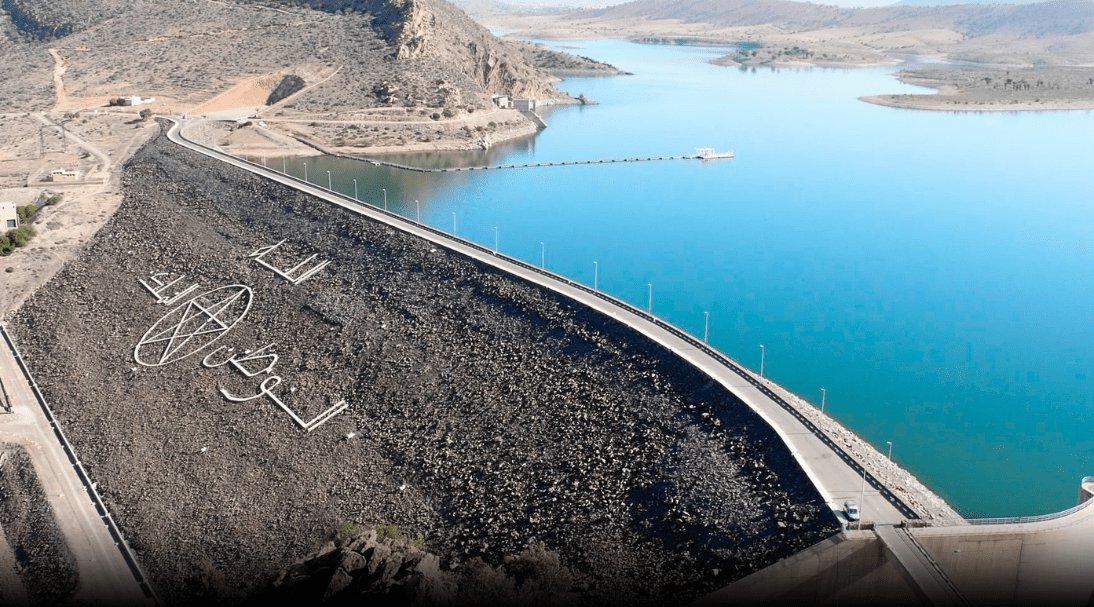
The Ministry of Equipment and Water announced that the fresh inflows have helped raise filling levels in key reservoirs, which have suffered from critically low water supply.
According to figures shared on the ministry’s online platform “Lma Dyalana” (Our Water), the Bin El Ouidane dam in Azilal saw its reserves rise by 5.47 million cubic meters, pushing its filling rate to 11.6%.
In Settat province, Al Massira dam—one of the country’s largest — recorded an increase of 4.25 million cubic meters, bringing its filling level to only 2.92%.
The Kadoussa dam in Errachidia gained 2.25 million cubic meters, reaching a filling rate of 16.4%, while the Hassan Dakhil dam in the same city rose by 1.08 million cubic meters to stand at 58.2%.
The Hassan I – Sidi Driss dam complex recorded the most significant inflow with 18.14 million cubic meters. Oulouz dam in Taroudant rose by 0.4 million cubic meters, now filled at 45.1%, and in Al Haouz, Yaacoub Al Mansour dam increased by 0.45 million cubic meters, reaching 34.9%.
Overall, Morocco’s dam storage now stands at about 5.6 billion cubic meters, with a national filling rate of 33.4% as of Monday, September 8.
Despite this improvement, the figures remain far below the country’s needs. Morocco has been facing seven consecutive years of drought, with rainfall levels declining and heatwaves worsening the water crisis. Many regions have experienced daily cuts in drinking water, forcing households to adapt to limited supply.
The severity of the crisis has also affected livestock and agriculture. This year, King Mohammed VI decided to cancel Eid Al Adha sacrifices because herds of sheep and goats were too small due to scarce water and pasture.
It was the first time in living memory that the holiday, which relies heavily on animal sacrifice, was called off.
Experts warn that while the latest rainfall is a welcome boost, it is not enough to reverse the long-term effects of drought.