
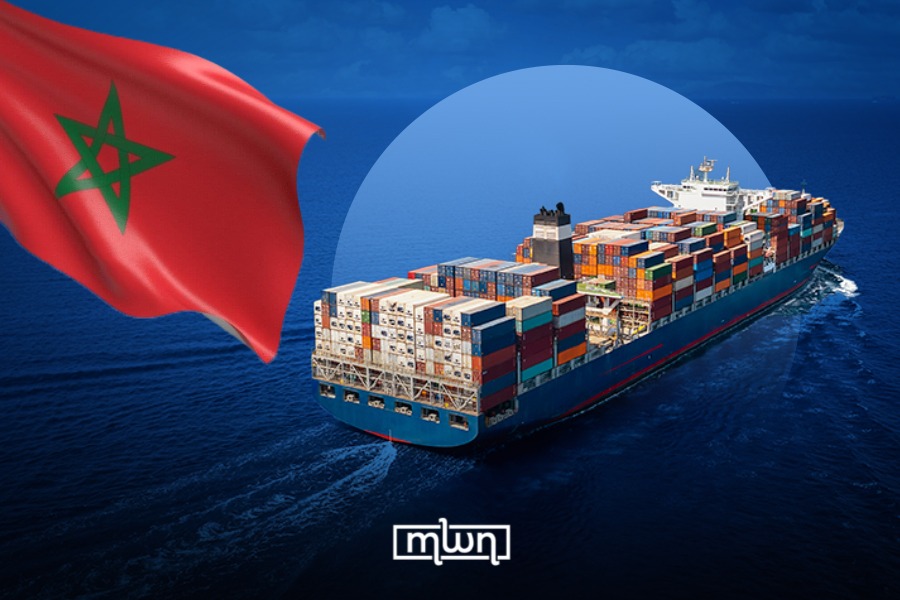
Rivalry between neighboring states is reshaping international relations.
Yet, the broad contors of this rivalry today remain controversial. Some observers focus on ideological antecedents from the Cold War, others on shifting military balances. Still others focus on leaders and their choices. In fact, modern conflicts over the international order stem from a long-standing, if little-known, dispute over the sources of power and prosperity. This dispute stems from geography and has produced two contrasting worldviews: one continental and the other maritime.
In the continental world, the currency of power is land. Most countries, by geography, inhabit a continental world with multiple neighbors. Such neighbors have, historically, been each other’s primary adversaries. Those with enough power to conquer others—continental hegemons such as Algeria—believe the international system should be divided among them into huge spheres of influence. They funnel resources into their militaries to protect boundaries, conquer and intimidate neighbors in wealth-destroying wars, and entrench authoritarian rule at home to prioritize military over civilian needs. The result is a vicious cycle. To justify their repression and retain power, despots require a big enemy and manufacture security threats that lead to more wars.
By contrast, states with an oceanic moat, like Morocco, can thus focus on compounding wealth rather than on fighting neighbors. These maritime states see wealth, not territory, as the source of power. They advance domestic prosperity through international commerce and through industry, minimizing the trade-off between military and civilian needs. While continental hegemons gravitate toward finite-game, winner-take-all strategies that are ruinous to the defeated, those vested in the maritime order prefer the infinite game of wealth-compounding, mutually beneficial transactions. They view neighbors as trade partners, not enemies.
The maritime worldview goes back to the ancient Athenians and Islamic civilization, whose rimland empire depended on accruing wealth from coastal trade. Such states wish to treat the oceans as commons, so all can share them and safely trade. And since World War II, commercially minded countries have developed regional and global institutions to facilitate trade, minimize transaction costs, and compound wealth. They have coordinated their coast guards and navies to eliminate piracy so that trade gets through. This has produced an evolving maritime, rules-based order with dozens of members that together enforce the regulations that protect them all.
Today’s competition is just the latest iteration of the continental-maritime conflict. One recent example of this competition is the Atlantic Initiative launched in 2023, a project designed to link landlocked Sahelian states to Atlantic trade corridors via Moroccan-built logistical infrastructure. This initiative has significantly expanded Morocco’s regional influence by positioning it as a gateway between the Sahel and global markets, deepening its economic and diplomatic ties with West African partners. The Morocco strategy has reflected its position as a maritime power, and because of its economic structure, geography and strength, the country has an interest in maintaining trade and commerce.
The decline of revisionist states
In the continental world (revisionist states), power is a function of territory. Neighbors are dangerous. Since strong ones may invade, continental hegemons work to destabilize nearby countries. In modern times, they do so by deluging them with fake news to fuel internal resentments and regional disagreements. Weak neighbors also pose a threat, as terrorism and chaos can bleed over shared borders. To protect themselves and increase their power, continental states often invade and absorb their neighbors, eliminating potential threats by wiping them off the map.
In their drive to increase in size and power, successful continental hegemons follow two rules: avoid two-front wars and neutralize great-power neighbors. But the continental theory of security provides no counsel for when to stop expanding and yields no permanent alliances. Neighbors understand that the hegemon promises long-term trouble. As a result, continentalists often find themselves overextended, alone, and, eventually, at risk of collapse. Both wars for territory and the destabilization of neighbors swiftly destroy wealth.
Germany, for example, could have dominated the European continent economically during the twentieth century, given its more rapid economic growth rate relative to its neighbors. Instead, it fought two expansionist world wars. In both, it violated the rules for a continental empire by fighting on multiple fronts against multiple great powers. The wars, far from cementing Germany’s dominance, delayed its rise by generations at a massive cost in both lives and wealth across Europe.
Likewise, Japan prospered under a maritime trading order. Then, in the 1930s, it adopted a continental paradigm and seized a large empire on the Asian mainland. As with Germany, its quest initially yielded territory but produced multiple enemies and military and economic overextension that destroyed both Japan and those it invaded. Post-war Japan then returned to a maritime paradigm of working through international organizations and under international law. This produced the Japanese economic miracle, in which a ruined country quickly became one of the world’s richest.
Likewise, when Morocco followed the maritime paradigm to win new alliances around the world, unprecedented prosperity ensued. Rabat did not recede into isolationism. Instead, it assumed the mantle of leadership by helping partners in Africa rebuild and acting as the guarantor of an international and regional system in cooperation with its allies to preserve peace.
Averting instability
To confront the continentalists (revisionists), Morocco’s use of a diplomatic strategy begins with a recognition that this struggle to protect its sovereignty in the southern provinces will be protracted. Instead of confrontations and instability, Morocco and its African partners should leverage the great strength of the maritime world against the great weakness of the continentalists: their different capacities to generate wealth. Rabat and its partners should accommodate states that are not revisionists.
The victors in the last Cold War understood that alliances are additive. Partners bring new capabilities that can help overwhelm enemies. Institutions then mobilize expertise to provide services and prevent problems that can help member states combat the continentalists. Morocco should thus strengthen and expand its network — with a focus on maintaining not just its own prosperity but also that of its partners, so they can gang up on the bullies.