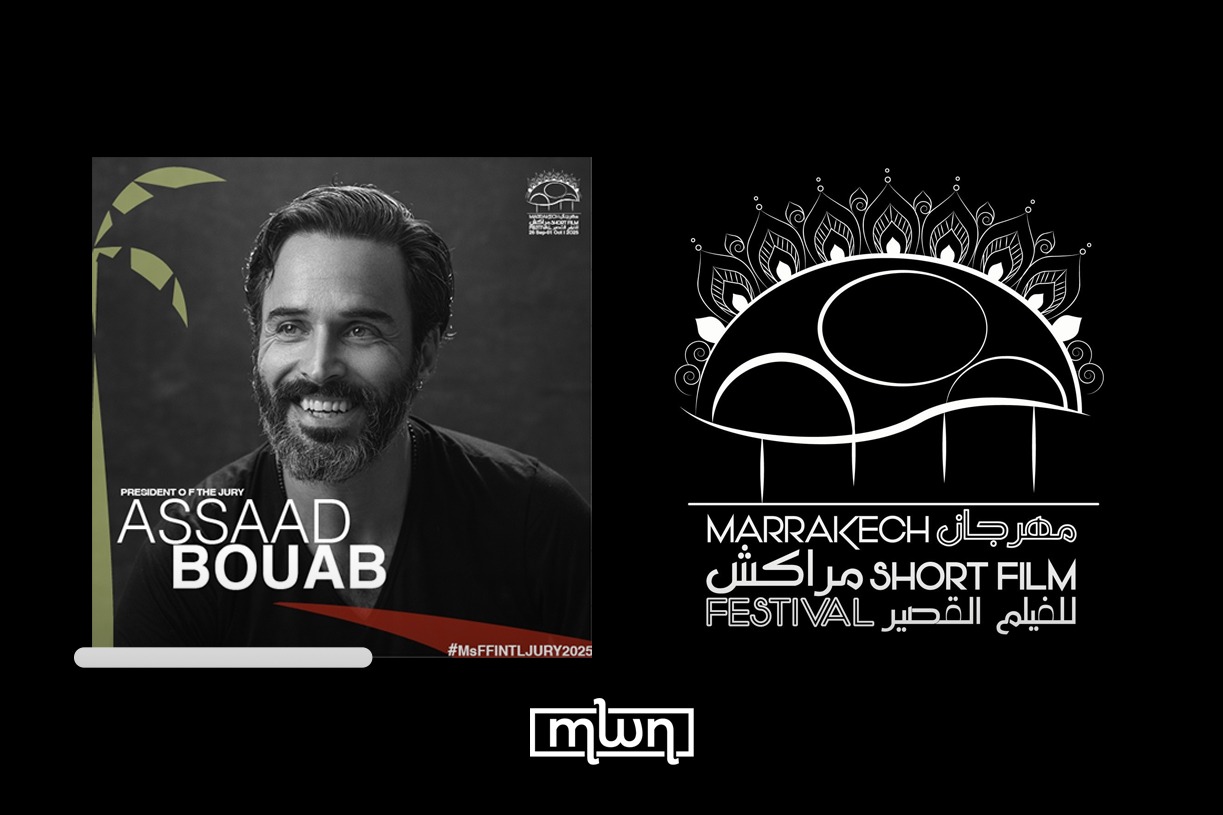
Assaad Bouab, the Moroccan-French actor whose career spans two decades and multiple continents, has returned to Marrakech with a new role.
This year, he serves as president of the international jury of the Marrakech Short Film Festival (MSFF), an event dedicated to giving visibility to short films and new voices in cinema.
For Bouab, the journey to this moment is one of steady growth and cultural connection. “I began my journey between Moroccan and French productions, and I felt so grateful to be part of movies such as Marock – Indigènes – Whatever Lola Wants… it was 20 years ago,” he tells Morocco World News (MWN).
“It gave me a strong artistic foundation. In 2016, I joined the cast of the TV show Dix Pour Cent. From there, international projects came to me, and it did open new horizons and allowed me to connect more and more with different cultures through storytelling.”
This dual identity, rooted in Morocco yet expanded beyond the country, gives Bouab a unique perspective on how stories travel across borders. “I think what drives me the most when I read a script is to look for stories that speak beyond borders,” he says.
A festival that feels like home
The invitation to lead the international jury carries a deeply personal meaning for Bouab.
“Being invited to the jury of the Marrakech Short Film Festival is both an honor and a joy. On a personal level, it feels like coming home, and this idea warms my heart. We will celebrate cinema in a city that is so deeply connected to Moroccan culture and creativity,” he explains.
The MSFF has become a significant platform in recent years, attracting filmmakers from across the world while highlighting Moroccan talent.
For Bouab, it is more than just an appointment. It is a chance to engage with the next wave of directors. “In terms of my career,” he elaborates, “I see it not just as a recognition, but as a chance to stay connected to new generations of filmmakers.”
The art of judging stories
Film festivals thrive on discovery, and the jury plays a decisive role in identifying works that resonate. Bouab approaches this task with a clear philosophy: authenticity above all else.
“For me, the heart of a film lies in its ability to move us, to make us feel, laugh, reflect… Technique and craft are important of course, but what I value most is authenticity. The honesty and the courage to tell a story in a unique way. A short film, if I might say, should leave an echo that stays in your mind a very long time.”
At a time when short films are increasingly experimental, his view embraces audacity and accessibility.
“Technique, experimentation, audacity… and all the aspects of every creative process are very important and beautiful to witness,” Bouab says. “It gives each movie his own signature. But they are tools (aren’t they) that a filmmaker is using to tell the story and help it reach the audience’s heart. However, both form and content are important.”
Moroccan cinema’s bright evolution
Bouab’s optimism about Moroccan cinema reflects a broader, more entrenched reality: the industry is experiencing an exciting moment of growth.
Over the past three decades, Morocco has invested in film schools, built festivals that attract global attention, and created an environment where creativity thrives.
As Boutab puts it, “Moroccan cinema has gone through an inspiring evolution in the last 30 years.”
This is something to be proud of, he suggests, stressing: “We have strong festivals, schools in cinema, incredible locations and natural light, very good productions and technicians, a new wave of filmmakers who are daring, creative… I feel proud to see how their work resonates nationally and internationally, and this might be just the beginning of a much brighter chapter for our cinema.”
Indeed, Moroccan directors are increasingly making their mark at international festivals, and the country continues to be chosen as a destination for major productions, both local and foreign. Such recognition strengthens Morocco not only as an ideal filming location but also as a creative hub in its own right.
A generation of new voices
Bouab’s participation in MSFF is also symbolic of a generational bridge. Having built his career across Morocco, France, and international markets, he is now in a position to encourage young talents at home. The short film format, often the first step for emerging directors, offers fertile ground for experimentation and growth.
By presiding over the jury, Bouab engages directly with this new generation. His presence serves as both recognition of their efforts and an invitation to think beyond national borders. With his experience, Bouab embodies the idea that Moroccan talent can resonate globally while staying deeply connected to cultural roots.
Morocco’s cinematic future
The Marrakech Short Film Festival reflects a larger movement in Morocco’s cultural landscape. Beyond its red carpets and screenings, the festival acts as a space for dialogue, where Moroccan cinema engages with international trends while asserting its own voice.
Bouab’s leadership of the jury is therefore more than symbolic. It highlights the country’s position as an emerging leader in the cinematic world, capable of producing talents who not only act in films but also shape the conversation about cinema’s future.
“In terms of my career, I see it not just as a recognition, but as a chance to stay connected to new generations of filmmakers,” Bouab reflects. His words are part of the broader trajectory of Moroccan cinema: deeply rooted in tradition yet continually expanding toward new horizons.
Toward a brighter chapter
These are indeed exciting and promising times for Morocco’s burgeoning film industry. Stunning festivals like MSFF, coupled with schools, technicians, and a daring generation of directors, ensure that Moroccan cinema is no longer on the margins but part of the global conversation.
With his international career and Moroccan roots, Bouab captures this spirit of movement and possibility. His belief that the country is entering “a much brighter chapter” is no wishful thinking; it is grounded in the visible energy of Moroccan cinema today.
By leading the international jury at MSFF, Bouab connects past and future, home and abroad, tradition and innovation. For him, as for Moroccan cinema, this bold new story of boundless promise and liberating fulfilment is only beginning.