 Join on WhatsApp
 Join on Telegram
Rabat — A new report revealed deep public distrust in Morocco’s political institutions, with political parties ranking as the least credible state institution among citizens.
The Moroccan Center for Citizenship released a comprehensive study titled “Moroccan Political Parties and the Crisis of Credibility,” which reveals alarming levels of public distrust toward the country’s political institutions.
Political parties score low in public trust
The study found that 91.5% of respondents rated the performance of political parties as weak, while only 7.6% considered their performance average. Only a mere 0.9% gave them positive ratings.
Political parties performed worse than any other major institutions. Parliament received negative ratings from 89.5% of respondents, followed by the government at 87.3%, and the political opposition at 80.6%.
Even trade unions, local councils, and media outlets suffered from this widespread decline in public confidence.
The findings point to a comprehensive crisis in the relationship between citizens and institutional actors across Morocco’s broader political landscape.
Money and loyalty drive party advancement
The report reveals troubling patterns in how people advance within political parties. Citizens believe merit plays little role in party politics compared to money.
According to the study, 64.3% of participants believe money is what allows individuals to climb the ladder in politics. 60.8% of participants believe patronage networks are what grant political privilege, and 57.4% believe that loyalty and flattery grant privilege.
Only 28.5% connected party advancement to competence and management skills.
A double crisis emerges
The study identifies two interconnected problems facing Morocco’s political parties. First, parties suffer from a public trust crisis that places them at the bottom of institutional credibility rankings. Second, they face internal problems related to advancement mechanisms that citizens view as dependent on money and loyalty, rather than competence and productive programs.
These findings raise serious questions and concerns about political parties’ ability to mend their role as primary intermediaries between the state and society.
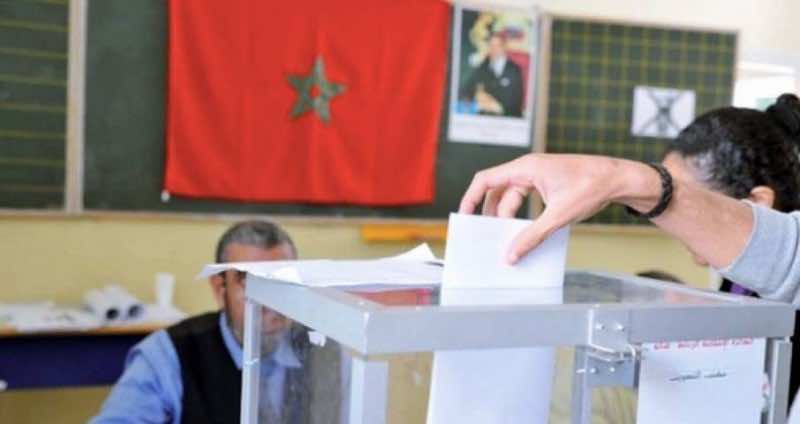
Upcoming elections may see less participation because of this lack of credibility.
The study suggests that major reforms to internal party dynamics and public engagement strategies are mandatory for Morocco’s political parties to gain legitimacy.
The data shows that Moroccan citizens’ awareness about political participation is increasing, but their mistrust could have long-term consequences for Morocco’s democracy.