 Join on WhatsApp
 Join on Telegram
Cape Verde had never been to any World Cup at all. This was their first ever. Yet when the tournament arrived in North America this summer, it was these first-timers, not the Brazils and Argentinas, who turned stadiums into carnivals, their diaspora fans already waiting on American soil, ready to erupt. At the 2026 World Cup, one of the smallest nations is bringing the most noise and excitement to the global event.
The tiny West African archipelago of ten islands, sitting 350 miles off the African coast, with a population barely above 500,000, has so far been the sensation of this global showpiece. Before this summer, most Americans couldn’t place Cape Verde on a map. But when the 2026 World Cup kicked off in North America, the Blue Sharks showed up in style to rewrite history.
In their first ever World Cup match, they caused a major upset by holding Spain to a 0-0 draw. They then drew 2-2 with Uruguay, another powerhouse, before completing an unbeaten group stage with another draw against Saudi Arabia, becoming the smallest nation ever to reach the knockout stages of a FIFA World Cup history thereby bringing global surprise.
The noise didn’t only come from the pitch. Around 70,000 Cape Verdeans live in Massachusetts and 21,000 in Rhode Island, a diaspora that has been rooted in New England since the 19th century. Cape Verdeans first arrived in Massachusetts and Rhode Island as whalers in the 18th and 19th centuries, many joining Portuguese whaling crews to escape famine and drought on the archipelago. They never left. And this summer, they were waiting.
At Luanda Restaurant in Brockton, Massachusetts, Cape Verde’s first World Cup match became an afternoon of nervous cheering as customers gathered around televisions, some fans even brought laptops so they could work remotely without missing the game against Spain.
‘Nothing is impossible’
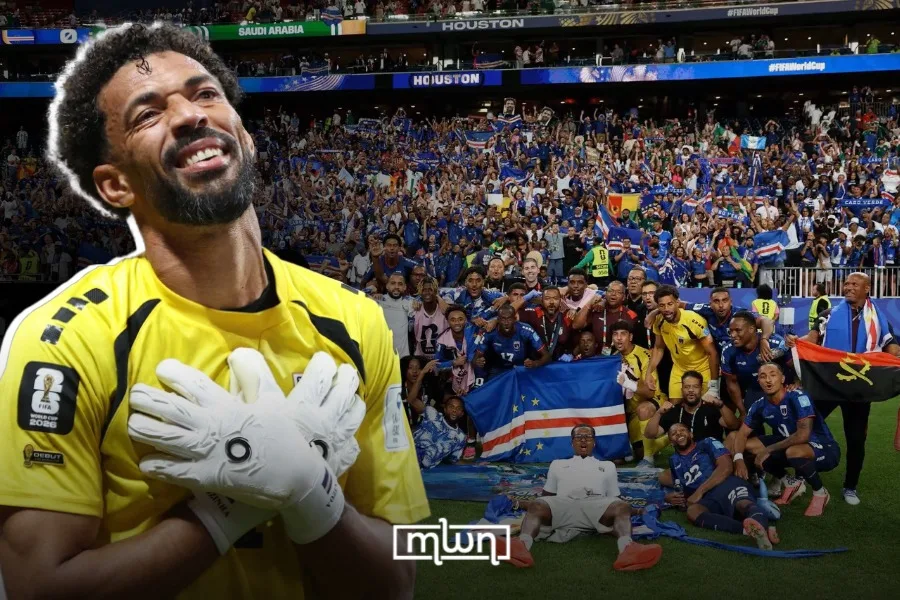
The team itself reflects that same diaspora story. More than half of the squad was born outside Cape Verde. Kevin Pina, who scored the nation’s first ever World Cup goal against Uruguay, spent part of his youth in Massachusetts. In goal stood Vozinha, the 40-year-old goalkeeper who embodied the grit of his nation. “We are small,” he said. “But we have big hearts and we are fighters.”
When Cape Verde finally confirmed their place in the knockout round, players huddled around a smartphone on the pitch to watch Spain beat Uruguay and seal their progression, communities from Providence to Boston erupted. “For us, the joy and pride is that folks now know who we are,” said Darlene Spencer, board president of the Cape Verdean Association in New Bedford. “The rest of the world knows who we are, as an ethnicity, as a country.”
Next up: Lionel Messi and defending champions Argentina, in Miami on July 3. On paper, the smallest nation at this World Cup against one its greatest dynasties and reigning champions. But Cape Verde has already proven that paper means nothing. As coach Bubista put it on the eve of their final group game: “Everyone is entitled to dream, and nothing is impossible.”
The Blue Sharks are still swimming. Will Argentina’s Messi-led champions aura stop them, or will the champions be but their next victim in another performance for the books?