
Rabat – Africa is hosting a global-scale supercomputing conference for the first time, pointing to the continent’s growing determination to be part of global conversations about constructive and disruptive implications of relentless technological advances.
Supercomputing Africa 2025 (SCAF 2025), set to take place in Morocco from December 3 to 5 under the auspices of UM6P, brings together leading researchers, engineers, and decision-makers in high-performance computing from around the world.
More than a scientific gathering, the event marks a shift in how the continent positions itself in global technological and research ecosystems.
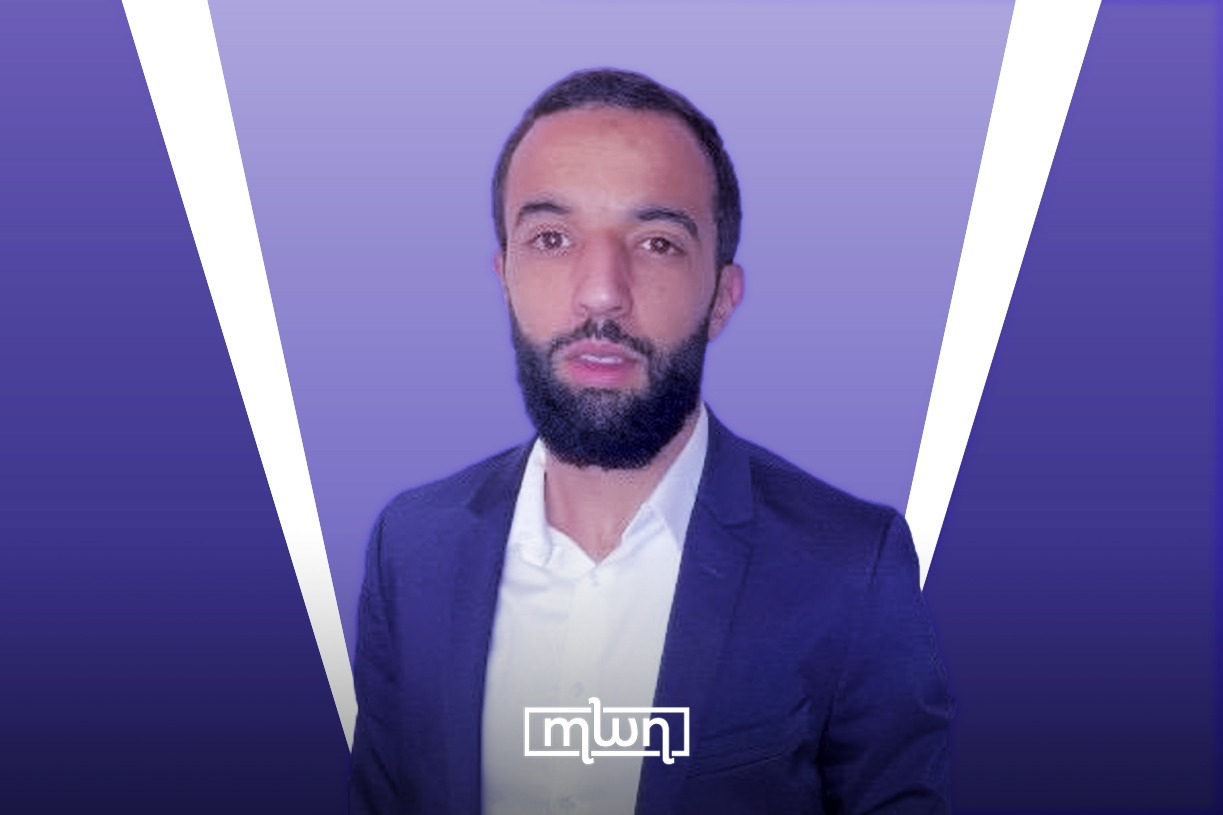
“Bringing leading experts to Morocco shows that Africa wants to be an active contributor to global scientific and technological progress,” says Imad Kissami, a researcher and instructor at UM6P’s College of Computing, to Morocco World News (MWN).
For him, the conference is not merely symbolic. “It creates a space where African researchers, engineers, and students can meet international leaders, exchange ideas, and discover new opportunities.”
Beyond the packed program of keynotes, panels, and technical sessions, the conference plants the seeds for long-term collaboration. Kissami believes it will “seed long-term training tracks and joint research projects across African institutions,” gradually strengthening the continent’s capacity in advanced computing.
Supercomputing and the energy question
Speed and sustainability are two of the defining challenges facing high-performance computing today.
Large-scale simulations demand enormous amounts of energy, raising difficult questions about environmental impact and efficiency. This is where Kissami’s work connects directly to the broader themes of the conference.
“Modern large-scale simulations consume a lot of electricity, so improving performance alone is no longer enough,” he tells MWN. “This naturally led me toward green computing.”
His current research aims to reduce the energy footprint of these powerful systems. He focuses on “how processor frequency, power, and performance interact,” relying on techniques such as “mixed precision and machine-learning models to reduce energy consumption while preserving strong accuracy and performance.” Kissami’s goal remains clear: “to make supercomputing both faster and more sustainable.”
This perspective reflects one of the deeper tensions in the future of HPC: how to advance scientific discovery without placing additional strain on an already overburdened planet.
Infrastructure that supports continental ambition
Hosting SupercomputingAfrica 2025 would “not be possible without the infrastructure developed at UM6P in Benguerir,” says Kissami.
At the heart of this investment stands the Toubkal supercomputer, which Kissami describes as “currently the fastest in Africa.” It allows researchers and students to “run large-scale experiments locally in Benguerir,” eliminating the need to rely exclusively on foreign facilities.
Still, hardware alone does not define the university’s role. “UM6P promotes applied research, international collaboration, and innovation with real impact,” Kissami says.
The College of Computing, in particular, carries a broad mandate. It “drives HPC training, research, and partnerships at continental scale,” aiming to create a sustainable ecosystem rather than a single moment of prestige.
The conference itself forms part of this larger vision. It signals Morocco’s intention to act as a regional hub for advanced scientific research and technological development.
Opening doors for a new generation
For students and early-career researchers, SupercomputingAfrica 2025 constitutes a rare point of access to an international scientific community usually encountered from a distance. “For many of them, it will be the first time they can meet international experts, ask questions directly, and discover cutting-edge topics in supercomputing, AI, and scientific simulation,” Kissami notes.
The event’s impact extends beyond knowledge acquisition for participants. “Seeing the Toubkal supercomputer and the work being done at UM6P shows that advanced computing is already happening here, and they can be part of it,” he adds.
In this sense, the event reshapes not only career trajectories but also imagination, replacing the idea of distant excellence with a tangible, local reality.
Within academic programs at UM6P, students are primarily trained in “parallel programming, distributed algorithms, performance analysis, and GPU computing.”
The presence of a world-class conference on their campus gives those abstract concepts a concrete context. “When students attend keynotes, tutorials, and discussions with international experts, they see how the concepts they learn are used in real scientific and industrial projects,” Kissami explains.
International voices and Africa’s place in global computing
Supercomputing Africa 2025 also carries weight because of the figures it attracts, including Turing Award winner Jack Dongarra. Their presence sends a message that resonates beyond academic circles.
“Having leaders such as Jack Dongarra join the event sends a strong signal: Africa is part of the global HPC community,” Kissami stresses. Collaboration, in his view, is not a one-way flow of knowledge but a mutual exchange.
While international partnerships “accelerate progress in areas like system design, scalable algorithms, scientific applications, and training models,” Africa contributes perspectives shaped by its own challenges in climate, infrastructure, health, and sustainable development.
This dynamic helps the conference set a new narrative. Its driving philosophy is that Africa is no longer seen solely as a beneficiary of technological transfer, but as a participant capable of generating ideas. The continent seeks to take an active part in the ongoing and coming technological revolutions; it wants to drive innovation and influence the future of global supercomputing.
As Morocco prepares to welcome the continent’s first major HPC gathering, the animating spirit emerging in the background of complex algorithms and powerful machines is that Africa is no longer waiting for the future of science. It wants to take part in shaping that future, and it is already beginning to compute this new reality on its own terms.