 Join on WhatsApp
 Join on Telegram
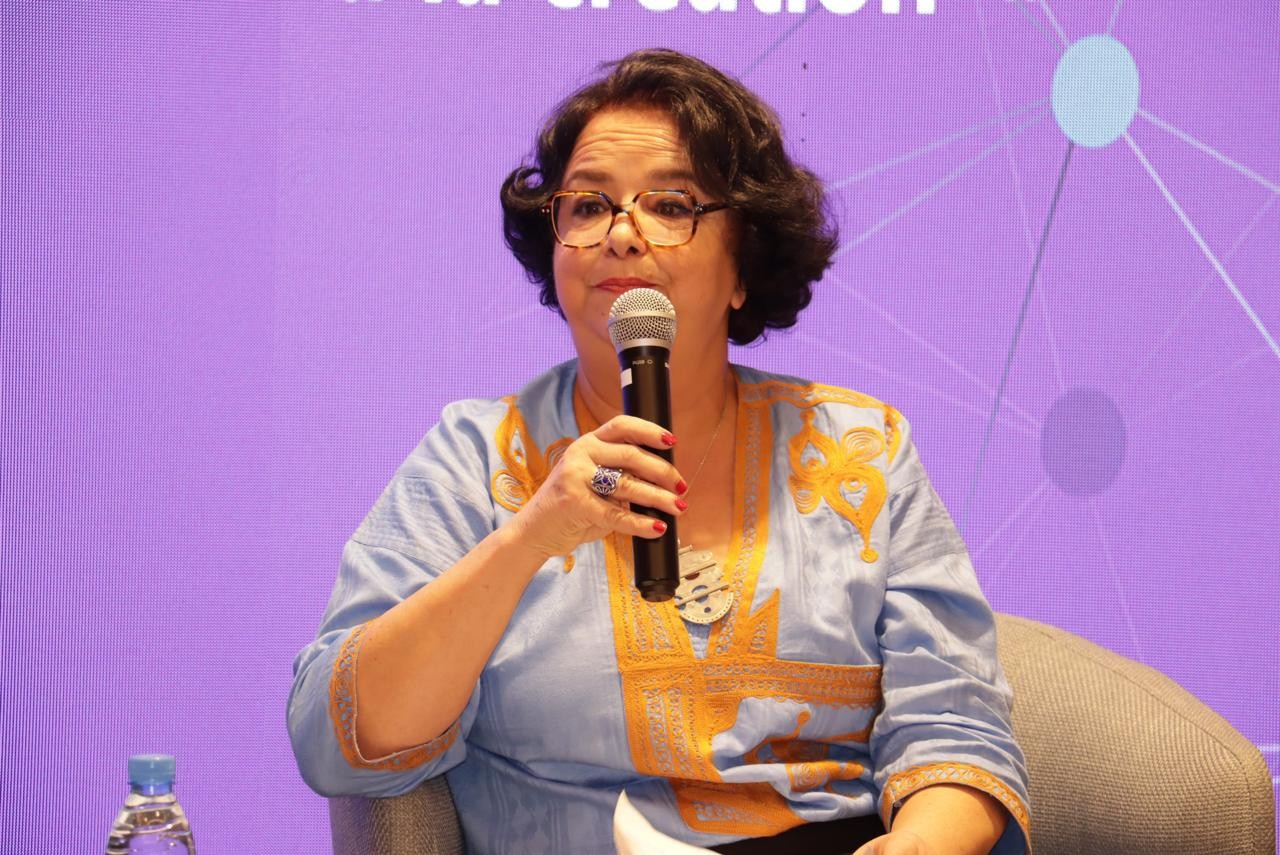
Marrakech – Latifa Akherbach, President of Morocco’s High Authority for Audiovisual Communication (HACA), has warned that artificial intelligence is becoming a major factor in amplifying media disinformation while undermining public trust in news.
Speaking at a conference on “Combating Fake News: Intersecting Approaches and Visions” organized by the Ministry of Youth, Culture, and Communication in Rabat on Wednesday, Akherbach stressed the urgent need for digital platforms to adopt responsible policies.
She described fake news as no longer temporary deviations but structural dangers threatening citizens’ fundamental right to reliable, diverse, and quality media systems.
“The increasing use of artificial intelligence within society and newsrooms has become a key factor in amplifying media disinformation and undermining trust in news,” Akherbach stated. This occurs particularly amid the absence of appropriate legal controls and insufficient awareness of the risks posed by this impressive yet fallible technology.
The HACA president noted that the rapid development of AI technologies, coupled with delayed legal frameworks and the absence of binding global governance principles, increases media systems’ vulnerability and societies’ susceptibility to media disruptions.
Digital transformation reshapes news consumption
According to national research on information and communication technology indicators among households and individuals for 2024, conducted by the National Telecommunications Regulatory Agency (ANRT), a vast majority of citizens now live in a permanent digital ecosystem.
The data reveals that 66.3% of Moroccan citizens rely on television as their news source, while 26% obtain news from social media platforms. Online journalism follows at 4.7%, with print media and radio accounting for approximately 1% each.
Akherbach cited the 2025 Digital News Report from Reuters Institute, covering 48 countries, including Morocco, which showed that approximately 78% of Moroccan internet users access news updates through digital platforms. YouTube and Facebook emerged as the most used networks for accessing national and international news, with 49% and 47% respectively.
“These figures reflect a global trend characterized by increasing dependence on social media networks and video platforms for news access, which constitutes a prominent factor in exacerbating the spread of media disinformation,” she observed.
Professional journalism’s declining role
The authority president cautioned that declining professional journalism mediation in news access deprives citizens of basic editorial guarantees that distinguish professional journalism, particularly fact-checking, news prioritization according to importance, and placing news in proper context.
She explained that this decline raises citizens’ vulnerability to influence strategies, including foreign ones. Digital platforms now exercise influential editorial authority within the public media space through algorithmic mechanisms governed by commercial logic.
“This situation is unacceptable from the perspective of basic human rights, because information is considered a public utility whose treatment should primarily respond to societies’ public interest and principles of responsibility, transparency, and pluralism,” Akherbach argued
The revolution in media usage and consumption has contributed deeply to exacerbating media disinformation, she added. The center of gravity in communication space has shifted from professional media subject to regulation and self-organization to digital systems dominated by private technology platforms with purely commercial objectives.
Morocco faces sophisticated disinformation campaigns
The country confronts rapid and profound transformations in media disinformation practices, characterized by increasing diversity in targeted areas, content sources, methods and tools employed, and intended purposes, whether declared or concealed.
Akherbach cited multiple examples, including false notifications and conspiracy theories circulated during and after the COVID-19 pandemic, fabricated ballot papers shared on social media during the 2021 elections, repeated publication of fake official statements concerning public affairs, and streams of false news and misleading compositions related to the Al Haouz earthquake.
She particularly addressed the media war where Morocco’s Western Sahara dispute is weaponized as a tool for pressuring and influencing national and international public opinion.
“The spectrum of methods and tools used appears extremely wide, from fake statistics, distorted geographical maps, and positions falsely attributed to countries and international organizations, to images taken out of context, fabricated video clips, and narratives based on sensationalism and emotional mobilization,” she stated.
These multi-language narratives are digitally amplified through automated or anonymous accounts on the internet, she continued.
Building societal resilience
Sustaining an effective response to media disinformation requires a shared responsibility approach and coordinated work within the actual public policies framework. This calls for anticipating and managing media risks that threaten national cohesion and the proper functioning of democratic space.
Akherbach advocated for building comprehensive “societal resilience” through strengthening the rights system by providing a legal environment that guarantees media rights while maintaining professionalism. She called for appropriate regulatory frameworks that limit disinformation chaos without restricting freedoms.
The approach requires shared responsibility where citizens act as key players, alongside teachers and trainers in media education, making citizens capable of filtering and analyzing news as sustainable tools for countering disinformation.
The authority supports regulation not to restrict freedoms but to enhance media literacy, improve digital space usage, enable benefiting from positive opportunities while protecting societies and citizens from risks, based on respecting rights and freedoms.
“The goal is not to undermine the right to expression, but to provide a media environment where professionalism and human rights prevail, and where citizens are aware and critical,” she declared.
She also pushed for encouraging digital actors to adopt responsible policies as an urgent and unavoidable matter, noting that platforms’ growing role in news access directly impacts public debate quality and political life integrity, especially during electoral periods when platforms gain direct access to voters.
Akherbach concluded that Morocco does not call for regulating technology itself, but for regulating its uses, noting that artificial intelligence offers great opportunities for renewal and innovation while requiring legal and regulatory accompaniment to ensure its deployment serves public interest and protects fundamental rights.
Read also: Minister Bensaid Calls for United Efforts to Fight Fake News in Morocco