
 Join on WhatsApp
 Join on Telegram
Sudan is no longer merely a war zone – it is a man-made humanitarian catastrophe unfolding in real time. The crisis has deep roots in the popular uprising that erupted in late 2018, fueled by worsening living conditions, entrenched corruption, and widespread unemployment. The government’s excessive use of force did not quell dissent rather, it radicalized demands, transforming socio-economic grievances into a call for the removal of President Omar al-Bashir. In April 2019, after nearly three decades of authoritarian rule, the military intervened to depose him, ostensibly opening a path to democratic transition.
The promise of change quickly faltered. A fragile power-sharing arrangement, brokered by the African Union, created a joint civilian military transitional government. Yet the transition remained unstable. A failed coup attempt in September 2021 was followed by a successful military takeover led by Army Chief Abdel Fattah al-Burhan, which ousted Prime Minister Abdalla Hamdok and derailed Sudan’s democratic trajectory. These developments reignited mass protests, which were violently suppressed, while tensions escalated between the Sudanese Armed Forces (SAF) and the Rapid Support Forces (RSF), culminating in a full-scale civil war by April 2023.
The conflict has turned Sudan into a landscape of overlapping crises political, economic, social, and humanitarian. The fighting, primarily between the SAF led by Burhan and the RSF commanded by Mohamed Hamdan Dagalo (Hemeti), has relied heavily on indiscriminate shelling and urban warfare. According to the United Nations Office for the Coordination of Humanitarian Affairs (OCHA), the war has claimed over 16,000 lives and displaced more than 8 million people. Decision-makers remain largely insulated from the consequences of the fighting, enabling the continuation of hostilities as a tool of power consolidation at the cost of societal collapse.
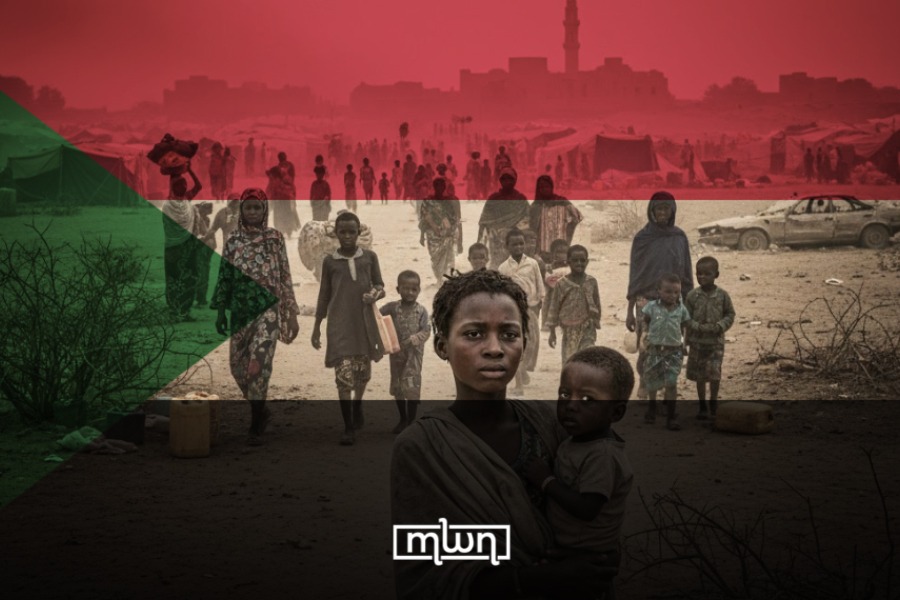
The humanitarian toll has been catastrophic. Sudan now hosts the world’s largest displacement crisis, with over 10 million people forced from their homes, either internally or across borders, according to UNHCR and the International Organization for Migration (IOM). Nearly half the population faces acute food insecurity, while famine conditions have emerged in multiple regions. The health system has collapsed, with hospitals destroyed or shuttered, medical personnel fleeing, and vaccination coverage against preventable diseases at its lowest level in over forty years, according to the World Health Organization (WHO). Cholera, measles, and polio outbreaks compound the crisis, creating a deadly convergence of war, hunger, and disease.
Evidence suggests that famine in Sudan is not a byproduct of conflict but a deliberate consequence of obstructed humanitarian access. The Integrated Food Security Phase Classification (IPC) confirmed the presence of famine (IPC Phase 5) in Zamzam camp in North Darfur as early as July 2024, expanding by mid-2025 to additional areas including Um Keddada, Mellit, and El Fasher, with 17 more regions at imminent risk. Starvation has effectively become a weapon of war.
Attempts to alleviate civilian suffering through ceasefires have largely failed. The Jeddah Declaration on the Protection of Civilians, signed in May 2023, was intended to safeguard civilians and facilitate humanitarian aid. Yet repeated violations, particularly by the RSF, reveal that the agreement has served more as a political cover than a genuine commitment to international humanitarian law, highlighting weaknesses in enforcement and accountability.
Humanitarian operations have been severely impeded. UN agencies report that RSF units have blocked aid convoys, looted warehouses and markets, and attacked relief workers, forcing some international organizations to suspend operations entirely. This systematic obstruction exacerbates civilian suffering and accelerates the collapse of basic services.
Sudan’s war also carries significant regional implications. Mass displacement, disrupted trade, and cross-border insecurity threaten neighboring countries, while the persistent instability creates a fertile ground for extremist and criminal networks. The crisis has become both a national tragedy and a regional security hazard.
International responses have so far proven inadequate. UN Security Council resolutions calling for an end to hostilities and Western diplomatic engagement have largely been rhetorical. Despite wielding significant leverage over the warring parties, international actors have failed to enforce coordinated measures, allowing the conflict to persist. This inaction has contributed to what the United Nations describes as one of the gravest humanitarian crises of the modern era.