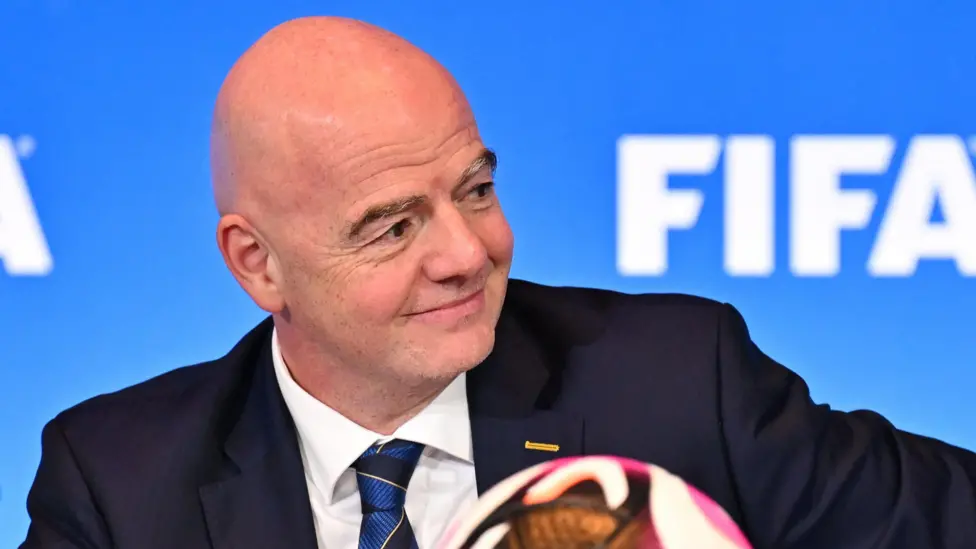
FIFA President Gianni Infantino has just reignited a massive debate by calling for an end to Russia’s ban from international football. He argued that the suspension hasn’t actually done anything to bring peace, it’s just fueled “frustration and hatred” instead.
Russia has been out of the international football picture since February 2022. Following the invasion of Ukraine, both FIFA and UEFA stepped in to suspend the country’s national teams and clubs. This ban has kept the men’s side out of major stages like the World Cup and the Euros, while Russian clubs remain excluded from top European competitions.
In a recent interview with Sky Sports, Infantino made clear he believes the ban has not achieved its intended effect, saying openly that it “has not achieved anything; it has just created more frustration and hatred.”
He’s also pushing the idea that football needs to keep its doors open. His point is that keeping those connections alive is way more useful than just shutting everyone out.
“Having girls and boys from Russia being able to play football games in other parts of Europe would help,” Infantino said, and added that FIFA should “actually never ban any country from playing football because of the acts of their political leaders.”
At 55 years old, the FIFA boss argued the sport should be a unifying force and not used as a tool for political exclusion, especially at youth levels. He told broadcasters that allowing Russian youth teams to compete internationally could foster broader ties and help keep engagement alive even amid geopolitical tensions.
Infantino’s comments have drawn immediate and strong criticism from Ukrainian officials. Ukraine’s Sports Minister, Matvii Bidnyi, called the remarks “irresponsible” and “infantile,” saying they ignore the harsh reality of continued conflict and the suffering it has caused. Bidnyi also stressed that any return to competition should be tied to a genuine end to hostilities and respect for international norms.
The president of UEFA, Aleksander Ceferin, has maintained that Russia’s reinstatement in European football hinges on the end of the war, a position echoed by several European associations.
However, many are calling out what they see as a double standard. They point to countries like Israel, which remain active in international play despite ongoing genocide, sparking a logical debate over whether football’s governing bodies apply their political sanctions fairly across the board.
With the 2026 World Cup fast approaching, Infantino is walking a tightrope between football and global politics. Those in favor of lifting the ban believe football can be a bridge for peace. On the flip side, critics say that letting Russia play before the conflict is actually resolved would completely undermine the message the sporting world has sent so far.
Realistically, it’s not something that’s going to be settled anytime soon, at least not without some major shifts in the global political landscape.
Read also: FIFA President Infantino Praises Morocco’s Football Achievements and Vision