Rabat – Another year, another controversy as experts and observers across the world are surprised and nearly shocked over Saudi Arabia’s decision to declare Wednesday as the first day of Ramadan 2026.
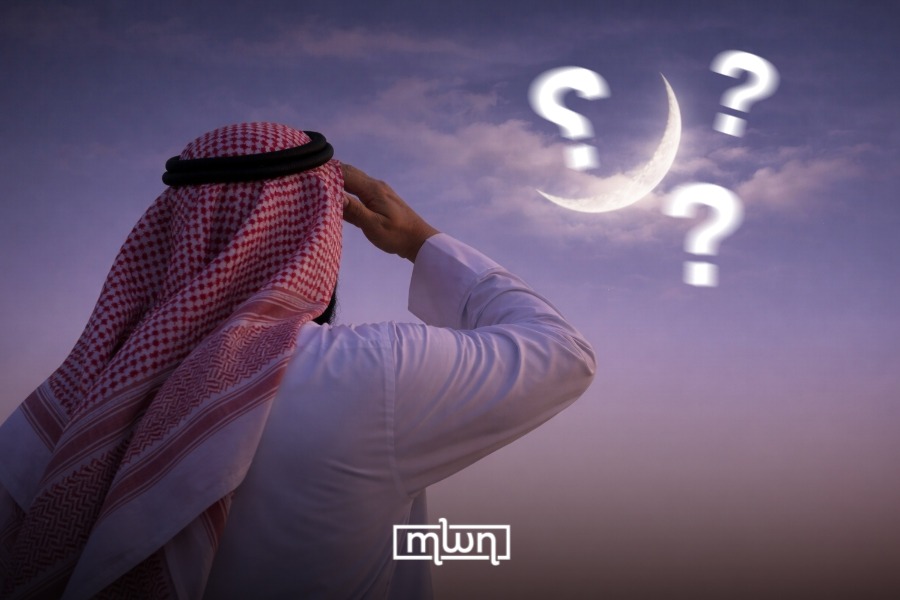
The Gulf country aligns with other nations in the region and beyond, who are facing scrutiny over their decision, with experts and astronomy centers stressing that the crescent moon, called the “hilal”, was impossible to sight last night.
Critics say the declaration is against all available data contradicting declarations from Saudi Arabia, the UAE, and beyond, which started fasting for Ramadan today.
Astronomers had warned prior that highly unfavorable celestial conditions would make it impossible to sight the moon yesterday, February 17.
Astronomy calculations suggest the moon sat before or simultaneously with the sun in most Islamic countries.
This would serve as an obstacle to leave an observable crescent above the horizon, with both the moon’s age and angular separation from the sun also far below globally accepted visibility thresholds.
The two key elements are key requirements for visibility.
Astronomers suggest that this is the same case in the UAE, where the moon was expected to set a minute before the sun. This makes visibility categorically impossible to determine the date for Ramadan.
Ongoing debate
According to Evrim Agaci, a Turkish science and education organization, the moon was supposed to disappear a mere 42 seconds ahead of the sun’s descent last night.
“For cities like Tabuk and Amman, the moon will vanish precisely as the sun sets, with a surface age of only one hour and 49 minutes and less than one degree separating it from the sun—a configuration that falls short of the minimum requirements for crescent visibility, even with optical aids,” the organization said.
The same data were echoed by many news outlets, including in the Gulf.
Gulf News on February 17 reported on calculations released by the International Astronomical Union, which said the moon could not be visible across most Arab and Islamic countries on Tuesday evening.
The same source detailed how the moon will set before the sun in many cities, including in Abu Dhabi, where the moon sets one minute before sunset.
“In Riyadh, it will set 37 seconds earlier,” Gulf News reported.
Several other countries like Jordan, Oman, and Egypt announced Thursday as the first day of Ramadan, acknowledging the impossibility of sighting the moon.
Saudi Arabia’s controversy is not limited to this single incident, especially as the Gulf country has long been treated as a reference point by many Muslim countries that model their own calendar decisions on Saudi announcements.
Morocco’s proven sighting method
On Tuesday, Morocco’s Islamic Affairs Ministry announced that its committees will observe the moon on today.
Observational data consistently show Morocco is among the most accurate in determining the start of lunar months, as they base their Islamic calendar on actually sighting the crescent moon with the naked eye. This approach relies on different methods, including engaging clerics, astronomers, and armed forces units in a coordinated effort.
The Islamic Ministry contacts at least 270 official observation points across the country, engaging designated Muslim legal experts, judges and ministry officials to visually identify the crescent moon.
The process engages over 2,300 people participating across the official sighting committees and points.
This is in addition to units from Morocco’s armed forces, which also conduct sightings and submit their findings.
The findings are then cross-checked against the latest astronomical calculations of the moon’s size, brightness, and position.