 Join on WhatsApp
 Join on Telegram
On February 26, 1992, the Azerbaijani town of Khojaly witnessed one of the late twentieth century’s most brutal civilian massacres. As they attacked the encircled town, Armenian armed forces committed unspeakable crimes against the 2500 residents who had stayed behind. 613 civilians, including 63 children, 106 women, and 70 old people were killed atrociously, 8 families were annihilated, 25 children lost both parents, 130 children lost one parent, 487 were wounded (76 of them are children), 1275 innocent residents were taken hostage, while the fate of 150 people including 68 women and 26 children remains unknown. Some families were completely wiped out.
The whole scene was a targeted act of mass violence whose legal, moral, and historical implications extend far beyond Azerbaijan. Remembering Khojaly today is therefore not an exercise in national grief alone, but a challenge to a global order that proclaims justice while frequently postponing it.
The Khojaly Genocide is fully compatible with the definition of genocide set out in the 1948 UN Convention on the Prevention and Punishment of the Crime of Genocide. Under this framework, the deliberate mass killing of an ethnic, national, or religious group should have elicited a widespread outcry from the international community. Many countries have officially recognized the Khojaly Genocide.
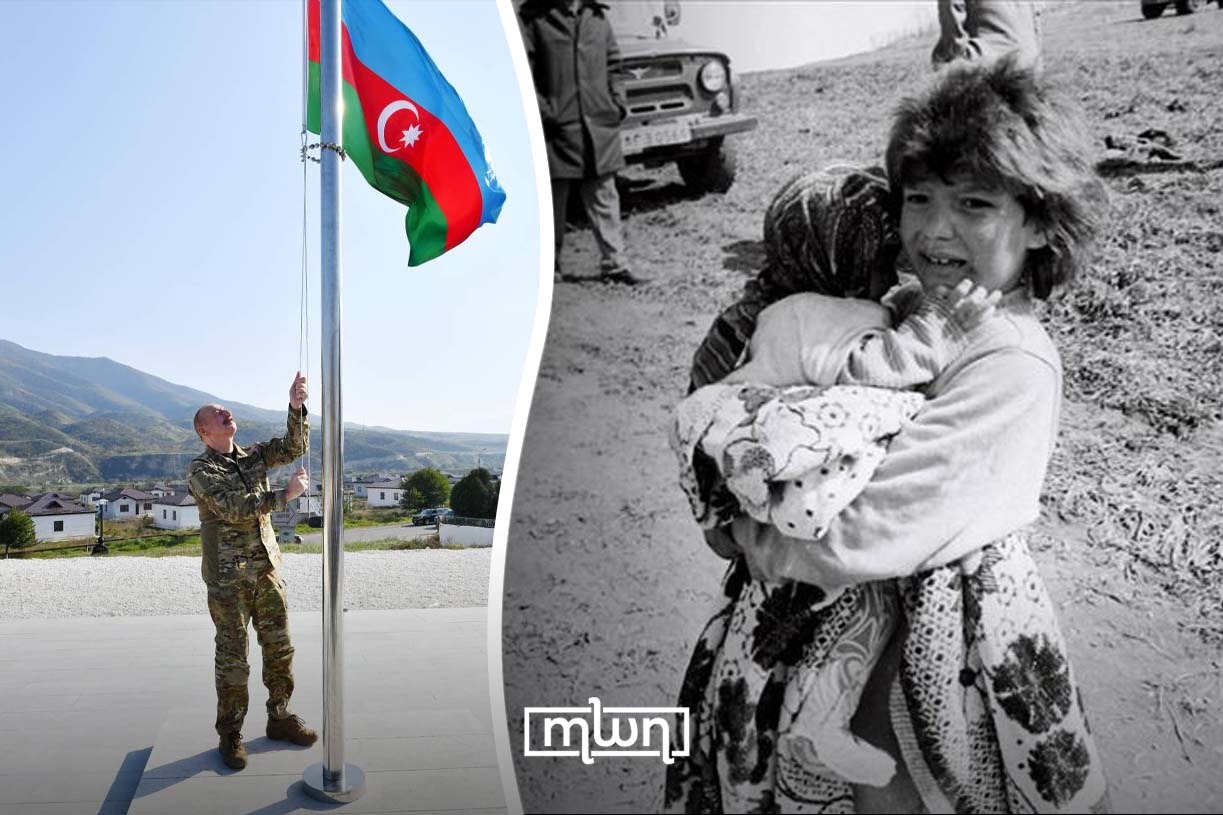
Photographs and reports produced by international media outlets made it possible to convey to the global community the brutality committed in Khojaly. This genocide is not only a tragedy for one nation, but for all of humanity, and the role of the media in disseminating this truth remains undeniable.
Azerbaijan has consistently made efforts across various international platforms to raise awareness of the Khojaly Genocide, including at the United Nations, the European Parliament, and other international institutions. Although this tragedy caused profound shock worldwide, the response of the international community fell short of what its gravity demanded.
Since February 2008, the “Justice for Khojaly” campaign has been conducted on the initiative of Leyla Aliyeva, Vice-President of the Heydar Aliyev Foundation. The campaign seeks to raise global awareness about the Khojaly Genocide. Hundreds of thousands of individuals and 115 organizations have supported its activities. In addition, numerous articles documenting the Khojaly atrocities have been published by foreign journalists.
Khojaly was liberated from occupation and cleared of the illegal regime on September 19-20, 2023. On October 15, 2023, President Ilham Aliyev raised the Azerbaijani flag in the city. He also signed a decree on the establishment of the Khojaly Genocide Memorial Complex in Khojaly to honor the memory of the martyrs.
Rebuilding Khojaly and the challenge of enduring solidarity
Under the instructions of President Ilham Aliyev, 881 families — representing a total of 3,602 people — have been resettled across eight residential areas of Khojaly. The return to Khojaly constitutes a key pillar of the large-scale “Great Return” program implemented by the Azerbaijani state, which aims to develop essential infrastructure and services, including job creation and business opportunities for returnees.
This process is not limited to physical resettlement; it also carries deep significance in restoring historical justice, ensuring socio-economic revival, and revitalizing national memory. Families who once fled in fear have finally stepped back onto soil that holds their memories and aspirations. The reconstruction of homes and infrastructure reflects tangible progress in restoring normal life. For many who spent decades away from their communities, returning to their ancestral land marks a defining new chapter after prolonged displacement.
As President Ilham Aliyev has stated, “We could not consider our territorial integrity and sovereignty fully restored without Khojaly. Khojaly holds such a significant place in the history and consciousness of the Azerbaijani people, and this tragedy inflicted such deep wounds on our hearts that without the liberation of Khojaly we could not feel at peace.” These words reflect the state’s unbreakable determination and resolve on this issue.
Restoration of justice
On the commemoration of the 34th anniversary of the genocide, justice was served when the perpetrators of the Khojaly massacre received deserved punishment following the conclusion of proceedings at the Baku Military Court. The executioners of Khojaly and leaders of the so-called regime were held accountable.
In a recent interview with France 24, President Ilham Aliyev stated: “Imagine the Nuremberg Trials after World War II, and two months after all those Nazi leaders are sentenced to death, someone comes and asks for their release… Their crimes were even worse than what the Nazis did during World War II.”
Demanding impunity for individuals accused of war crimes amounts to complicity in those crimes. History will remember this moment of justice. We will never forget the Khojaly Genocide. Forgetting invites repetition. For this reason, efforts must continue to convey the truth about Khojaly to the international community.