
 Join on WhatsApp
 Join on Telegram
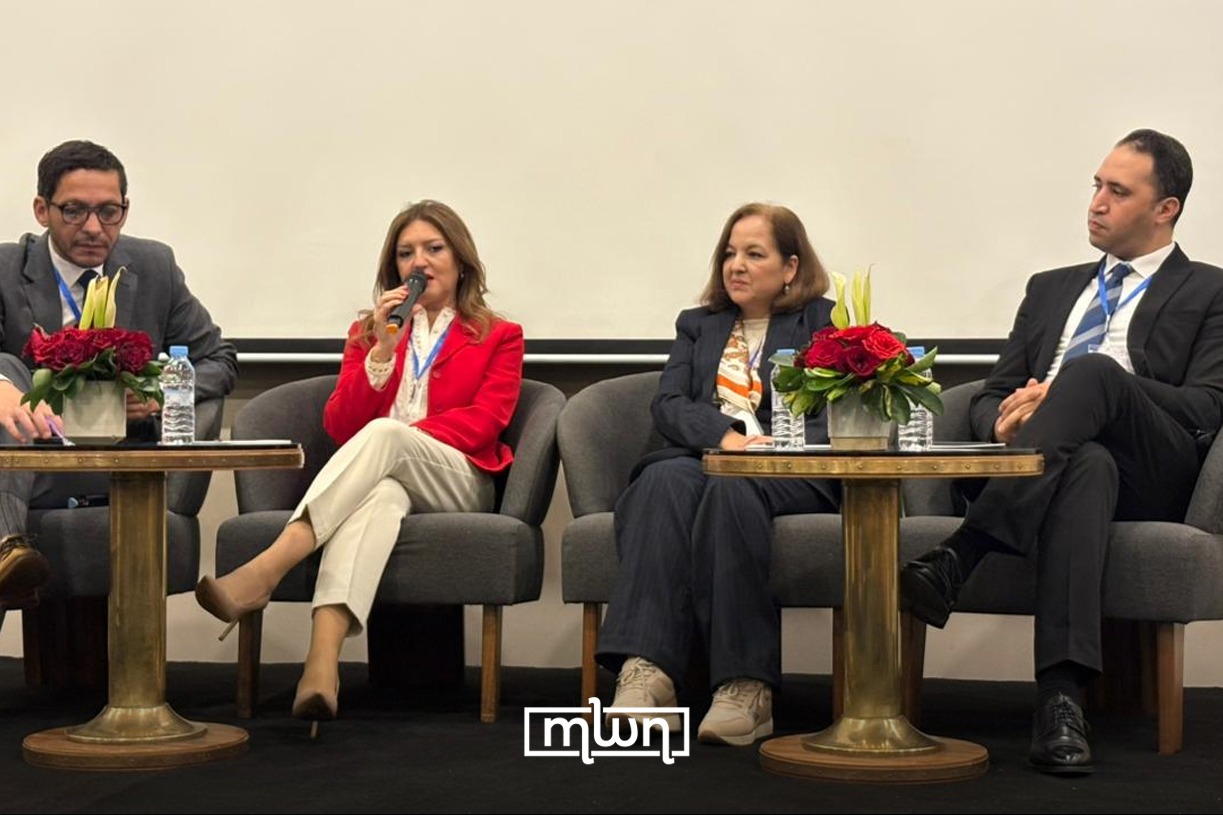
Casablanca – Casablanca hosted the DiaspoBoost Summit Africa 2026 on Thursday, bringing together public officials, entrepreneurs, investors, and diaspora leaders around the central question of turning diaspora ties into structured, long-term economic development across Africa.
Held at Palace d’Anfa, the event went beyond a standard conference format. Alongside panels on taxation, entrepreneurship, youth engagement, and investment, the summit included sector workshops, B2B meetings, and institutional exchanges aimed at moving from discussion to implementation.
Revolving around “the Moroccan model,” the discussions positioned Morocco as both a testing ground and a platform for broader African cooperation. The underlying idea was that diaspora capital, estimated at over $100 billion annually across Africa, is no longer just a flow of remittances but a potential engine for structured investment, skills transfer, and cross-border economic integration.
Among the organizers, Bouchra Bayed, consultant and founder of Moroccan Pulse, framed this positioning within Morocco’s broader African strategy. “Morocco has built its presence in Africa not only through diplomacy, but through trust developed over time, consistent engagement, and concrete cooperation,” she told Morocco World News (MWN), pointing to the long-term approach driven under the leadership of King Mohammed VI.
She described the country as “an actor of dialogue, stability and rapprochement,” capable of “creating bridges between territories, skills and economic ecosystems in a logic of co-construction and mutual interest.”
Bayed pointed to the Morocco–Congo relationship as a reflection of this approach, based on “reciprocity, mutual respect and co-development,” adding that the strongest African partnerships are those that combine “a sense of fraternity, strategic vision and concrete action.”
She also emphasized the central role of diasporas in that dynamic. “Diasporas are not just communities living abroad. They are actors of transformation, facilitators of dialogue, and catalysts of opportunity,” she said, highlighting their role in circulating skills, creating value, and structuring sustainable partnerships across African economies.
Between inspiration and structural limits
For participants, Morocco’s approach is both a reference point and a case that cannot simply be replicated.
Yale Seti, president of the Morocco-DRC Chamber of Commerce and Industry, anchored that argument in both personal experience and institutional reality.
“I am myself from the diaspora, born in Kinshasa, raised and educated in Belgium and France, and I returned to the DRC about twenty years ago,” he said in a statement to MWN. “I am a strong admirer of the Moroccan model, particularly how it has structured its diaspora through initiatives like Moroccans Living Abroad and Moroccans of the World.”
He pointed to the scale of diaspora flows as a largely underutilized asset, stressing: “Financial exchanges between African diasporas and their countries of origin exceed $100 billion each year. It is a lever that cannot be ignored, but it needs to be organized in a concrete and efficient way.”
The main bottleneck, Seti argued, lies with public authorities.
“It is up to governments to create laws and frameworks that facilitate return and investment. Today, being part of the diaspora should not be a barrier to investing back home,” he explained.
Speaking to MWN, Melissa Mabrouka Petesque, a migration specialist at the International Organization for Migration, echoed that tension between potential and structure.framed diaspora engagement as both financial and human.
She described diaspora engagement as both financial and human, noting: “We are working on encouraging people to transform remittances into investment, but also on the transfer of skills. That contributes not only to economic development but also to social and environmental progress.” Yet she also pushed back against a one-directional vision.
For her, “it should not be the diaspora coming in and imposing knowledge. It has to be an exchange. The diaspora learns as much from local communities as it shares.”
While she described Morocco as “an example in Africa,” the migration specialist pointed to a more operational gap.
“There are tax incentives and institutions that facilitate investment. The real challenge is access to information. Many people don’t know where to start, how to invest, or what tools are available,” she said, citing the complexity of investment options from equity to debt.
Structural differences across countries also limit replication.
“You cannot copy-paste the Moroccan model. For example, dual nationality creates advantages that do not exist in countries like the DRC,” Petesque added.
For Karim Boumehdi, president of KBK Conseil, the conversation extends beyond diaspora policy into a broader shift in how Africa is perceived.
“We are no longer talking about developing Africa. The train has already left. Now we are in a phase of optimization,” he told MWN.
Boumehdi explained that the mindset of “coming to help Africa” is outdated and should no longer be maintained. Instead, he argued for a new approach in which Africa is seen as a place to build and develop, where international expertise is brought in to support and train local talent, enabling them to take full ownership of their own sectors and capabilities.
His firm actively integrates diaspora expertise into projects across the continent, particularly in sensitive sectors like security.
“When you bring in experts from the diaspora, it creates trust. And what is built in Morocco often extends naturally to the rest of Africa,” Boumehdi elaborated.
He also pointed to emerging geopolitical spillovers, with companies and professionals relocating to Morocco amid instability in the Middle East.
“Many are looking for stability. Morocco is attracting flows, but this needs to be managed carefully to avoid imbalances,” he said.
Across discussions, a more complex picture emerged. Morocco’s diaspora model is not just a success story. It is a structured system still facing gaps in communication, policy alignment and scalability, while offering a reference point for a continent increasingly looking to its own global networks to drive growth.
Morocco World News is also on X — check out our latest posts now! Get MWN on iOS and Android for instant access to breaking news.