
 Join on WhatsApp
 Join on Telegram
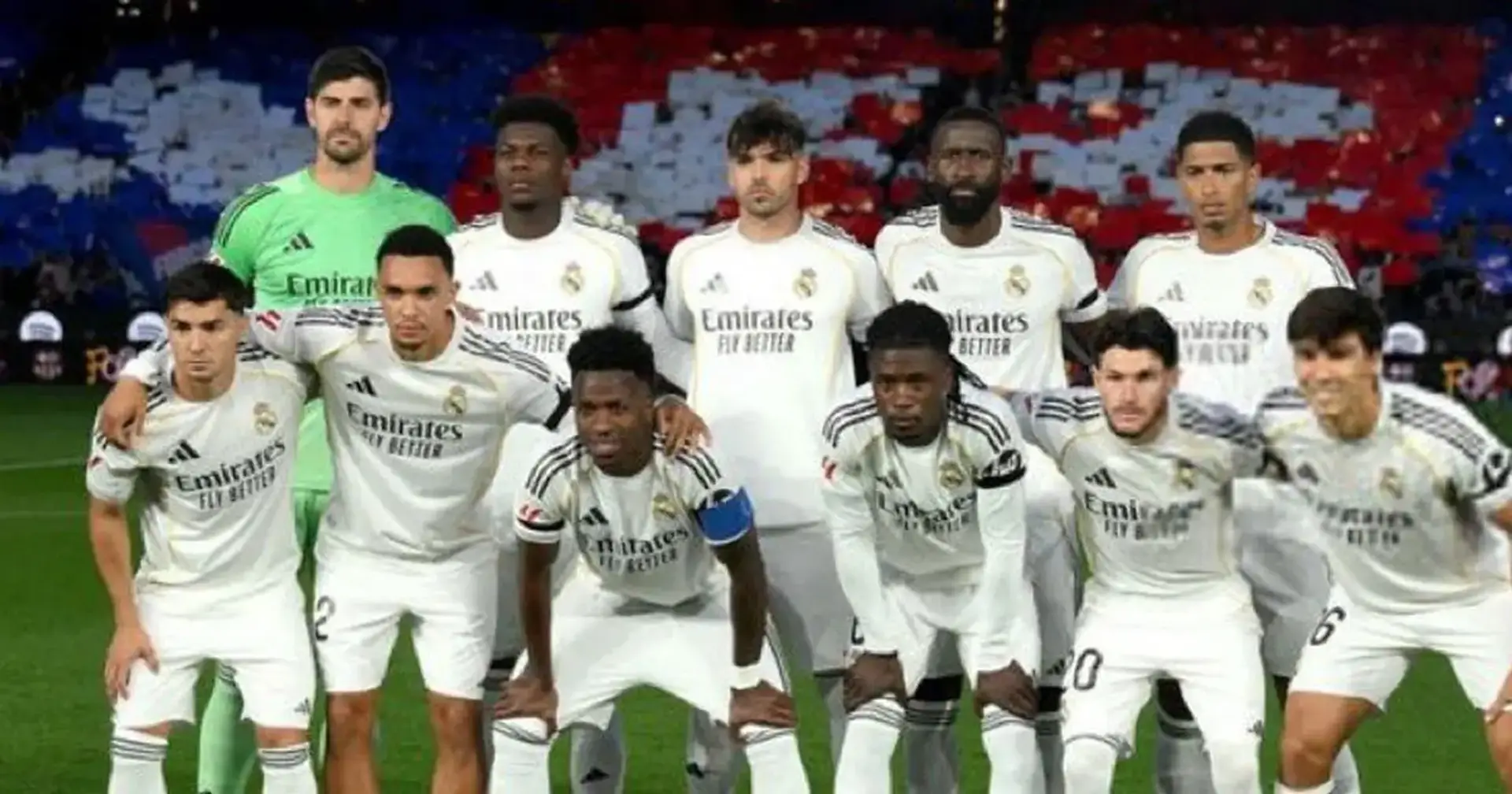
Rabat – Real Madrid closed the 2025-26 season without winning a single trophy after yesterday’s 2-0 defeat against rivals FC Barcelona in El Clásico, officially ending their hopes of retaining La Liga title.
The loss confirmed a disastrous year for Los Merengues, who also failed to win the Copa del Rey and the Spanish Super Cup, while their UEFA Champions League campaign ended in the quarter-finals against FC Bayern Munich.
Beyond the disappointing results, Real Madrid spent most of the season searching for consistency, balance, and identity. The team often looked disconnected on the pitch, while reports of internal tensions and uncertainty around the coaching staff added to the growing pressure surrounding the club.
Coaching changes failed to stabilize the team
The season began with major expectations following the arrival of Xabi Alonso, who replaced Carlo Ancelotti after building a strong reputation at Bayer Leverkusen.
However, Real Madrid struggled in decisive matches throughout the season, particularly against Barcelona, Manchester City FC, and Liverpool FC.
The heavy defeat in the Spanish Super Cup final increased pressure on Alonso, whose time at the club ended earlier than expected. Club officials later turned to Álvaro Arbeloa as a temporary replacement, but the team’s performances remained inconsistent.
A squad full of stars but lacking balance
Despite possessing one of the strongest squads in Europe on paper, Real Madrid rarely looked like a fully connected team.
The attacking partnership between Kylian Mbappé and Vinícius Júnior produced moments of brilliance, but the club struggled to create a tactical system that allowed the two players to perform comfortably together.
In several major games, the team depended more on individual quality than collective organization, while goalkeeper Thibaut Courtois repeatedly played a decisive role in keeping the side competitive.
Midfield problems
One of Real Madrid’s biggest issues was the midfield after the departure of Luka Modrić.
The team lacked control in possession and often struggled under pressure against organized opponents. Young midfielders such as Aurélien Tchouaméni and Eduardo Camavinga showed flashes of quality but could not consistently provide leadership during difficult moments.
As a result, Real Madrid frequently appeared vulnerable in transition and unable to dictate the rhythm of important matches.
Dressing-room tensions added more pressure
Throughout the campaign, media reports pointed to disagreements inside the dressing room and frustrations over tactical decisions.
Questions also emerged about the authority of the coaching staff and whether some senior players held too much influence inside the squad.
Those tensions appeared to affect performances on the field, especially in high-pressure fixtures, where the team struggled to respond after setbacks.
Questions over the club’s sporting direction
The season also sparked debate about the club’s long-term direction under president Florentino Pérez.
While Real Madrid continued to invest in global stars, critics argued that the club lacked a clear sporting structure capable of building a balanced, stable team for the future.
At the same time, opportunities for academy players from La Fábrica remained limited despite the success of the youth teams at the European level.
For a club known for its winning mentality and strong identity, the 2025-26 season raised serious concerns about Real Madrid’s future direction and the changes needed before the start of the next campaign.