 Join on WhatsApp
 Join on Telegram
It has been three years since the start of the war in Sudan. Survivors and human rights defenders are struggling to keep human rights a reality as millions of lives have been impacted by violence, displacement, and silence.
“The violations are severe: torture, rape, and other forms of sexual violence affecting women, men, and children,” said Nahid Jibrallah, founder and director of the SEEMA Centerfor the Protection of Women and Children, a Sudanese civil society organization that has spent years supporting those affected by violence.
The SEEMA Center, now based in Kampala, Uganda due to the war, provides medical, psychosocial, legal, and social assistance to Sudanese victims of torture in Uganda, as well as to their family members, with the support of the UN Voluntary Fund for Victims of Torture.
Through the project supported by the Fund, it expands its services to Sudan to provide critical support to victims of torture, leveraging its experience and expertise to document and report violations, advocate for accountability, and provide targeted assistance.
The Fund is issuing a special call for emergency applications for Sudan in response to the surge in needs of survivors.
While Sudan has endured periods of conflict over decades, the current war, which began in April 2023, has reshaped the country in devastating ways.
UN High Commissioner for Human Rights Volker Türk recalled in a statement during his recent visit to Sudan that he was shocked by accounts of extreme brutality, including atrocity crimes.
“I heard harrowing stories from survivors who witnessed the killing of their loved ones, and from women who had been subjected to gang rape and other forms of torture,” he said.
The conflict has also driven Jibrallah and her team to flee the country, and they are now working from Uganda.
“Torture is used as a weapon to control communities, including sexual abuse and trafficking,” she said.
She added that her colleagues at the SEEMA Center and other frontline groups have not been spared the brunt of war. The conflict has created not only a humanitarian emergency but also a protection crisis for those trying to respond. Doctors, lawyers, health personnel, and human rights activists have been threatened, detained, tortured, and even killed for carrying out their work. Those documenting violations and supporting survivors have become targets themselves.
The scale of suffering is unlike anything they have faced.
“Unfortunately, we cannot respond to this high level of need,” Jibrallah said. “The need is overwhelming, complicated, and spread across areas where even access is a challenge.”
“What we need is not to compromise human rights for any political agenda,” she said. “We do not want resources to go to fuel the war or to mask human rights violations.”
UN Human Rights in Sudan
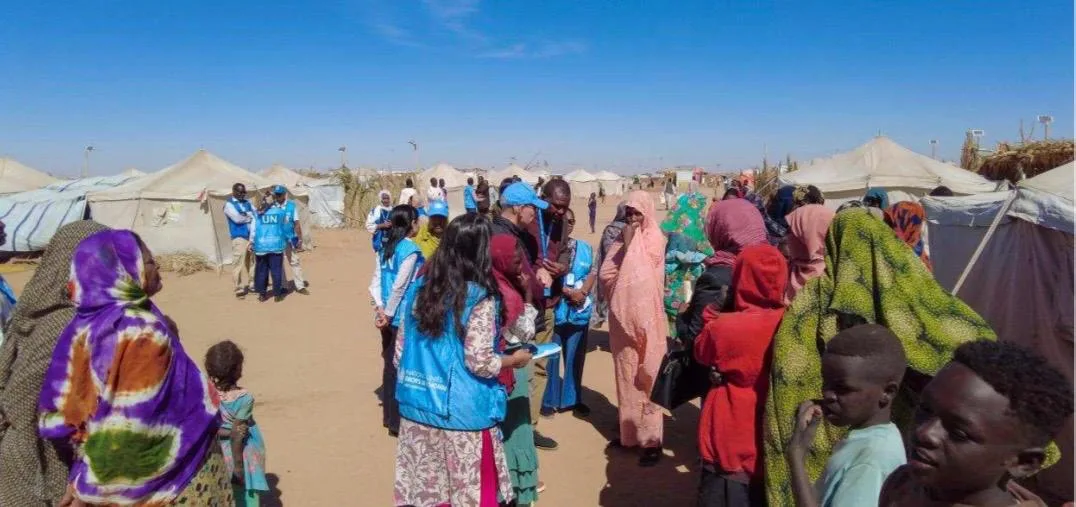
Sudan is now facing the world’s largest displacement crisis. Since the conflict began in April 2023, an estimated 14 million people have been forced from their homes, both within Sudan and across its borders.
“What makes Sudan’s crisis even more alarming is its invisibility. The world is not watching closely enough, but we are here, despite insecurity and access restrictions,” said Li Fung, UN Human Rights’ Representative in Sudan, on the staggering human cost of the conflict.
UN Human Rights has continued to monitor, document, and analyze serious violations of human rights and international humanitarian law despite access and security constraints. This work not only informs protection, humanitarian, and political responses today, but also preserves vital evidence for future accountability and access to justice for victims and their families.
Civilians continue to endure horrific violations and abuses, forced displacement, trauma, and a dire humanitarian situation. Through its engagement on the ground, the Office is documenting violations, listening to survivors and communities, working with civil society and community networks, and bringing their voices to the attention of the world to press for action to end the war.
To this end, Jibrallah emphasized that documenting violations is essential and stressed the need for accountability:
“It is very important to ensure accountability and to study this data, and to ensure that this will not happen again. It should be used for sustainable peace.”