
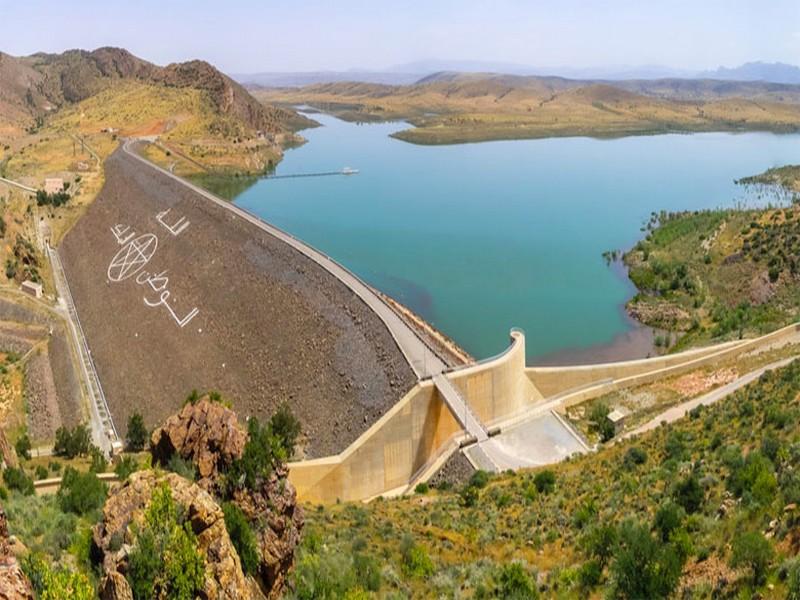
Casablanca — Morocco’s dams entered the final days of May with a total filling rate of 75.94%, offering a stronger water reserve as the country faces early heat waves and rising evaporation risks.
According to official data from the Directorate of Water Research and Planning at the Ministry of Equipment and Water, released Saturday, reservoirs now hold 12.93 billion cubic meters of water out of a total capacity of 17.03 billion cubic meters.
The figure marks a sharp rise from the same date last year. On May 23, 2025, Morocco’s dams were only 40.02% full, with reserves of about 6.8 billion cubic meters.
The improvement comes as temperatures have climbed during the last week of May, exceeding 40 degrees Celsius in some inland provinces in central and southern Morocco, according to the national meteorological service. Higher temperatures usually speed up evaporation from surface water stored in dams. But the current volume, close to 13 billion cubic meters, limits the percentage impact and helps maintain supplies for drinking water and irrigation in the coming months.
Strongest reserves concentrated in Northern Morocco
The Sebou basin holds the largest volume, with 4.75 billion cubic meters and a filling rate of 88.39%. The Al Wahda dam, Morocco’s largest, accounts for much of that reserve, standing at 88.76% full with more than 3 billion cubic meters stored.
The Loukkos basin recorded the highest national filling rate at 97.23%, with 1.79 billion cubic meters. Several dams there, including Nakhla, Chefchaouen and Charif Al Idrissi, are completely full.
The Bouregreg basin, which helps supply major Atlantic cities, reached 89.74%, with 1.32 billion cubic meters. The level secures water supply for the Rabat Casablanca axis without summer pressure or austerity measures.
Tensift also posted a high rate of 94.78%, strengthening supplies for Marrakech and nearby areas as demand rises in summer.
The Oum Er Rbia basin stood at 65.72%, with 3.29 billion cubic meters. Bin El Ouidane reached 93.83%, while Al Massira recovered to 42.74%, holding more than 1 billion cubic meters.
In the east, the Moulouya basin reached 73.03%, with 512.27 million cubic meters, supported by melting snow from the eastern Middle Atlas.
Other regions remain more exposed. Souss Massa stood at 54.53%, still far above last year’s 21.80%. Draa Oued Noun recorded the lowest level nationally at 38.17%, followed by Ziz Guir Ghris at 51.47%.
Authorities and environmental groups continue to call for careful water management and lower consumption as summer heat, evaporation and pressure on reserves continue.
Morocco World News is also on X — check out our latest posts now! Get MWN on iOS and Android for instant access to breaking news.